TL;DR

Get school and study supplies delivered free — and shop member deals
- Fast, free delivery on millions of items
- Access to Prime Big Deal Days deals on October 6–7
- Prime Video, Amazon Music and more included
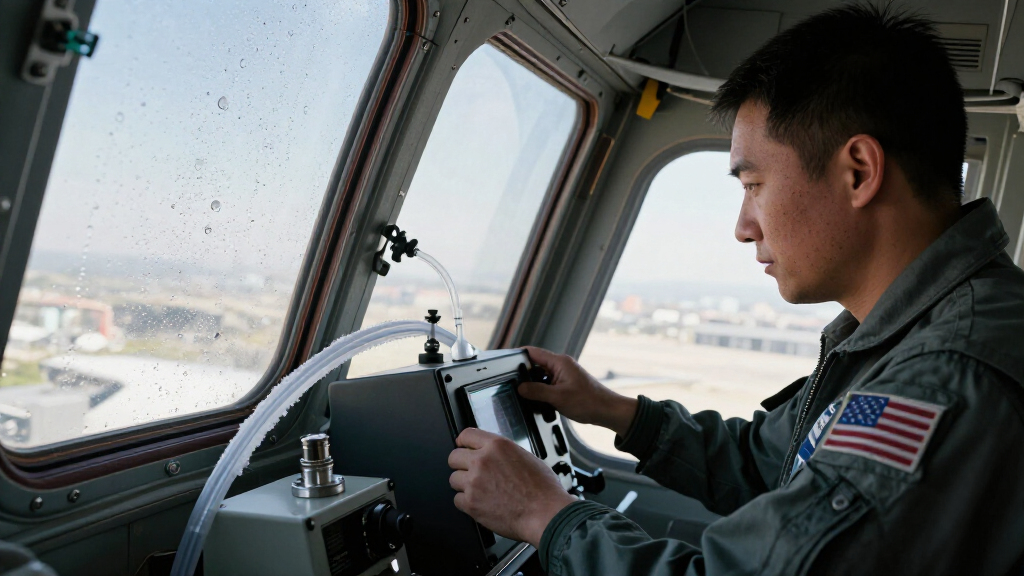
NASA researchers are testing new probes in the Icing Research Tunnel to measure unusually large, supercooled water droplets linked to aircraft icing. The data could help engineers evaluate design tools and ice protection for areas droplets may reach beyond protected surfaces; analysis is ongoing.
NASA says the tunnel tests are part of a campaign to improve how it generates and measures experimental clouds. New probes can detect droplets larger than 45 microns and analyze their sizes in real time. Researchers plan to compare those readings with results from post-processing images of droplets in the tunnel, a more laborious method.
The large-droplet measurements will be combined with data from another probe that measures droplets smaller than 45 microns. NASA says this will provide a measurement of the full droplet-size spectrum in the test clouds. The agency has not yet reported the campaign’s detailed findings; analysis of collected data continues.
NASA describes the test campaign as a milestone for its Subsonic Flight Demonstrator project, which is part of the agency’s Research and Technology Mission Directorate. NASA says the project team will share results with the broader aerospace community after analysis is complete.
Droplets Beyond Protected Surfaces
Aircraft are designed for typical icing conditions, in which cloud droplets range from 2 to 100 microns in diameter. NASA says rare clouds can contain supercooled drops as large as 2,000 microns. When these larger drops strike an aircraft, they can splash or run aft and freeze on surfaces beyond the reach of conventional ice protection.
That possibility matters to aircraft designers and safety researchers because engineering tools used to assess icing perform well for typical clouds, according to NASA, while engineers still have questions about how those tools represent the physics of much larger drops. Better measurements from controlled tunnel tests can inform that assessment. NASA has not yet said whether the current campaign will lead to specific design changes or revisions to engineering tools.
As an affiliate, we earn on qualifying purchases.
From Cloud Physics to Tunnel Tests
Supercooled water droplets remain liquid below 32 degrees Fahrenheit. NASA explains that they may freeze after encountering dust or other tiny particles that help ice crystals form. Aircraft can meet these droplets in clouds, and the larger ones pose a different icing challenge from the smaller drops typical aircraft designs are built to encounter.
NASA’s Glenn Research Center in Cleveland operates the Icing Research Tunnel, where researchers can produce clouds for controlled tests. The agency is enhancing equipment used to generate and measure those clouds so the test data can better describe the range of droplet sizes involved.
supercooled large droplet measurement probes
As an affiliate, we earn on qualifying purchases.
As an affiliate, we earn on qualifying purchases.
Findings Await Data Analysis
NASA has not released the detailed results of the test campaign, including how closely the new probes’ readings agree with post-processed images or how the combined measurements affect assessments of large-droplet icing. The agency also has not specified when the analysis will be finished or when the results will be published.
It remains unclear whether the measurements will prompt changes to engineering tools, aircraft designs or ice protection systems. NASA presents the tests as work to help researchers and industry better understand the phenomenon, rather than as a report of a newly validated safety solution.
As an affiliate, we earn on qualifying purchases.
NASA’s project team is continuing its analysis of the tunnel data. The agency says it plans to share the results with the broader aerospace community once that work is complete. Those findings will show what the new probes measured and how the data may help engineers evaluate the behavior of large supercooled droplets.
As an affiliate, we earn on qualifying purchases.
Key Questions
What is supercooled large droplet icing?
It occurs when very cold liquid water droplets freeze after hitting an aircraft. NASA says unusually large droplets can reach surfaces aft of conventional ice protection.
What is NASA testing?
NASA is testing new probes in the Icing Research Tunnel. They measure droplets larger than 45 microns in real time, and their readings will be compared with image-based measurements and combined with data for smaller droplets.
How large can the droplets be?
NASA says typical icing clouds have droplets around 2 to 100 microns in diameter, while rare supercooled large drops can reach 2,000 microns.
Have NASA’s tests produced a safety finding yet?
NASA says analysis is ongoing and has not released detailed results. It plans to share the findings with the aerospace community when analysis is complete.
Source: primary
Halloween Picks
halloween
As an affiliate, we earn on qualifying purchases.