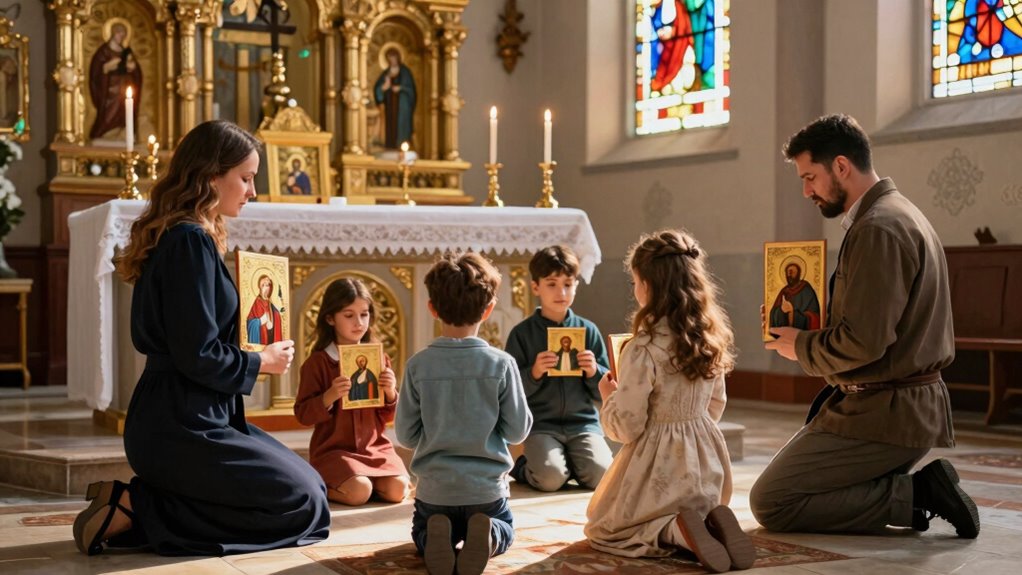

When Orthodox Christian families choose a patron saint name, they often do so during baptism, guided by the priest’s recommendations or family traditions. They consider saints’ stories, virtues, and how those align with their values or life goals. Personal faith, cultural customs, and the desire for protection or guidance also influence the decision. Understanding these factors can help you see how the name becomes a meaningful part of your spiritual journey. Keep exploring to learn how this tradition shapes identity.
Key Takeaways
- Names are often chosen during baptism, influenced by saints celebrated in the liturgical calendar or family traditions.
- Families consider saints’ virtues, stories, and significance for inspiration and spiritual guidance.
- Personal, familial, or community connections to specific saints heavily influence the choice.
- The selected saint’s life and martyrdom serve as models for faith and virtue.
- Naming reinforces spiritual inheritance, cultural identity, and a sense of belonging within the church community.

Choosing a patron saint name is a meaningful step in your spiritual journey, offering guidance and protection throughout your life. In Orthodox Christian families, selecting a saint’s name isn’t just a personal choice; it’s deeply rooted in Christian liturgical traditions and family naming customs. These traditions help shape your identity within the faith and connect you to centuries of spiritual heritage. When you’re thinking about which saint’s name to adopt, it’s common to contemplate saints celebrated in the liturgical calendar, especially those whose feast days hold special significance for you or your family. Many families have a tradition of naming children after saints who exemplify virtues they admire or who have particular significance within their community.
Choosing a patron saint name connects you to faith, tradition, and spiritual heritage through meaningful family and liturgical customs.
In Orthodox Christian customs, it’s customary for children to receive their patron saint’s name during baptism. This sacrament marks your entrance into the faith and sets the foundation for your spiritual life. The priest often recommends saints based on the day of your baptism, the time of year, or family traditions. For example, if a family has a longstanding practice of honoring a particular saint, it’s common for children to be named after that saint to maintain a spiritual link through generations. Some families choose saints whose stories resonate with their values or life goals, believing those saints’ virtues can serve as a guiding example. Additionally, many families consider the life story and virtues of saints to find a name that will inspire their child’s spiritual growth. Understanding the spiritual significance of saints can deepen the meaningfulness of this choice.
Family naming customs play a significant role in this process. In many Orthodox cultures, it’s customary to name children after saints from the family’s history or community. Sometimes, a child’s full name includes both the name of a saint and a family surname, creating a sense of continuity and spiritual inheritance. This tradition reinforces the connection between generations and underscores the importance of faith in daily life. When selecting a name, you may also ponder the saint’s life story, martyrdom, or contributions to the church, aiming to inspire your child to emulate those virtues.
Ultimately, choosing a patron saint name is a personal decision influenced by faith, tradition, and family values. It’s about embracing a spiritual identity that aligns with your beliefs and hopes. Whether you pick a saint celebrated in the liturgical calendar or one with special family significance, this choice becomes an integral part of your faith journey. It’s a meaningful act that links you to a broader spiritual community, offering guidance, protection, and a sense of belonging within the Orthodox Christian faith.
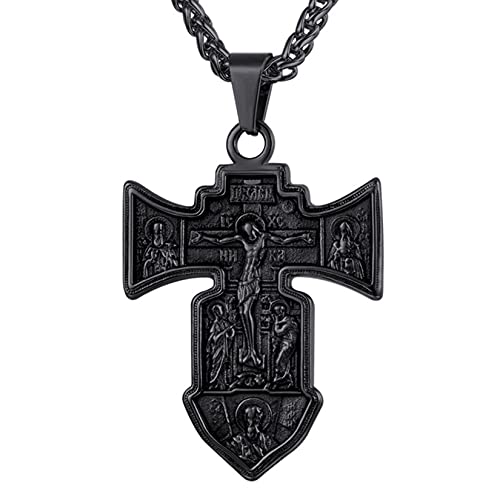
U7 Catholic Jewelry Ion Plating Black Metal Orthodox Cross Pendant Christian Saint Crucifix Necklace for Men
Fine Details: INRI Crucifix Front which means God with us, St Gabriel on the back to provide protection…
As an affiliate, we earn on qualifying purchases.
As an affiliate, we earn on qualifying purchases.
Frequently Asked Questions
How Do Families Decide Which Saint’s Name to Choose?
You might choose a saint’s name based on personal preferences or cultural influences that resonate with your family’s traditions. Often, families select a saint who reflects their values, life experiences, or regional heritage. You may also consider saints associated with specific virtues or miracles you admire. Ultimately, your decision is a meaningful blend of personal connection and cultural background, guiding you to honor a saint whose example inspires your spiritual journey.
Can a Family Choose a Saint From Any Country or Region?
You can choose a saint from any country or region, but many families consider interfaith considerations and cultural relevance when making their decision. Modern naming trends influence choices, often blending traditional saints with contemporary names. It is crucial to select a patron saint whose life and virtues resonate with your family’s faith journey, and some families prefer saints from their cultural background to strengthen their spiritual connection and heritage.
Are There Specific Rules for Naming After Saints?
Yes, there are specific rules for naming after saints. You should choose a saint with a strong historical significance and whose life aligns with your values. Many families prefer saints from their homeland or with a special connection. While modern naming trends influence choices, tradition emphasizes selecting a saint whose life inspires faith and virtue. Typically, the saint’s name is given at baptism, honoring their spiritual role.
Do Family Traditions Influence the Saint Selection Process?
Family traditions profoundly influence how you choose a saint’s name, much like a woven tapestry where each thread adds meaning. You might select a name honoring an ancestor or a beloved family saint, emphasizing cultural significance and familial influence. For example, passing down a saint’s name from generation to generation keeps your heritage alive, fostering a sense of identity and continuity in your faith journey.
How Important Is the Saint’s Feast Day in Choosing a Name?
The saint’s feast day holds significant cultural importance in choosing a name, as it often aligns with family traditions or regional celebrations. You might see families selecting a saint whose feast day coincides with a special date, honoring historical context and cultural heritage. This choice reinforces spiritual connections, making the saint’s day a meaningful factor in the decision, symbolizing blessing, remembrance, and community identity.

Studio Collection St. Michael The Archangel Wall Plaque | Patron Saint of Grocers, Military, and Police | Christian Home Goods
Powerful Symbolism of Divine Justice Features Saint Michael the Archangel triumphing over evil, holding a crucifix and stepping…
As an affiliate, we earn on qualifying purchases.
As an affiliate, we earn on qualifying purchases.
Conclusion
Remember, choosing a patron saint isn’t just about picking a name; it’s about embracing a spiritual guide for life. As the saying goes, “A problem shared is a problem halved,” and in this case, a saint’s example can lighten your path. Trust your heart and faith when selecting your patron saint, knowing that this decision connects you to centuries of tradition and divine guidance. Let your choice inspire you every day.

Intercession Orthodox Rosary – Blue Wooden Prayer Beads with Antique Gold Crucifix & Icon Medals
AUTHENTIC DESIGN: Traditional Orthodox Christian prayer rosary featuring deep blue wooden beads connected with antique gold-toned decorative spacer…
As an affiliate, we earn on qualifying purchases.
As an affiliate, we earn on qualifying purchases.

Stories of the Saints: Bold and Inspiring Tales of Adventure, Grace, and Courage (Stories of the Faithful, 1)
As an affiliate, we earn on qualifying purchases.
As an affiliate, we earn on qualifying purchases.