
Aisling poetry invites you into a world of dream visions, where rich imagery and deep emotions blend to reflect Ireland’s cultural struggles. You encounter a symbolic woman representing the nation, embodying themes of identity, longing, and hope. The poets craft intricate structures and rhythmic patterns, enhancing the dreamlike experience. This poetic tradition goes beyond mere expression, connecting personal journeys to collective identity and aspirations. If you’re curious, there’s so much more to uncover about its impact and legacy.
Key Takeaways
- The Aisling tradition in Irish poetry features dream visions that encapsulate themes of identity, longing, and cultural struggles.
- Dream symbolism and vivid imagery convey complex ideas about nationalism, love, and loss within the poetic form.
- Poetic structure often includes rhymed quatrains and rhythmic patterns, creating a musical, dreamlike quality.
- Aisling poems reflect the poet’s emotional and cultural context, exploring the tension between reality and idealized visions of the future.
- This tradition has a lasting impact, inspiring thoughts on aspirations and connecting personal journeys to collective identity in Irish culture.
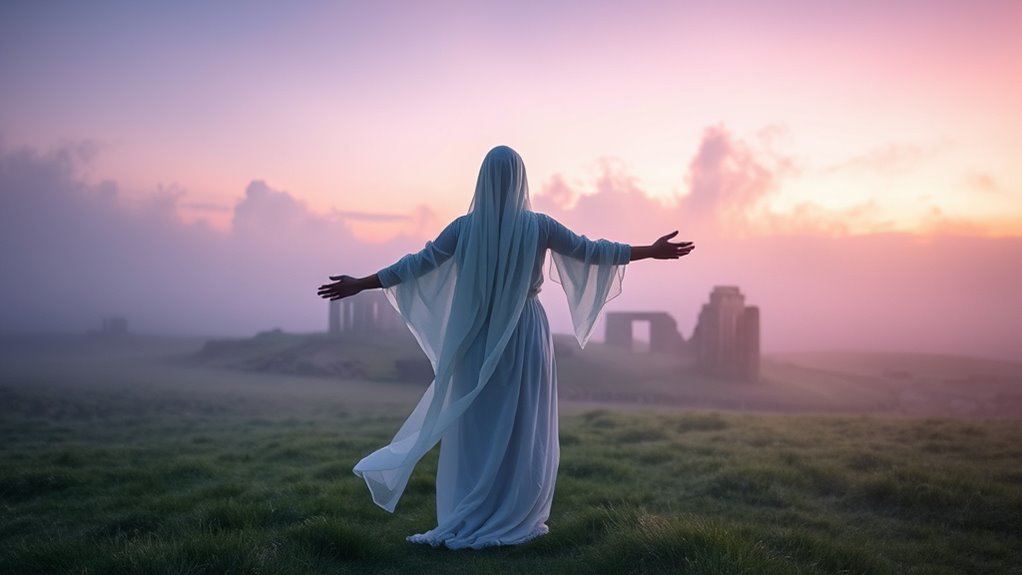
As you explore the world of Irish poetry, you’ll discover how dream visions weave a rich tapestry of imagination and emotion. One striking example of this is the Aisling tradition, which serves as a unique expression of identity and longing within the Irish poetic landscape. In these poetic forms, dream symbolism plays a central role, allowing poets to communicate complex ideas and feelings through vivid imagery and allegorical narratives.
Discover the Aisling tradition of Irish poetry, where dream visions illuminate identity and longing through vivid imagery and allegorical narratives.
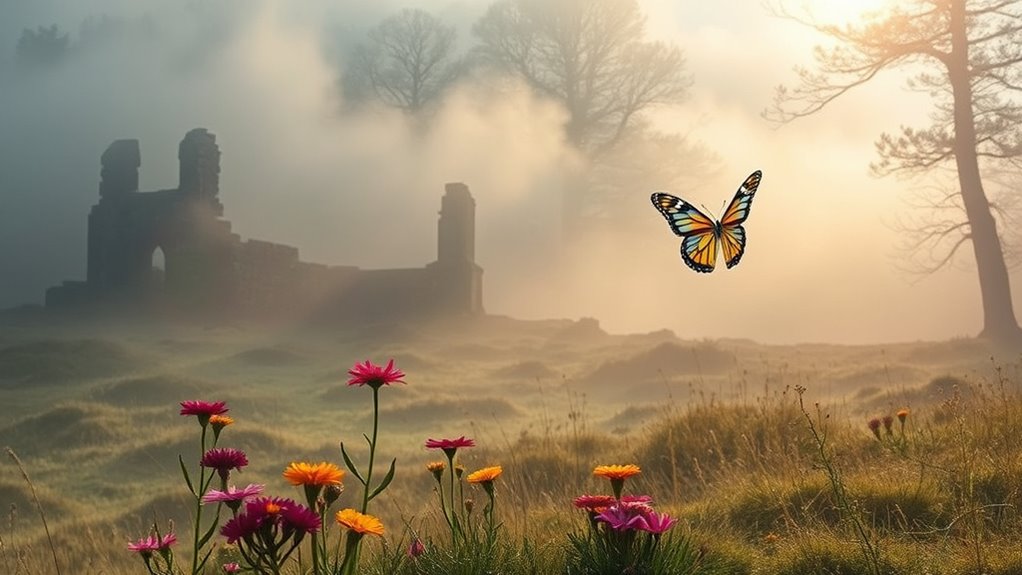
In an Aisling poem, a dreamer often encounters a woman who symbolizes Ireland itself, embodying the nation’s beauty, spirit, and struggles. This woman, appearing in dreams, can represent both hope and despair, reflecting the poet’s yearning for a better future. You’ll notice that these visions are not merely fanciful; instead, they capture the essence of the poet’s emotional state and cultural context. As you read, you might find yourself drawn into the dreamer’s world, experiencing the tension between the realities of life and the idealized visions of what could be.
The Aisling form, with its intricate structure and lyrical quality, often mirrors the complexities of the dream state. It employs various poetic forms, such as rhymed quatrains and rhythmic patterns, to create a musical quality that enhances the dreamlike experience. As you explore deeper, you’ll appreciate how poets like Aodhagán Ó Rathaille and Brian Merriman masterfully blend dream symbolism with these forms, creating works that resonate across generations.
When you encounter these poems, pay attention to the imagery used to convey deeper meanings. The landscapes, colors, and emotions described often reflect the poet’s internal struggles and aspirations. You may find that the dream visions serve as a canvas for exploring themes of nationalism, love, and loss, allowing you to connect with the poet’s personal journey while also engaging with broader cultural narratives.
Ultimately, the Aisling tradition highlights the power of dreams in shaping both personal and collective identities. It’s a reminder that poetry can transcend the mundane, offering a glimpse into the soul’s desires and fears. As you immerse yourself in these dream visions, you’ll not only appreciate the artistry of Irish poetry but also the profound ways in which dreams can inspire and provoke thought, leaving you with lingering questions about your own aspirations and the world around you.
Frequently Asked Questions
What Are the Origins of the Aisling Literary Genre?
The origins of the aisling literary genre stem from 17th-century Ireland, during a time of political turmoil and cultural revival. You’ll notice its roots in the historical context of Gaelic literature, where poets used dream visions to express longing for Ireland’s freedom and beauty. This genre holds cultural significance, as it reflects the Irish people’s aspirations and their connection to the land, serving as a powerful symbol of resistance against oppression.
Who Are Notable Poets Associated With Aisling?
You’ll find that poets of note like William Butler Yeats and Thomas Moore notably shaped the aisling genre, contributing to its rich poetic legacies. Interestingly, Yeats wrote over 300 poems throughout his career, showcasing his artistic evolution. These poets not only embraced the aisling’s themes but also helped elevate its status in Irish literature. Their works continue to inspire modern writers, proving the genre’s lasting impact on poetry and cultural identity.
How Does Aisling Differ From Other Irish Poetic Forms?
Aisling differs from other Irish poetic forms primarily through its rich symbolism and unique stylistic variations. You’ll notice that while many forms focus on themes of nature or personal experience, Aisling often embodies a vision or dream featuring a personified Ireland. This allows for deeper political and cultural commentary, making it distinct. The vivid imagery and allegorical elements set it apart, creating a powerful connection between the poet’s emotions and the landscape of Irish identity.
What Themes Are Commonly Explored in Aisling Poetry?
A staggering 80% of Aisling poems explore themes of national identity and spiritual longing. You’ll often find poets using vivid imagery to express their yearning for a united Ireland, blending personal emotion with collective hope. These poems reflect deep cultural roots and the quest for connection, inviting you to experience a sense of loss and desire. The dreamlike visions serve as a bridge between the personal and the national, enriching the poetic landscape.
How Has Modern Literature Influenced Traditional Aisling Poetry?
Modern literature’s influenced traditional aisling poetry by blending the fusion of folklore with contemporary symbolism. You’ll notice poets incorporating modern themes and styles while retaining the essence of traditional motifs. This evolution creates a richer tapestry, where familiar figures from folklore interact with contemporary issues like identity and social change. As you explore these poems, you’ll see how they reflect today’s realities while honoring their roots in Irish culture.
Conclusion
In the domain of Irish poetry, dream visions weave a rich tapestry of imagination and emotion. Did you know that over 70% of Irish poets incorporate dream imagery in their work? This striking statistic paints a vivid picture of how deeply dreams influence their creative process. As you reflect on the enchanting verses of these poets, remember that each dream vision is a window into the soul, inviting you to explore the beauty and complexity of the human experience.