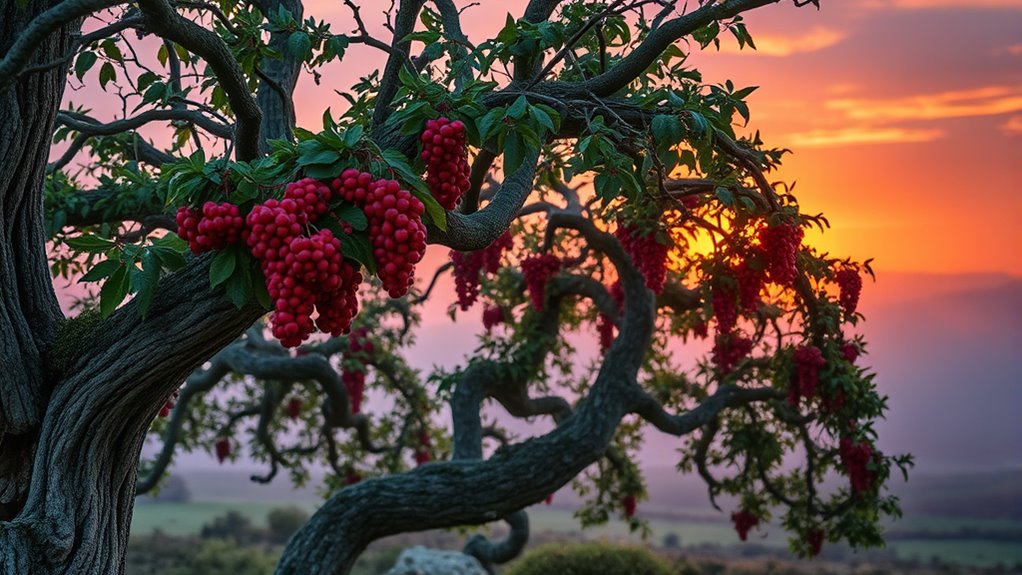

The rowan tree, often called the “tree of life,” is deeply rooted in Irish culture. It symbolizes strength, protection, and resilience, serving as a guardian against negative forces. Linked to the goddess Brigid, it plays a key role in rituals and spiritual practices for safeguarding communities. Its vibrant red berries embody vitality and endurance, reminding us of life’s persistence. Discover more about the rich history and significance this enchanting tree holds in Irish tradition.
Key Takeaways
- The rowan tree, known as the “tree of life,” symbolizes strength, protection, and transformation in Irish folklore.
- It is associated with the Celtic goddess Brigid, representing healing, fertility, and wisdom.
- Rowan wood is used to create protective amulets and charms, serving as a spiritual safeguard.
- The red berries symbolize resilience and vitality, thriving in harsh conditions and encouraging perseverance.
- Its enduring legacy reflects the tree’s deep cultural significance and magical allure in Irish tradition.
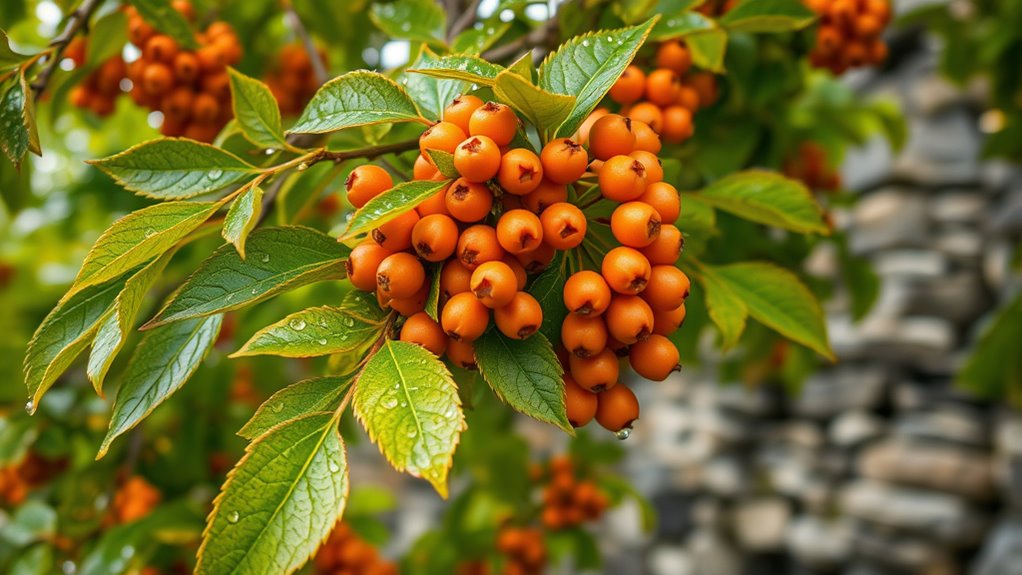
Have you ever wondered why the rowan tree holds such a special place in Irish culture? Its significance stretches far beyond mere aesthetics; the tree is deeply intertwined with mythological associations and spiritual symbolism that resonate throughout the ages. As you explore the rich tapestry of Irish folklore, you’ll discover that the rowan is often referred to as the “tree of life,” embodying strength, protection, and transformation.
The rowan tree, known as the “tree of life,” embodies strength, protection, and transformation in Irish folklore.
In ancient times, the rowan was revered as a guardian against malevolent forces. People believed that planting a rowan tree near their homes would ward off evil spirits and bring luck to their families. This protective quality is rooted in its mythological associations, where the tree is linked to various deities and mystical beings. For instance, in Celtic mythology, the rowan is often connected to the goddess Brigid, who symbolizes healing, fertility, and wisdom. When you think about it, it’s no wonder that the rowan became a symbol of hope and safety for those living in a world filled with uncertainty.
The spiritual symbolism of the rowan tree also extends to its use in rituals and ceremonies. Traditionally, the wood of the rowan has been used to create protective amulets and charms, believed to carry the tree’s inherent power. When you hold a piece of rowan wood, you can almost feel the connection to those who came before you, invoking a sense of continuity and belonging. This tree isn’t just a part of the landscape; it’s a bridge to the spiritual world that echoes the beliefs of your ancestors.
Moreover, the rowan tree’s striking red berries are often seen as symbols of resilience and vitality. They serve as a reminder that even in the harshest conditions, life persists and thrives. You might find that this symbolism resonates with your own experiences, encouraging you to embrace challenges and grow stronger in the face of adversity. In fact, engaging with creative practice can further enhance your ability to draw inspiration from such powerful symbols.
As you explore more deeply into the lore surrounding the rowan tree, you’ll likely feel a profound sense of connection to its rich history. Its enduring presence in Irish culture is a tribute to the tree’s power, wisdom, and magical allure. So next time you see a rowan tree, take a moment to appreciate its beauty and the layers of meaning it holds within its branches. You never know what insights it might offer you.
Frequently Asked Questions
What Is the Scientific Name of the Rowan Tree?
The scientific name of the rowan tree is Sorbus aucuparia. When you explore its botanical classification, you’ll find it’s part of the Rosaceae family. It exhibits various genetic variations, which contribute to its adaptability and resilience across different climates. As you study the tree, you might appreciate how these variations affect its growth and characteristics, making it a fascinating subject for both casual nature lovers and serious botanists alike.
Where Can Rowan Trees Be Commonly Found?
You can commonly find rowan trees in various habitats, especially in cool, temperate regions. They thrive in mountainous areas, woodlands, and along riverbanks. In the UK and Ireland, look for them in heathlands and rocky slopes. They prefer well-drained soil and can often be spotted near other trees, creating a beautiful blend of greenery. If you explore these environments, you’re likely to see rowan trees standing tall and vibrant.
Are Rowan Berries Edible for Humans?
Rowan berries aren’t typically edible for humans without proper preparation. They can be poisonous if consumed raw, much like a beautiful yet dangerous flower hiding its thorns. However, when cooked or processed, these berries find their culinary uses in jams or jellies, transforming their toxic nature into something delightful. Just remember, always guarantee they’re prepared correctly to avoid any unpleasant surprises. So, tread carefully with those berries!
How Do You Care for a Rowan Tree?
To care for a rowan tree, start by watering it regularly, especially during dry spells—aim for about an inch of water per week. Use pruning techniques to shape the tree and remove any dead or crossing branches, preferably in late winter or early spring. This helps promote healthy growth and airflow. Keep an eye out for pests and diseases, addressing any issues promptly to guarantee your rowan thrives.
What Are the Medicinal Uses of Rowan?
Rowan’s got some fascinating medicinal uses. You can find it in traditional herbal remedies, where its berries help treat ailments like colds and fevers. Folk medicine practices often utilize rowan to support digestive health and boost immunity. If you ever need a natural remedy, consider making a tea from the berries or using them in tinctures. Just remember, it’s always smart to consult a healthcare professional before diving into herbal treatments.
Conclusion
In the heart of Ireland, the rowan tree stands as a symbol of protection and magic, its vibrant berries contrasting with the dark folklore surrounding it. You might find comfort in its presence, yet be captivated by the tales of mischief woven into its history. As you explore the landscape, let the rowan remind you that beauty and danger often coexist, inviting you to embrace the enchantment of nature while respecting its mysteries.