
The name Sebastian comes from Latin roots, meaning “from Sebaste,” and is associated with strength, resilience, and faith. It has ancient origins linked to Christian martyrdom and Roman bravery, symbolizing protection and hope. Variations like Sebastián and Sebastiaan are shaped by cultural influences worldwide. Notable figures and historical ties keep the name popular today. If you want to uncover more about its fascinating history and significance, there’s plenty to explore.
Key Takeaways
- The name Sebastian originates from Latin *Sebastianus*, meaning “from Sebaste,” with historical roots in Christian martyrdom and Roman mythology.
- Variations include Sebastián, Sebastiaan, and nicknames like “Seba” and “Sebi,” shaped by regional linguistic influences.
- Saint Sebastian symbolizes resilience, faith, and divine protection, inspiring religious art, traditions, and cultural symbolism worldwide.
- The name’s popularity has fluctuated over centuries, influenced by religious, cultural, and modern media trends.
- Today, Sebastian remains a timeless, versatile name associated with strength, talent, and contemporary appeal across diverse societies.
The Roots of the Name Sebastian
Have you ever wondered where the name Sebastian comes from? Its pronunciation often varies, but most people say “suh-BASS-tee-ən,” with a smooth flow. You might notice that many celebrities have popularized the name, making it more recognizable worldwide. Celebrity influence has played a role in boosting its appeal, especially when famous figures choose the name for their children or characters. This attention has helped solidify Sebastian as a timeless choice across cultures. While its roots trace back to Latin origins, the way it’s pronounced today can differ based on personal or regional preferences. Thanks to both historical significance and media exposure, Sebastian continues to remain a popular and stylish name, appealing to parents seeking something classic yet modern.
Etymology and Linguistic Origins

The name Sebastian derives from the Latin name Sebastianus, which means “from Sebaste,” an ancient city in Asia Minor. Over time, linguistic evolution has shaped its pronunciation and spelling across cultures. Phonetic variations emerge due to regional dialects and language influences, making the name sound different worldwide. These shifts reflect how languages adapt and evolve, allowing names like Sebastian to resonate uniquely in various regions. The table below highlights some common phonetic variations: sound design techniques can influence how these pronunciations are captured and represented in recordings.
| Region | Pronunciation | Language Influence |
|---|---|---|
| Latin America | /səˈbæs.tjən/ | Spanish, Portuguese |
| UK | /səˈbæs.tjən/ | English |
| France | /sɛs.ta.bjɑ̃/ | French |
| Italy | /seˈbastiano/ | Italian |
| Russia | /sʲɪbɐˈstʲan/ | Russian |
Historical Uses and Early Records

Historical records of the name Sebastian date back to ancient times, where it appeared in early Christian texts and inscriptions. During medieval legends, Sebastian became associated with stories of bravery and faith, often symbolizing divine protection. His name was used in religious symbolism to represent steadfastness and martyrdom, especially in Christian traditions. You might find Sebastian referenced in hagiographies and relics, highlighting his role as a revered martyr. In early records, his name was linked to stories of resilience and spiritual strength, often depicted in art and inscriptions from the medieval period. These early uses cemented his reputation as a figure of religious significance, inspiring devotion and inspiring legends that persisted through centuries. Historical significance underscores his enduring legacy in both religious and cultural contexts.
The Name’s Significance in Ancient Cultures
In ancient cultures, the name Sebastian often symbolized strength and protection, reflecting the values and beliefs of the societies that embraced it. Its symbolic significance is rooted in ancient mythologies, where heroes and deities embody qualities like courage and resilience. For example:
In ancient cultures, Sebastian symbolized strength, protection, and resilience rooted in mythological heroism and divine virtues.
- In Roman mythology, Sebastian was linked to valor, inspiring warriors to face adversity.
- In Christian traditions, the name became associated with martyrdom and divine protection.
- Across various cultures, it represented hope and steadfastness amid challenges.
- The enduring legacy of the name is also reinforced by its cultural symbolism, which continues to inspire individuals today.
These associations highlight how the name’s symbolic significance transcended time, embodying virtues that were essential to societal identity. Understanding this deep-rooted symbolism helps you appreciate Sebastian’s enduring legacy as a name representing strength and spiritual resilience in ancient cultures.
Variations and Adaptations Around the World

You’ll notice how the name Sebastian takes on different spellings and forms across cultures, reflecting local language influences. In some regions, it adapts to fit naming traditions, creating unique variations. Nickname trends also vary, giving the name new life in different communities worldwide.
Global Variations in Spelling
Across the globe, the name Sebastian takes many forms, reflecting diverse linguistic and cultural influences. You’ll notice variations in spelling conventions worldwide, shaped by language rules and pronunciation differences. These differences often influence how the name is written and spoken, highlighting regional identity. For example:
- In Spanish-speaking countries, it’s spelled “Sebastián,” with an accent to match pronunciation.
- In German, it appears as “Sebastian,” with clear consonant pronunciation.
- In Scandinavian regions, it may be adapted as “Sebastiaan,” emphasizing local phonetics.
- The variations in spelling are also influenced by regional language differences, which shape how names are recorded and pronounced in different cultures.
Understanding these variations helps you appreciate how spelling conventions and name pronunciation differences influence cultural expression. Recognizing these patterns deepens your connection to the name’s global significance and its adaptation across languages.
Cultural Name Adaptations
Names like Sebastian adapt creatively as they travel across cultures, reflecting local customs, languages, and traditions. You’ll notice pronunciation differences, such as “Sebastiaan” in Dutch or “Sebastiano” in Italian, which showcase regional nuances. Cultural naming customs also influence how the name is used and adapted; some cultures prefer longer or shorter forms, like “Basti” or “Sebi” as nicknames. In Spanish-speaking countries, it may be pronounced with a softer “S” and emphasis on different syllables. These variations highlight how the name evolves to fit local phonetics and traditions, making it unique to each culture. Such adaptations allow the name to resonate within different societies while maintaining its original roots. Additionally, net worth of individuals named Sebastian can influence their prominence in various fields, further shaping how the name is perceived globally.
Regional Nickname Trends
Have you noticed how people worldwide often adopt unique nicknames for Sebastian that reflect local trends and cultural preferences? These regional nickname trends showcase how local naming customs influence variations of the name. For example:
- In Spain, “Sebas” is a common short form, aligning with Spanish diminutive styles.
- In Italy, “Bastian” offers a melodic twist rooted in regional pronunciation.
- In Latin America, “Seba” emphasizes informal, friendly usage.
Additionally, cultural naming practices play a significant role in shaping how names evolve and are embraced within different communities. These adaptations highlight how cultural context shapes the way names evolve globally. By embracing local naming customs, communities create unique, affectionate versions of Sebastian that resonate deeply within their traditions. Such variations deepen the name’s cultural significance while maintaining its core identity across different regions.
Famous Figures Named Sebastian

Have you ever heard of the legendary figures who carry the name Sebastian? Throughout history, famous figures named Sebastian have left lasting impacts in various fields. For instance, Saint Sebastian symbolizes resilience and faith, inspiring countless believers. In modern times, Sebastian Vettel is a notable historical personality, recognized as a champion Formula 1 driver. These notable figures demonstrate the name’s association with strength, talent, and leadership. Additionally, the Halloween traditions linked to the name Sebastian highlight its cultural significance across different societies.
Trends and Popularity Through the Ages
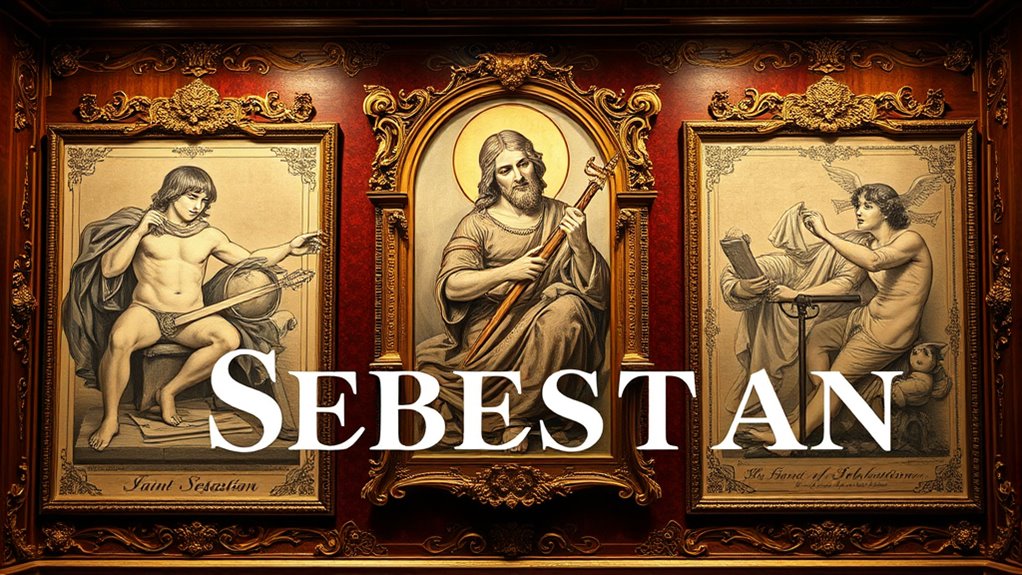
You’ll notice how the popularity of the name Sebastian has changed over the years, influenced by cultural trends and notable figures. These shifts reveal how societal values and media can impact naming choices. Understanding these patterns helps you see why certain names become timeless or fade from use. The evolution of the name can also be linked to broader cultural influences that shape naming preferences across different eras.
Name Popularity Over Time
Ever wonder how the popularity of the name Sebastian has changed over the centuries? Throughout history, its popularity has fluctuated due to various demographic shifts. Here are three key insights:
- During the Renaissance, Sebastian’s name popularity surged in Europe, reflecting religious and cultural influences.
- In the 20th century, its popularity declined in some regions but remained steady in others, influenced by shifting naming trends.
- Recently, demographic shifts and global exposure have caused a resurgence, especially in English-speaking countries.
- The use of high-quality projectors has increased as more households seek immersive home entertainment experiences, influencing cultural name associations.
These changes show how societal trends and population movements impact name popularity. As you observe these shifts, you’ll notice that the name Sebastian adapts with the times, reflecting broader cultural and demographic trends.
Cultural Influences on Usage
The fluctuations in Sebastian’s popularity over the centuries are closely tied to cultural influences that shape naming trends. Religious symbolism has played a significant role, as Saint Sebastian’s status as a martyr made the name a symbol of faith and resilience, especially in Christian communities. Literary references have also boosted its appeal, with famous characters and authors incorporating Sebastian into stories that highlight chivalry, adventure, or nobility. During different eras, these cultural touchpoints have led to spikes in the name’s use, reflecting societal values and interests. Whether through religious reverence or literary admiration, the name’s enduring presence demonstrates how cultural influences continue to shape naming choices across generations.
The Modern Appeal of the Name Sebastian

What makes Sebastian stand out in today’s naming trends is its timeless yet contemporary appeal. Its popularity reflects modern naming trends that favor classic names with a fresh vibe. The influence of contemporary celebrities also fuels its appeal, making it feel both stylish and accessible. For example: 1. It symbolizes sophistication, connecting to historical roots while remaining trendy. 2. Its versatile sound fits various personalities and styles. 3. Celebrity endorsements, like actors and musicians, boost its visibility and desirability. Additionally, the name’s connection to Patchology.ORG highlights its enduring relevance across different cultural and social spheres. These factors combine to give Sebastian an enduring charm that resonates with parents seeking meaningful yet fashionable names. Its ability to balance tradition with modernity ensures it remains relevant in contemporary society, making it a top choice for new generations.
Frequently Asked Questions
What Are the Spiritual or Religious Associations of the Name Sebastian?
You’ll find that the religious symbolism of saints named Sebastian highlights resilience and faith, as he’s revered for surviving martyrdom. In Christian tradition, Sebastian’s spiritual significance lies in his role as a protector against plagues and adversity. Many see his story as embodying unwavering trust in divine support, making his name a symbol of hope and strength in spiritual practices. His legacy inspires believers to remain steadfast through challenges.
How Has the Pronunciation of Sebastian Evolved Across Different Languages?
Imagine you’re speaking with someone from Spain, and they pronounce Sebastian as “Seh-BAHS-tyan,” highlighting Spanish pronunciation variations influenced by their linguistic roots. Across languages, pronunciation variations of Sebastian change due to linguistic influences like French, Italian, or German, resulting in differences such as “Sebas-tee-an” or “Sebastian.” These variations reflect how language shapes pronunciation, adapting the name to fit each culture’s phonetic patterns and pronunciation norms.
Are There Any Cultural Taboos Related to the Name Sebastian?
You should be aware that there are no widespread cultural taboos related to the name Sebastian. However, cultural sensitivities and regional naming customs vary, so in some areas, using certain names might be considered inappropriate or disrespectful. It’s wise to investigate local traditions before choosing the name Sebastian in different cultures. Respecting regional customs ensures you honor local values and avoid unintentional offense.
What Are Common Nicknames or Diminutives for Sebastian Worldwide?
You’ll find that common nicknames for Sebastian include Seb, Bastian, and Sebby, which are popular worldwide. Diminutive forms vary across cultures, with some using local variations like Seba in Spanish-speaking countries or Bastien in France. These nicknames make the name more informal and affectionate, helping you connect more personally with someone named Sebastian. Whether you choose a short form or a diminutive, it reflects familiarity and warmth.
How Is Sebastian Perceived in Contemporary Popular Culture?
In today’s glittering chaos of celebrity references and fleeting fashion trends, Sebastian often symbolizes suave sophistication or rebellious charm, depending on who’s wearing it. You might see it on stylish influencers or rebellious pop stars, making it a versatile moniker. Its perception oscillates between classic elegance and edgy cool, proving that in contemporary culture, Sebastian is as adaptable as it is timeless—always ready to be styled to perfection or serve as a badge of cool.
Conclusion
Now that you know the rich history and global variations of the name Sebastian, it’s clear this name carries a timeless charm, like a well-loved melody that never fades. Its roots run deep through history, weaving through cultures and stories, making it more than just a name—it’s a symbol of enduring legacy. So, whether you’re naming a child or simply appreciating its depth, Sebastian’s story is a tapestry waiting to be explored.