
In Chinese baby naming traditions, you’ll find that each character symbolizes luck, virtue, or positive qualities, reflecting hopes for a prosperous future. Names are carefully chosen based on meanings, symbolism, and cultural beliefs, often considering astrology and ancestral influences. Superstitions play a role too—avoiding characters linked to bad luck while favoring those associated with good fortune. If you keep exploring, you’ll discover how these practices help preserve cultural identity and bring blessings for the child’s future.
Key Takeaways
- Characters with positive meanings and rich symbolism, like prosperity or longevity, are selected to bring good luck and health.
- Naming practices often involve consulting elders, fortune tellers, or classical texts to ensure auspicious choices.
- Avoiding characters associated with bad luck, such as those linked to death or misfortune, especially the number four, is crucial.
- Names are crafted to harmonize with the child’s zodiac sign and balance the five elements for favorable destiny.
- Modern names blend traditional characters with contemporary influences, reflecting cultural evolution while preserving heritage.
The Significance of Characters in Chinese Names

Have you ever wondered how Chinese names carry deeper meaning beyond just sound? The characters chosen for a name reflect wishes for luck, health, and success. Each character has its own significance, often tied to lucky number combinations, like the number eight for prosperity or nine for longevity. These choices aren’t random—they’re carefully selected to bring positive energy. Additionally, auspicious color choices influence the characters’ meaning, as certain colors symbolize good fortune, such as red for happiness and gold for wealth. Combining meaningful characters with auspicious colors creates a name that embodies well-wishes and hopes for a bright future. This intentional symbolism demonstrates how Chinese names are more than identifiers; they’re powerful carriers of cultural values and good fortune. Understanding name symbolism can deepen appreciation for the cultural importance behind each character choice.
Traditional Methods of Selecting Names
Traditional methods of selecting Chinese names often involve consulting elders, fortune tellers, or using classical texts to guarantee the name aligns with cultural and spiritual principles. You might participate in a naming ceremony, where elders or spiritual guides suggest suitable names based on various factors. Name numerology plays a key role, analyzing the number of strokes in characters to ensure harmony and luck. Some common practices include:
- Consulting fortune tellers for auspicious name combinations
- Referencing classical texts like the Hundred Family Surnames
- Calculating the child’s birth date and time for compatibility
- Choosing characters that promote good fortune during naming ceremonies
Additionally, understanding personality traits associated with specific characters can help select a name that reflects desired qualities. These methods aim to secure a name that brings balance, luck, and positive energy, reflecting deep-rooted traditions in Chinese culture.
The Role of Meaning and Symbolism

You notice that selecting characters with rich symbolism is central to Chinese naming. Names often carry positive connotations to bring good fortune and health. These choices reflect deep cultural values and the hope for a prosperous future. Understanding the meaning and symbolism behind each character helps parents make informed decisions that align with their aspirations for their child’s life.
Symbolic Character Selection
In Chinese baby naming traditions, the choice of characters is deeply rooted in symbolism and meaning, reflecting hopes and aspirations for the child’s future. You select characters that convey virtues, strength, or beauty, often inspired by calligraphy art and the rich history of character evolution. These characters are carefully chosen to embody positive qualities. The evolution of Chinese characters reveals how their meanings have expanded or shifted over time, adding depth to the significance of each name. Symbolic characters are often paired to create a meaningful name that resonates with cultural values. This deliberate selection process helps shape the child’s identity, infused with cultural significance and good wishes.
Positive Connotations Emphasis
Emphasizing positive connotations in Chinese baby names guarantees that each character carries a meaningful and uplifting message. By choosing characters with auspicious meanings, you enhance your child’s luck and future. Consider lucky color combinations to amplify good fortune, such as pairing red with gold for prosperity. Additionally, selecting an auspicious time for naming ensures harmony and positive energy. To make it easier, here’s a quick overview:
| Aspect | Example |
|---|---|
| Meaning of characters | Joy, strength, wisdom |
| Lucky color combinations | Red and gold for wealth |
| Auspicious time | Early morning or specific zodiac hours |
| Symbolic emphasis | Happiness and success |
| Overall goal | Uplift and bring good fortune |
Focusing on positive meanings helps set a hopeful tone for your child’s future. Incorporating meaningful characters that reflect desirable qualities can further strengthen this intent.
Cultural Significance of Names
Chinese baby names are rich with cultural significance, where each character’s meaning and symbolism reflect deep-rooted beliefs and values. The names often convey hopes, virtues, or aspirations, influencing social status and respect. You’ll notice regional naming variations that highlight local customs and linguistic nuances, shaping how names are chosen. For example, in some areas, names emphasize virtues like wisdom or strength, while others focus on nature or fortune. The meaning behind a name can influence perceptions of your social standing, making it more than just a label. It’s a reflection of cultural identity, values, and societal expectations. Understanding these nuances helps you appreciate how names serve as symbols of personal and communal hopes for the future. Additionally, cultural significance plays a vital role in how names are crafted to convey specific virtues or blessings.
Incorporating Elements of Astrology and Fate
You might consider how your baby’s Zodiac sign influences their name, reflecting traits and compatibility. Balancing the five elements can help create harmony and positive energy in their future. By aligning a name with fate and destiny, you can aim to set a meaningful course for their life. Incorporating predictive analytics can also provide insights into potential future traits and opportunities for your child’s development.
Zodiac Sign Influence
Have you ever wondered how a child’s zodiac sign can shape their destiny in Chinese naming traditions? Your child’s zodiac sign influences name choices through animal symbolism and zodiac compatibility. You might choose names that align with the characteristics of their zodiac animal, reflecting traits like strength or wisdom. Sometimes, parents select names that promote harmony with their child’s zodiac sign to enhance luck and positive energy. For example, if your child is born in the Year of the Dragon, you might pick a name symbolizing power or vigor. You’ll also consider zodiac compatibility, ensuring the name supports favorable interactions with other signs, fostering good fortune. Recognizing angel numbers related to love can also guide parents in selecting names that attract positive relationships and emotional harmony. This approach helps shape a future where luck and personality are harmonized through thoughtful character selection, rooted in ancient astrological beliefs.
Elemental Balance Strategies
Building on the influence of zodiac signs, selecting an appropriate balance of elements—wood, fire, earth, metal, and water—further enhances a child’s destiny. You focus on achieving elemental harmony by analyzing the child’s birth chart and identifying which elements are underrepresented or excessive. Using balance techniques, you can adjust the name characters to strengthen weak elements or subdue dominant ones. For example, if a child’s chart lacks water, choosing names with water-related characters can promote harmony and positive luck. These strategies aim to create a balanced elemental profile that supports health, success, and happiness. Incorporating name character selection based on elemental needs can optimize the child’s overall fate. By carefully integrating astrology insights with traditional balance techniques, you craft names that align with the child’s unique elemental needs, fostering a more favorable fate.
Fate and Destiny Alignments
Fate and destiny in Chinese naming are deeply intertwined with astrology, as the alignment of celestial elements influences a child’s future. You might consult fortune telling methods like Bazi or Zi Wei Dou Shu to analyze a child’s birth chart, ensuring their name aligns with their destiny. Ancestral influence also plays a crucial role, as elders’ guidance helps select names that honor family heritage and balance cosmic energies. To visualize this process:
- Analyzing birth charts for favorable elements
- Incorporating ancestral wisdom and naming traditions
- Matching characters that enhance luck and harmony
- Using astrology to balance yin and yang in names
- Recognizing the significance of family photoshoot fails in understanding family heritage and harmony
This approach aims to align your child’s name with their unique fate, fostering prosperity and good fortune from the very start.
The Influence of Family and Ancestry
Family and ancestry play a central role in shaping a child’s name in Chinese tradition. Your family influence helps determine which characters are chosen, often reflecting virtues, hopes, or qualities valued across generations. Ancestral significance is deeply embedded in the naming process, as names honor ancestors and preserve lineage. You might notice that some characters are passed down from grandparents or great-grandparents, reinforcing family bonds and respect. This practice guarantees the child’s name carries the weight of family history, linking them to their heritage. By incorporating elements from the family’s past, parents aim to bestow good fortune and moral qualities. Ultimately, the child’s name becomes a living symbol of family influence and ancestral significance, anchoring them within their cultural and familial roots.
Popular Characters and Their Positive Connotations
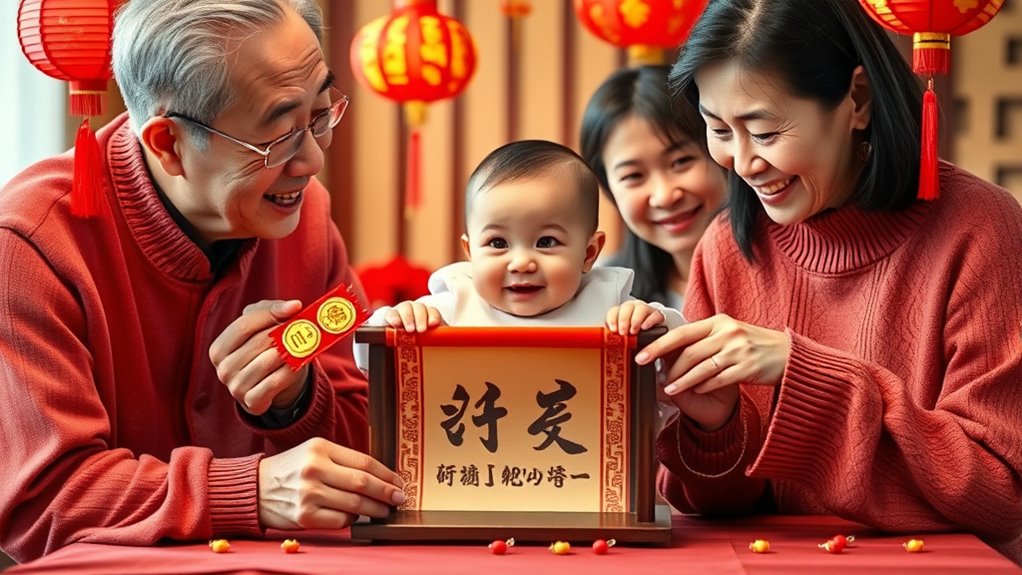
In Chinese naming traditions, certain characters are chosen for their positive meanings, symbolizing virtues, good luck, and desirable qualities. These characters often reflect hopes for a child’s future. Today’s modern naming trends blend traditional characters with cross-cultural influences, creating unique combinations. You might see popular characters like:
- “Yun” (云) meaning cloud, symbolizing hope and high aspirations
- “Li” (丽) meaning beautiful, representing grace and elegance
- “Hao” (浩) meaning vast, signifying strength and potential
- “Jie” (杰) meaning outstanding, emphasizing excellence and achievement
These characters are carefully selected to convey good fortune and virtues. They adapt to contemporary tastes while maintaining deep cultural significance, making them popular choices for parents seeking meaningful, positive connotations in their children’s names. Character meanings play an essential role in conveying cultural values and aspirations through names.
The Use of Rhythms and Phonetics in Naming

You’ll notice that Chinese names often have a pleasing rhythm and flow, creating a sense of harmony. The choice of sounds can carry symbolic meanings, influencing perceptions of strength or elegance. By balancing tones and syllables, parents craft names that sound natural and memorable. Additionally, the use of symbolism in characters can reinforce positive traits and cultural values.
Tonal Harmony and Flow
Have you ever wondered how the sounds and rhythms of Chinese characters influence a baby’s name? Tonal harmony and flow are essential, as they reflect linguistic nuances that convey beauty and balance. When choosing a name, you focus on pronunciation harmony, ensuring each syllable complements the others smoothly. You might notice:
- The use of tones that create a melodic, flowing rhythm
- The balance between high and low pitch sounds for musicality
- The avoidance of harsh or jarring consonants
- The overall sense of harmony that enhances the name’s aesthetic and emotional impact
- Mindful selection of sounds can also promote positive energy and good fortune in the child’s life. The careful attention to tonal flow showcases the importance of linguistic nuances in Chinese naming traditions.
Phonetic Symbolism Impact
The way sounds and rhythms are crafted in Chinese names goes beyond mere pronunciation, deeply influencing the name’s symbolic meaning and emotional resonance. Phonetic symbolism reflects centuries of linguistic evolution, where certain sounds evoke specific qualities like strength, purity, or happiness. Over time, cross-cultural influences have introduced new sounds and patterns, enriching naming practices. You might notice that names with harmonious rhythms or auspicious phonetics are preferred, as they’re believed to attract positive energy and good luck. The phonetic choices are deliberate, aiming to balance sound and meaning, while also accommodating linguistic shifts through history. Additionally, understanding bank SWIFT/BIC codes can help ensure secure international transactions, much like choosing auspicious sounds in names ensures positive outcomes. This intricate interplay of sounds ensures that a name not only sounds beautiful but also carries a deeper, culturally resonant significance rooted in both tradition and evolving language.
Rhythmic Balance in Names
Rhythmic balance plays a crucial role in Chinese naming, as the cadence and flow of sounds can markedly influence the name’s overall harmony and appeal. During naming ceremonies, the way characters sound together is carefully considered to create a pleasing rhythm. Your family influence often guides the choice of phonetics, emphasizing smooth, balanced tones that resonate well. Pay attention to how the syllables flow, avoiding harsh or choppy sounds. For example, names with alternating tones or symmetrical syllable structures tend to sound more harmonious. This focus on rhythm helps ensure the name feels natural and elegant, contributing to its positive energy. Additionally, understanding the tone patterns involved in Chinese phonetics can enhance the harmony of a name. Ultimately, a well-balanced name reflects the cultural importance of sound harmony and leaves a lasting, favorable impression.
Modern Trends and Changes in Naming Practices

Modern trends in Chinese baby naming reflect a blend of tradition and innovation, as parents increasingly seek unique, meaningful, and sometimes Western-influenced names for their children. The modern influence encourages creative combinations, blending traditional characters with new sounds or styles inspired by global integration. Many parents choose names that resonate internationally, making their children’s names easier to pronounce and remember outside China. This shift also results in the use of more modern characters, sometimes departing from classical choices, to express individuality and modern values. Additionally, some parents incorporate Western names or adapt Chinese characters to create hybrid names. Overall, these trends highlight a dynamic evolution where cultural heritage coexists with contemporary influences, shaping a diverse landscape of naming practices that reflect China’s ongoing interaction with the world. The incorporation of contemporary naming styles can also be seen as a way to balance tradition and modernity, ensuring that cultural identity remains relevant in a rapidly changing society.
Superstitions and Avoidance of Certain Characters

Superstitions heavily influence Chinese baby naming practices, prompting parents to avoid certain characters believed to bring bad luck or misfortune. They steer clear of forbidden characters linked to negative meanings or associations with death, illness, or misfortune. Many also consider lucky numbers when choosing characters, believing they attract good fortune. For example, characters associated with the number four are often avoided because it sounds like “death.” Conversely, characters linked to the number eight are favored for their luck and prosperity. You might see parents avoiding characters with harsh tones or negative connotations, selecting symbols that promote health, success, or happiness instead. This careful selection aims to protect the child from bad luck and guarantee a positive future, reflecting deep-rooted superstitions about luck and misfortune. Incorporating traditional beliefs into naming choices is a way to honor cultural values and ensure the child’s well-being.
Preserving Cultural Identity Through Naming Traditions

Naming traditions play a vital role in preserving Chinese cultural identity, serving as a link between past and present generations. By following age-old practices, you uphold cultural preservation, ensuring that traditional values and beliefs continue to thrive. While modern adaptations have introduced new naming trends, many families still honor classical characters and meanings to maintain cultural roots. This blending of old and new reflects a dynamic approach, allowing you to honor tradition while embracing contemporary influences. Through careful selection of characters, you keep alive the stories, philosophies, and history embedded in Chinese naming customs. Your choices reinforce cultural continuity, fostering a sense of belonging and identity for future generations. Ultimately, these naming practices serve as a meaningful bridge connecting history, culture, and personal identity.
Frequently Asked Questions
How Do Chinese Parents Choose Names That Suit Their Child’s Future?
When choosing a name, you focus on meaningful characters that reflect positive qualities or aspirations. You consider auspicious combinations, ensuring the characters bring good luck and harmony. You might consult traditional charts or fortune-tellers to select names that align with your child’s birth date and zodiac sign. By blending cultural significance with personal hopes, you aim to give your child a name that supports a prosperous and happy future.
Are There Regional Differences in Chinese Baby Naming Traditions?
Yes, there are regional differences in Chinese baby naming traditions. You’ll notice variations influenced by regional dialects, which affect pronunciation and character choices. In some areas, naming ceremonies are more elaborate, involving specific rituals to bless the child’s future. These regional customs reflect local culture and beliefs, making each naming practice unique across China. So, if you explore different regions, you’ll see how tradition shapes naming practices differently.
What Influence Does Western Culture Have on Modern Chinese Names?
Western naming influences shape modern Chinese names by blending global naming trends with traditional elements. You might notice more Chinese parents choosing Western-style names or combining Chinese characters with international flair. This influence encourages creativity and cultural exchange, making names more diverse and reflective of global trends. As a result, Western naming influences help modern Chinese names evolve while still respecting traditional values, creating a unique fusion of East and West.
How Do Naming Customs Differ Between Urban and Rural Areas?
You’ll find that rural naming practices often emphasize traditional characters and meanings, reflecting a connection to family and local culture. In contrast, urban naming trends tend to be more modern, influenced by popular culture and Western styles, with creative spellings and unique names gaining popularity. As a result, rural areas stick to customs rooted in history, while cities embrace contemporary influences, blending tradition with evolving tastes.
Can a Child’s Name Change Over Their Lifetime in Chinese Culture?
In Chinese culture, a child’s name can change over their lifetime through name modification, often for cultural or personal reasons. You might do this to reflect new achievements, life stages, or to bring better luck. These changes carry cultural significance, symbolizing growth or a shift in destiny. While not very common, name modification is respected and seen as a meaningful way to adapt one’s identity within traditional beliefs.
Conclusion
As you explore Chinese baby naming traditions, you’re weaving a rich tapestry of history, hope, and destiny. Each character is like a brushstroke, shaping your child’s future with meaning and luck. Embrace the dance of symbolism, astrology, and family stories—these threads connect generations. Remember, in this vibrant naming mosaic, your choices preserve a cultural heartbeat, ensuring the legacy endures, vibrant and strong, through the timeless art of naming.