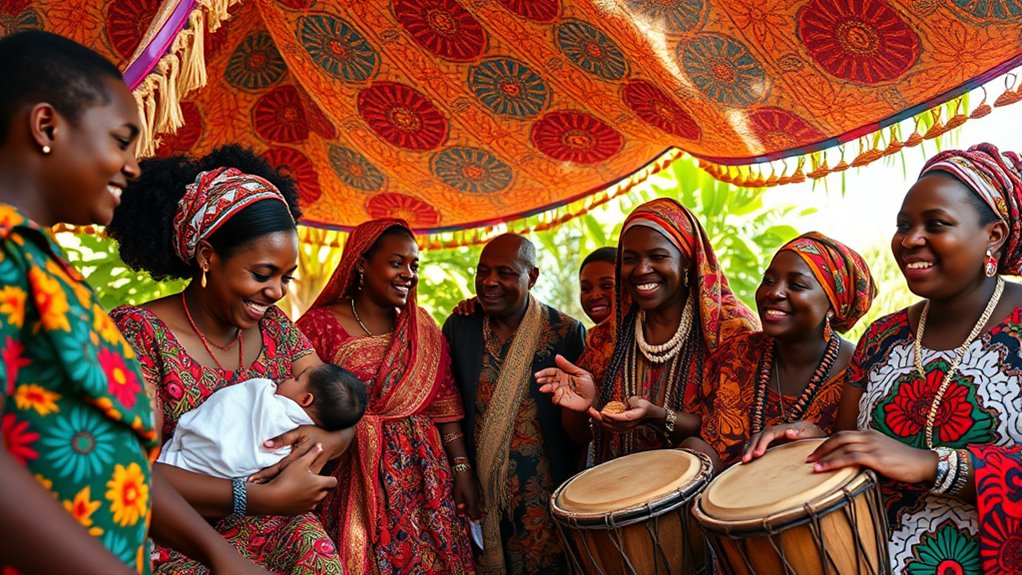

Yoruba naming ceremonies celebrate a child’s identity and heritage, marking an important milestone in their life. During these events, oriki names play a crucial role, embodying virtues, aspirations, and ancestral ties. They reflect the qualities parents hope to instill in their children and connect the family to their lineage. These ceremonies create a sense of community, love, and gratitude. If you’re curious about the rituals and deeper meanings behind these traditions, there’s much more to explore.
Key Takeaways
- Yoruba naming ceremonies celebrate a child’s identity and cultural heritage, marking an essential milestone in their life.
- Oriki names are poetic praise names that reflect a child’s character, achievements, and familial legacy, emphasizing personal and ancestral connections.
- The ceremonies involve rituals such as prayers, songs, and dances, fostering community bonding and gratitude towards ancestors.
- Names often carry significant meanings that embody virtues, aspirations, and hopes for the child’s future, reinforcing their identity within the community.
- These ceremonies enhance understanding and appreciation of Yoruba cultural practices, weaving a rich tapestry of tradition that lasts a lifetime.
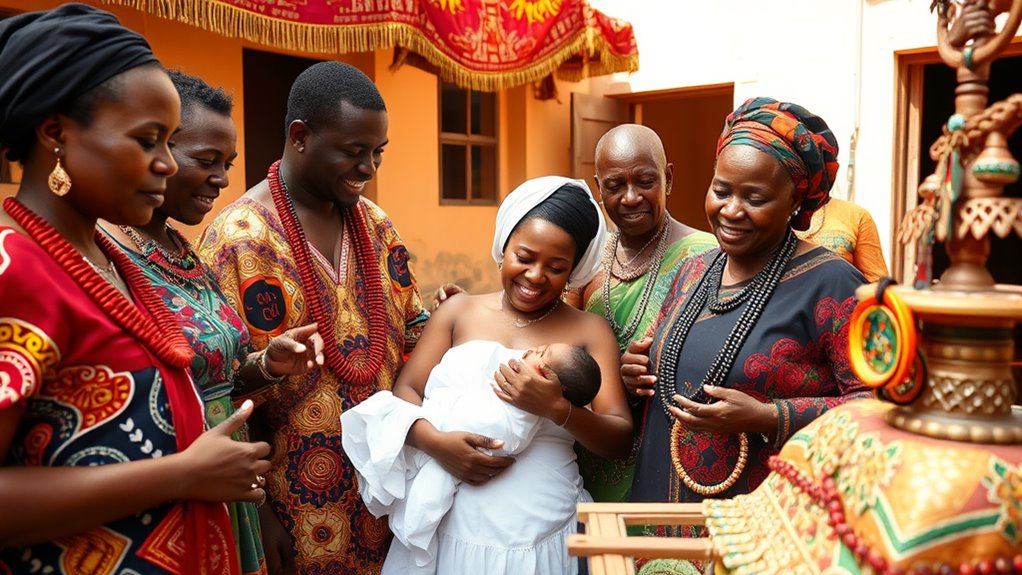
Have you ever wondered what makes Yoruba naming ceremonies so special? These celebrations are rich with historical origins and cultural symbolism that reflect the values and beliefs of the Yoruba people. When a new baby arrives, the family organizes a ceremony to formally give the child a name, marking an important milestone in their life. This event isn’t just about the name itself; it’s a deep-rooted tradition that signifies the child’s identity and place within the community.
Yoruba naming ceremonies celebrate a child’s identity, weaving together history, culture, and community values in a meaningful tradition.
The historical origins of the Yoruba naming ceremony can be traced back centuries, rooted in the spiritual and social fabric of the Yoruba culture. From the moment a child is born, the family believes that the baby possesses a unique destiny and purpose. By formally naming the child during the ceremony, the family invokes blessings and protection, ensuring that the child’s life journey is fruitful and guided. This tradition emphasizes the connection between the individual, their family, and the wider community, showcasing how important it is to celebrate life’s beginnings.
Cultural symbolism plays a crucial role in these ceremonies. The names given often carry significant meanings, reflecting virtues, aspirations, or ancestral ties. For instance, a name might signify strength, wisdom, or peace, embodying the hopes parents have for their child’s future. These names serve as a reminder of the values that the family holds dear and the legacy they wish to pass down through generations. When you hear an Oriki name, which is a type of praise name, you’ll notice it goes beyond just identification—it’s a poetic expression of the individual’s character and achievements.
During the ceremony, you’ll witness various rituals, including prayers, songs, and dances. Each element is steeped in meaning, representing gratitude to the ancestors and the divine forces believed to oversee the child’s life. As friends and family gather, the atmosphere is filled with love and joy, reinforcing the bond of community. Everyone participates in this moment, celebrating not just the child, but also the continuity of tradition and culture. Additionally, names often reflect cultural meanings that are vital in shaping the child’s identity within the community.
In essence, Yoruba naming ceremonies are more than just a formal event; they’re a celebration of life, identity, and community. The historical origins and cultural symbolism embedded in these rituals create an experience that connects everyone involved, weaving a rich tapestry of heritage and pride that lasts a lifetime. So, the next time you attend one of these ceremonies, take a moment to appreciate the depth of meaning behind every name.
Frequently Asked Questions
What Is the History Behind Yoruba Naming Ceremonies?
The history behind Yoruba naming ceremonies is rich with traditional rites that celebrate new life. These ceremonies signify the cultural importance of names, as they often reflect family lineage, ancestral connections, and hopes for the child’s future. You’ll find that these rituals have evolved over generations, intertwining spiritual beliefs with community bonding. As you participate, you’ll appreciate the deep-rooted customs that honor both the individual and their place in the family and society.
How Can One Choose an Oriki Name?
To choose an oriki name, you should consider your family’s cultural significance and naming traditions. Reflect on the qualities or values you want to embody, and think about your heritage. It helps to consult with elders or family members for their input, as they can share stories that inspire meaningful choices. Ultimately, pick a name that resonates with you and honors your lineage, creating a lasting connection to your roots.
Are There Specific Days for Yoruba Naming Ceremonies?
When the sun shines bright, it’s a good time for celebration. Yoruba naming ceremonies often take place on a specific day, typically the eighth day after birth, but family traditions can vary. These ceremonies hold deep cultural significance, as they connect families and honor ancestral roots. By choosing a day that aligns with traditional practices, you guarantee the event resonates with meaning, fostering unity and joy within your community.
Do Non-Yoruba People Participate in These Ceremonies?
Yes, non-Yoruba people can definitely participate in these ceremonies. This involvement often fosters cultural integration and strengthens community bonds. When you attend, you’re not just an observer; you’re part of a vibrant celebration. By engaging in ceremonial participation, you show respect for the culture and its traditions. It’s a wonderful opportunity to learn and connect with others, deepening your understanding of diverse customs while celebrating life’s milestones together.
What Role Do Grandparents Play in the Naming Process?
Imagine the wisdom of generations converging in a single moment. Grandparents play a vital role in the naming process, bringing their rich heritage and ancestral blessings to the celebration. Their involvement isn’t just ceremonial; they often share stories and meanings behind names, deepening the family’s connection to its roots. By actively participating, they pass down traditions and reinforce the importance of lineage, ensuring that the child’s identity is anchored in family history.
Conclusion
In Yoruba culture, naming ceremonies aren’t just traditions; they’re a bridge to identity and heritage. Your name, especially an Oriki, carries the weight of history, aspirations, and familial pride. As you celebrate a child’s naming, remember that each name is a story waiting to be told. It’s true what they say: a name is the first gift you give. Embrace this moment, for it’s the beginning of a beautiful journey steeped in meaning and connection.