
TL;DR
Educational science kits for kids bundle materials and instructions for hands-on activities in subjects such as plants, physics, chemistry, and engineering. Choose by the child’s interests, the kind of thinking the activities invite, safety and adult support, and the supplies each project really needs; a kit can make investigation easier, but it cannot guarantee a particular learning outcome.
A seedling on the windowsill can teach more than a page of facts: your child can watch a root curl through damp soil and ask what made it grow. Educational science kits for kids make questions like that easier to explore by bundling instructions and materials for activities in biology, physics, chemistry, engineering, and more.

Prime made for students and young adults
- Fast, free delivery for dorm and study essentials
- Prime Video and Amazon Music included
- Member-only deals
This guide will help you choose a kit that fits your child’s interests, skills, and attention span. You’ll learn how to spot activities that encourage real investigation, what to check for safety and cleanup, and why an adult’s questions can matter more than a flashy finished project.
Choose a topic your child already asks about, such as plants, space, ramps, or insects.
Look for activities that invite predictions and comparisons, not only a finished craft.
Check age guidance alongside reading, motor, attention, and supervision needs.
Count required household supplies, refills, cleanup, storage, and group materials before buying.
Treat unexpected results as a prompt to inspect the setup, repeat the test, and discuss what you observed.
Turn a child’s question into a hands-on investigation
Educational science kits for kids give children structured ways to observe a question, try an activity, and talk about what happened. The structure matters because curiosity alone can be hard to turn into a fair comparison: a kit may supply similar pots, seeds, and steps so a child can focus on what they change and observe. Instead of only reading that plants need water, a child can compare two seedlings and check whether both grow the same way. A kit supplies a starting point; the child’s questions make the experience personal.
Imagine your child asking, “How do seeds grow?” A plant kit might include pots, seeds, and instructions for tracking growth. Invite them to draw a quick prediction, such as “The seed by the window will grow faster,” then measure both plants every few days. Measuring the same way over time helps them notice gradual change that a quick glance might miss. If the plants differ, the comparison gives you something concrete to discuss, though it does not prove that window light alone caused the difference if other conditions also varied.
Many activities also connect science to other everyday skills. Reading directions practices following written steps, while measuring water or comparing plant heights brings in math. These connections are useful because they show children that investigating a question often involves several kinds of thinking. A shared experiment can give you a natural way to ask, “What changed?” and listen to your child explain their thinking in their own words; their explanation may reveal what they noticed and what they are still unsure about.
A kit works like a small trail map: it gives you a starting route, while your child’s observations determine what you notice along the way.
According to the educational guidance in this article’s source notes, hands-on activities can offer practice in observing, predicting, testing, and revising explanations. That possibility depends on the child, the activity, and adult support; the box itself cannot promise a particular result. A demonstration with only one outcome to watch may be engaging, but it offers fewer chances to compare or revise an idea than an activity where a child can change one part and see what follows. For a child who loves garden soil and seed pods, a plant kit may be a better fit than a robotics set, even if the robot looks more impressive on the shelf.
Popular right now

KitchenAid Artisan Mini Tilt-Head Stand Mixer, 3.5 Quart, Aqua Sky Blue

TCL F8D Series 50-Inch 4K QLED Smart Fire TV

Bose QuietComfort Headphones (2nd Gen), Wireless Noise-Cancelling Over-Ear Headphones, Eucalyptus Green
As an affiliate, we earn on qualifying purchases.
Choose a kit that gives curiosity room to grow
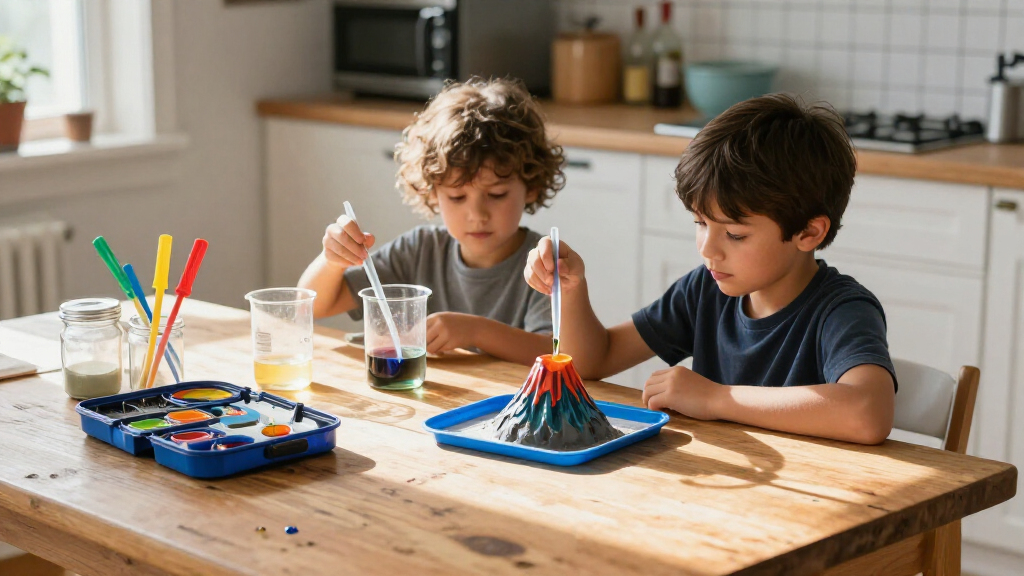
The most useful science kit for your child pairs an interesting topic with activities that ask them to think, predict, and compare. The topic gets a child to begin; the chance to make choices and check results can keep them involved after the novelty wears off. Look for directions that explain what each activity is testing, rather than only showing how to assemble a finished object. A bright volcano can catch a child’s eye; a good activity also helps them notice what happens when they change one part of the setup.
Use this quick check while you read the product details. For example, a kit advertised with “20 experiments” may have fewer if several depend on the same demonstration or on supplies you need to buy separately. The count matters less than whether the activities offer meaningfully different ways to observe, compare, or build; otherwise, a large number can create an expectation the box does not meet.
- Start with an interest. Does your child talk about insects, planets, building, weather, or coding? A familiar question can make it easier to start, though a new topic may also appeal if the activities are accessible.
- Read the age guidance. Then consider reading fluency, small-motor skills, attention span, and adult supervision. A nominally age-appropriate kit can still frustrate a child if its instructions or tools demand skills they have not developed.
- Check the activity itself. Can your child make a prediction, observe a result, or compare two attempts? These choices help distinguish an investigation from a project where the main task is following steps to reach a fixed result.
- Count what’s included. Look for the number of activities, household materials required, refills, and replacement parts. A low purchase price can mean more preparation or follow-up spending, so consider the cost of actually completing the projects.
- Picture the real setting. Check project duration, setup, cleanup, storage, and who can join in. A kit that works well at a roomy classroom table may be awkward in a small kitchen or during a short after-school window.
For instance, a child fascinated by ramps might enjoy a physics set that lets them roll the same toy car down different slopes. They can compare distances and explain which ramp sent the car farther. Keeping the car and measuring method consistent makes the comparison easier to interpret; if several things change at once, it may be harder to tell what affected the result. If directions are readable and the pieces are sturdy, the kit gives their interest a clear next step without deciding what they have to conclude.
Age labels help you narrow choices, but they do not measure a child’s ability. A younger child may enjoy a project with close adult help; an older beginner may prefer short directions and freedom to experiment. More adult help can make a challenging activity manageable, but it also means the kit may not be an independent activity for the child. If an app or sustainability claim appeals to you, check the hands-on activities and ongoing costs too. Those features alone do not show that the kit teaches well or has a smaller environmental footprint; the materials, their lifespan, and what you need to buy or replace all affect the practical value.
Match the project to the kind of day you have
A science kit fits your routine when its setup, activity length, and adult demands suit your household or classroom. This fit matters because a project is only useful if there is a realistic chance to start it and return to it when needed. A single short experiment may work well after school, while a growing project may need attention across several days. Before buying, imagine carrying out one specific activity where you plan to use it.
Think about a busy Tuesday evening. A child may be excited about a crystal-growing kit, but the activity could involve setup, waiting, and returning later to observe the result. That waiting can be part of the investigation if there is a clear reason to check back, but it can also mean an adult has to remember the next step. If you have ten minutes before dinner, a simple paper-plane test may feel more rewarding. The best match comes from what the child can actually do with the kit and when they can do it.
Kits can support a family activity, a homeschool lesson, or a classroom station, but the number of participants matters. If four children share a set designed for one pair, they may spend more time waiting than observing. Check whether the materials support individual or group use, and whether each child can take a turn measuring, recording, or making a prediction. Shared use can make discussion richer, but without enough materials or clear turns, some children may have little chance to handle the activity themselves.
Convenience also depends on supplies and storage. A box that includes most materials may save you from hunting through kitchen drawers; a kit that needs extra containers or frequent refills can add errands and cost. Those extra steps are easy to overlook at purchase time, but they can determine whether you repeat an activity. Imagine opening the box at the table: if the pieces have a clear place to return to, you’re more likely to repeat an activity later.
Some kits combine physical components with an app or online instructions. That can suit a child who enjoys guided videos, but consider screen access, device compatibility, and whether the child can still handle and observe the materials directly. Digital guidance may simplify directions, while a device requirement can make the activity less convenient or add another cost. A reusable engineering set may offer repeated builds, while a consumable chemistry activity may need refills. Compare how much the child can explore over time, not just the number printed on the front.
Make safety and cleanup part of the plan
A safe science kit matches its materials to the child’s age and uses clear instructions for supervision and protective equipment. This matters because children’s abilities and the risks of materials vary: an activity that is manageable with an adult nearby may not be suitable for a child working alone. Read the package guidance before opening the box, especially when projects involve small parts, tools, heat, electricity, or chemicals. A child’s excitement can make them move quickly; a simple safety check helps you slow the activity down.
For example, a kit with small beads or components may suit an older child but pose a swallowing risk for a toddler sharing the room. Set up on a clear table, keep unsuitable items out of reach, and stay close when the instructions call for adult help. Follow the kit’s directions, and don’t substitute materials unless the manufacturer says the replacement is suitable; a replacement can behave differently and change both the result and the safety instructions.
Consider where spills, tools, and leftovers will go before the project starts. A tray can catch drips from a plant experiment, while a labeled container can keep reusable building pieces together afterward. If the instructions call for a sink, warm water, or protective equipment, check that you have those things ready before your child begins. Preparing the space first reduces interruptions, which helps the child follow the steps in order and keeps materials from spreading to places where they do not belong.
Cleanup is part of whether a kit will get used again. A project that takes five minutes to reset may become a regular weekend activity; one that leaves powder, wet paper, and loose parts across the kitchen can lose its charm. The tradeoff is not simply tidy versus messy: a more involved cleanup may be worthwhile for a project the child loves, but it asks for more adult time and space. Ask yourself whether you have enough room for the work and a place to store unfinished projects, especially if results take several days to appear.
When the kit’s instructions and your child’s needs don’t match, pause and get an adult to review the activity before continuing.
Safety needs depend on the materials and the child, not simply on the word “educational” on the package. Read warnings and guidance for every activity, supervise as directed, and keep unsuitable parts and substances away from young children. A well-planned table and a nearby adult make it easier for your child to focus on what the experiment shows. They also give you a chance to notice when the child needs more help or when the activity should stop.
Help your child learn from results that surprise them
A surprising or failed result can teach your child how to check a setup, repeat a test, and describe what the evidence shows. An experiment is not a promise that every attempt will work the same way. That uncertainty is useful when it gives the child a reason to inspect what happened, but it can be discouraging if they expect to reproduce a picture exactly. You can model patience: pause, look closely, and ask what might have happened.
Suppose your child builds a paper helicopter that spins less than the example in the instructions. Instead of declaring the activity a failure, compare the paper shape, fold, and drop height. Change one thing at a time, then try again. Changing one factor helps you see whether it could be related to the different result; changing several at once may make the next attempt hard to interpret. That approach resembles checking a recipe: if the cake comes out flat, you inspect the ingredients and steps before changing everything at once.
Keep the discussion concrete and gentle. Ask, “What did you notice?” or “What would you try next?” rather than “What did you do wrong?” A child who expected a tall plant but saw a short one can check how much light each pot received. Their first guess doesn’t need to be correct for the activity to be useful. The aim is to help them connect a claim to something they observed, while leaving room to revise the claim when the evidence points elsewhere.
Repeat trials when the project allows it, and help your child record what changes. A simple drawing, a few marks on a ruler, or a note on the calendar can reveal patterns a single observation misses. Repeating a test can also show that results vary, so a child learns not to treat one run as a guaranteed answer. For a ramp test, they might measure how far a toy car rolls three times, then compare the results rather than trusting one lucky run.
There are limits to what a home experiment can establish. If two seedlings grow differently, the result does not prove that one factor caused the difference when several conditions may have changed. Still, your child can describe what they tested and what they saw. Distinguishing an observation from a guess helps them make a careful claim and identify what they might control in another test. That habit is useful long after the kit’s supplies run out.
Use the kit as a starting point, then follow your child’s lead
A science kit can start an investigation, but your child’s questions and observations should shape what happens next. Following the printed activity once can help everyone understand the basic setup; afterward, noticing where your child’s attention goes can make the next step more meaningful. If they care most about how a seed’s leaves look, they may want to sketch the leaves instead of rushing to the next project.
That flexibility can make a shared activity feel less like homework. Imagine your child building a simple bridge from kit pieces and asking why one version bends more than another. You can invite them to compare the designs or add one book at a time, if the kit’s guidance permits. Adding weight gradually makes changes easier to observe, while changing the design and load together can make the cause of a difference less clear. The discovery comes from paying attention to the structure, not from finishing first.
For classrooms and homeschooling, choose activities that fit your intended goals and available materials. A teacher with one kit for a group might set up turns for measuring, building, and recording, so each child has a job. That makes shared supplies go further, though it may mean each child gets less hands-on time than with an individual set. At home, you may care more about a topic your child will return to independently. Either way, read the activity details rather than assuming every product fits every group.
Price alone does not tell you how much value a kit offers. Compare the durability of reusable parts, the number of activities that genuinely differ, refill availability, and any extra materials you must supply. A kit with fewer projects may be better value if its pieces support many variations; a larger kit may suit a child who prefers guided activities and a range of topics. A modest plant kit that sparks weeks of observation may suit your child better than a large box of one-time demonstrations.
Before buying, make a small plan: choose the first activity, set aside the space, and decide what you’ll ask your child to notice. If the first result surprises you both, let that become the next question. The plan helps you see whether the kit fits the time and support you can offer, while leaving room for the child’s own interests to redirect the activity. That’s when the kit stops being a box of instructions and starts feeling like a doorway to the world outside it.
Frequently Asked Questions
What age is a science kit suitable for?
Start with the manufacturer’s age range, then consider your child’s reading ability, fine-motor skills, attention span, and need for adult supervision. A younger child may enjoy the activity with you nearby, while an older beginner may prefer straightforward instructions and room to experiment.
Which type of science kit should I choose?
Start with what your child already enjoys, such as plants, space, building, or coding. Then check that the activities suit their abilities and let them observe, compare, or try a prediction. A child who keeps collecting leaves may get more from a biology kit than a robot they will build once and forget.
Do science kits really help children learn?
A well-designed activity can give children practice in observing, testing, and discussing results. The kit itself cannot guarantee a particular learning outcome; the child’s interest, readiness, activity design, and adult support all matter.
Will an adult need to help?
Often, yes. You may need to help with setup, reading directions, tools, or talking through results, even when the age label suggests a child can do much of the activity independently.
Are educational science kits safe?
Safety depends on the materials, the activity, and the child’s age. Read the warnings and instructions, supervise as directed, and keep small or unsuitable parts and substances away from young children.
What should I check before buying a science kit?
Check the activities, included and required materials, age guidance, project length, refill availability, storage needs, and safety information. Picture one real afternoon using it: can your child start the activity, and do you have the time and space it requires?
What if the experiment does not work?
Check the setup, repeat the test if the instructions allow it, and change one thing at a time. A result that differs from the example gives you a chance to talk about what happened and what the test did or did not show.
Conclusion
Choose a kit that gives your child something interesting to test, fits the time and support you can offer, and makes safety and cleanup clear. Then stay curious together when the result surprises you.
A small seedling, a crooked paper helicopter, or a toy car that rolls farther than expected can turn an ordinary table into a place of discovery. Follow the question that keeps your child looking.