TL;DR

Prime made for students and young adults
- Fast, free delivery for dorm and study essentials
- Prime Video and Amazon Music included
- Member-only deals
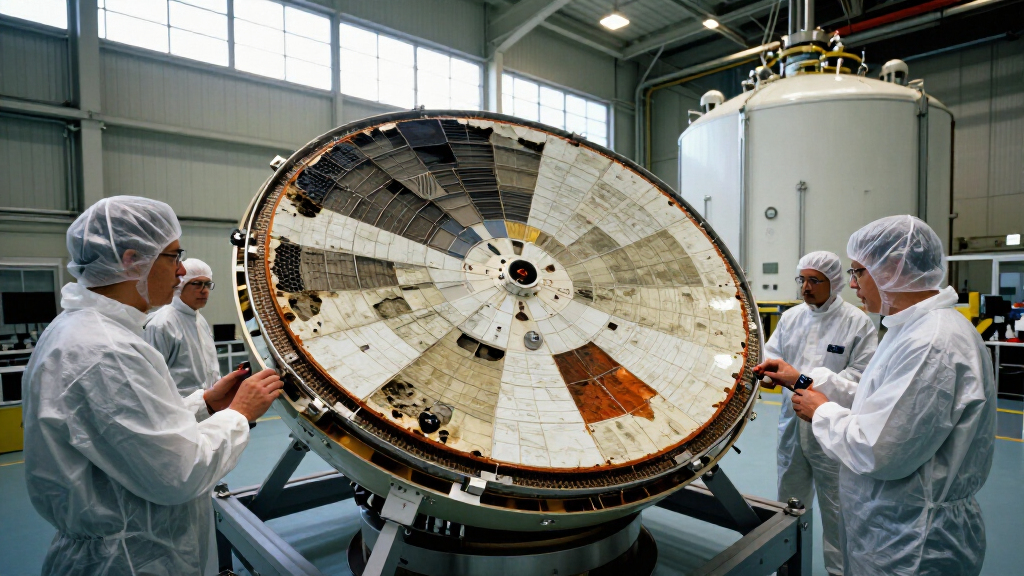
NASA’s KREPE-3 experiment sent 12 small instrumented capsules back to Earth aboard Northrop Grumman’s Cygnus XL cargo spacecraft. The capsules are designed to gather re-entry data on existing and experimental heat-shield materials, shapes and sensors that could inform future spacecraft protection.
NASA’s KREPE-3 experiment sent 12 small, instrumented capsules back toward Earth aboard a departing Northrop Grumman Cygnus XL cargo spacecraft, using its planned atmospheric re-entry to test heat-shield materials and designs. The flights are intended to collect data that may help researchers develop thermal protection for future spacecraft and missions to the Moon, Mars and other destinations.
Before the spacecraft left the International Space Station, astronauts loaded it with waste and activated the 12 experimental capsules inside. As the cargo vehicle follows its planned route and breaks apart in Earth’s atmosphere, the capsules are designed to eject and gather measurements. Their sensors will record temperature, pressure, motion, magnetic field and light; satellite signals are intended to relay data to researchers during the flight.
The capsules carry a mix of established materials and experimental approaches. Some include space-shuttle ceramic tile technology, while others are set to test a 3D-printed heat shield developed through NASA’s Additive Manufacturing of Thermal Protective Systems project with Oak Ridge National Laboratory. NASA Ames is contributing two capsules with MERINO, a family of flexible protective materials made from stitched layers of carbon and phenolic fibers. The agency says the materials may be faster and less expensive to produce than traditional options.
Other capsules focus on structures and measurement, not only material performance. A dual-cone experiment combines a tungsten tip and heat-resistant layers with MERINO to compare real flight data against computer models. Another capsule resembles the aeroshell design intended for NASA’s Dragonfly mission to Titan and will test its stability. A separate unit will test an umbrella-shaped deployable heat shield designed to increase surface area and slow descent. The payload also includes work by domestic and international partners, including a heat-flux sensor developed at the University of Stuttgart.
Flight Data for Future Heat Shields
Heat shields protect spacecraft and their contents from the intense heating that occurs during atmospheric entry. Measurements from a real flight can help researchers understand how candidate materials and designs perform under re-entry conditions, and can provide evidence for testing and improving computer models. That information is relevant to future missions whose spacecraft must enter an atmosphere while carrying crew, instruments or other payloads.
The approach also makes use of a cargo spacecraft that is already returning to Earth and is scheduled to break apart. NASA materials engineer Keith Peterson described KREPE-3 as a way to obtain flight data by hitching a ride on a vehicle already coming home. This can let researchers test several concepts on one mission rather than requiring a dedicated spacecraft for each experiment. The experiment is a research test, however, not proof that any one material is ready for operational use.
Some of the work has a specific potential application: NASA says the lighter protection under study could be promising for Mars missions, where the thinner atmosphere produces lower heat loads than denser atmospheres. Deployable shields could also make it possible to slow and protect payloads that are too large to fit inside a conventional launch vehicle fairing. Whether these concepts meet mission requirements will depend on the data and further development.
As an affiliate, we earn on qualifying purchases.
A Third Kentucky Re-entry Experiment
KREPE-3 is the third in a series of experiments that use the final part of a cargo spacecraft’s service life to collect re-entry data. NASA describes the project as a collaboration involving the University of Kentucky, the state of Kentucky, NASA’s Established Program to Stimulate Competitive Research, several NASA centers, and federal and commercial partners. University of Kentucky students designed the capsules.
The research draws on a range of prior NASA thermal-protection work. The source report says the Phenolic Impregnated Carbon Ablator on one capsule was developed at NASA Ames and has flown on Stardust, Mars Science Laboratory and Mars 2020. KREPE-3 pairs such established materials with newer concepts so researchers can compare them and examine designs under actual re-entry conditions. The experiment does not itself constitute a flight test of a complete crewed heat shield.
thermal protection materials for spacecraft
As an affiliate, we earn on qualifying purchases.
As an affiliate, we earn on qualifying purchases.
Results Await Re-entry Data
The source report describes what the capsules are designed to test, but does not provide re-entry results, measurements or a timetable for releasing findings. It is not yet clear which capsules successfully eject, transmit data or return usable readings, or how the tested materials compare under flight conditions. Their planned deployment and data collection should not be treated as confirmed outcomes until NASA reports them.
The report also does not quantify the cost savings, production-time reductions or performance advantages associated with the experimental materials. NASA describes MERINO as faster to produce and less expensive than traditional protective materials, and calls some approaches promising, but it gives no comparative figures or qualification results here. Further engineering and mission-specific testing would be needed before drawing conclusions about operational use.
re-entry heat shield simulation models
As an affiliate, we earn on qualifying purchases.
As an affiliate, we earn on qualifying purchases.
NASA Researchers Analyze Capsule Readings
The next milestone is the capsules’ planned deployment and data collection during the Cygnus XL’s atmospheric re-entry. If signals are received, researchers can examine sensor readings for evidence about heating, movement and the behavior of different materials and shapes. NASA has not specified in the source report when preliminary or final results will be published.
Researchers will then need to interpret the readings and compare them with models and other test results. Any promising designs would require additional development and qualification for the conditions of a particular mission. For readers, the immediate question is whether the small capsules return useful data; the longer-term question is whether that evidence supports heat shields suitable for future spacecraft and payloads.
As an affiliate, we earn on qualifying purchases.
Key Questions
What is NASA’s KREPE-3 experiment?
KREPE-3 is the third Kentucky Reentry Probe Experiment. It consists of 12 small capsules designed to collect data on heat-shield materials, designs and sensors during a cargo spacecraft’s planned atmospheric re-entry.
What will the capsules measure?
The capsules are equipped to measure temperature, pressure, motion, magnetic field and light. NASA says satellite signals are intended to send live data to researchers during re-entry.
Which heat-shield technologies are being tested?
The payload includes established ceramic tile and ablative materials, a 3D-printed shield, NASA Ames’ MERINO protective layers, a deployable umbrella-shaped shield, and different capsule shapes and sensors. The tests examine both materials and designs.
Are the experiment’s results available?
The supplied NASA report describes the mission and what the capsules are intended to test, but gives no measurements or results. The success of capsule deployment and data transmission, and the performance comparisons, remain to be reported.
Does KREPE-3 prove these shields are ready for crewed missions?
No. KREPE-3 is a technology test intended to gather flight data. Any material or design considered for a future mission would need further analysis and mission-specific development and qualification.
Source: primary
Fall Picks
fall essentials
As an affiliate, we earn on qualifying purchases.