
TL;DR

Prime made for students and young adults
- Fast, free delivery for dorm and study essentials
- Prime Video and Amazon Music included
- Member-only deals
A September 2026 design project introduces the Lightbulb Computer, a speculative device combining a projector and computer vision in a bulb-shaped form. Demonstrations use a real but bulky prototype; the creator says a consumer version is not yet practical and raises privacy safeguards as a core requirement.
A design project published in September 2026 presents the Lightbulb Computer, a speculative home-computing device that combines a projector and computer vision to display digital information on nearby surfaces. Its creator says the demonstrations use a real but bulky prototype, while a consumer-ready version is not yet feasible.
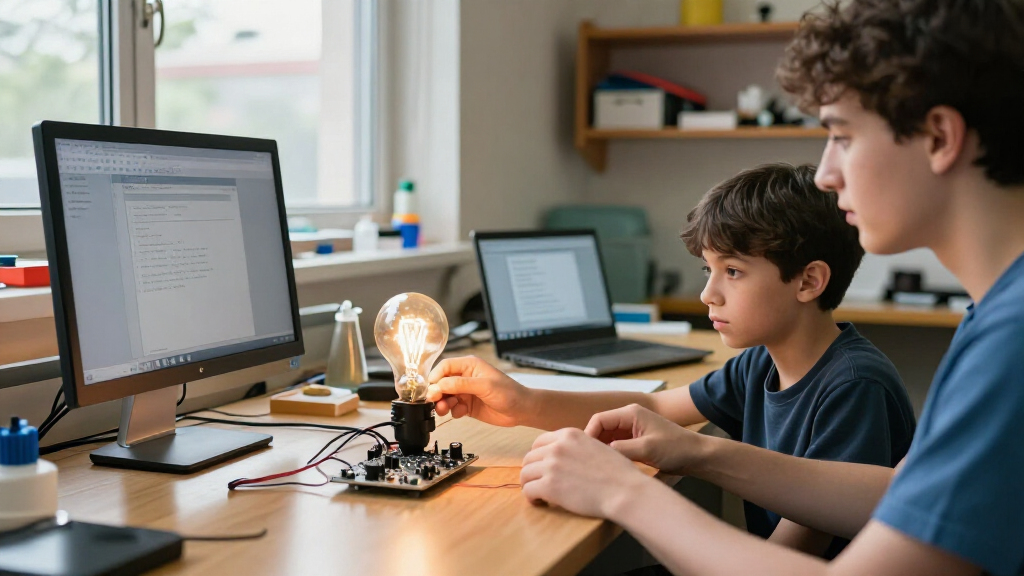
The concept puts a projector and camera system in a large lightbulb-shaped unit. It could sit in a portable, lamp-like battery base or be installed in an Edison-style socket for a room-scale setup. The project argues that a ceiling-mounted position could provide a view across a room and let the device project onto different surfaces.
In the project’s demonstrations, the system responds to voice commands, interprets where a user is pointing, analyzes what its camera sees and projects digital content onto real objects or surfaces. Suggested uses include displaying recipes and timers in a kitchen, answering questions about reading material, and showing a map that people can explore together with simple gestures.
Other examples include projecting photos sent from a phone, pointing at smart-home devices to control them, displaying household reminders and placing information over a physical map. The creator says the videos show a real prototype setup, not edited footage or AI-generated scenes, but also describes the prototype as bulky. These examples establish what the setup can demonstrate, not that every proposed use has been tested or works reliably in everyday settings.
The proposal shifts computing away from a personal screen and toward projected information in shared spaces. That could let more than one person view a map, photo or schedule at once, and could make some tasks easier when a phone is inconvenient to handle, such as following a recipe with wet or flour-covered hands.
It also offers a different design direction from head-mounted displays, which the project describes as physically constraining and socially awkward. A projector-based device would avoid putting a screen on a person’s face, but it would bring its own trade-offs: projected content depends on the room, the surface and the device’s ability to see and interpret its surroundings. The report does not provide comparative testing, so the examples should be read as a design vision rather than evidence that it is more usable than phones or headsets.
The idea’s reach would depend on how well projection and computer vision work outside controlled demonstrations. Brightness, image clarity, camera accuracy, response speed and ease of interaction would affect whether the system is useful across different rooms and surfaces. The project identifies advances in these technologies as reasons the concept may become more practical, but does not publish performance measurements or a product timeline.
As an affiliate, we earn on qualifying purchases.
From Bulky Prototype to Home Concept
The project frames the Lightbulb Computer as an alternative to keeping digital information on phones, tablets and laptops, or moving it into wearable displays. Its central design choice is to make the projector part of a familiar household fixture: the lightbulb socket. The creator says standard sockets could offer a convenient mounting point, while a portable base would let people move the unit between rooms.
The proposal draws on two technology areas the report says have advanced: computer vision, which can interpret visual information, and compact, bright, high-resolution projectors. But the report does not identify a commercial product, manufacturer, technical specifications, price or release date. It presents a series of design prototypes and use-case demonstrations, not an announcement of a device available for purchase.
Privacy is a stated design concern because the system would use a camera in domestic spaces. The creator suggests safeguards such as processing data on the device, a physical camera cover, and a hard-wired indicator light that would show when the camera is active. These are proposed measures; the report does not describe an implemented privacy system or an independent security assessment.
“I don’t think the technology is quite there yet to build a consumer version of this Lightbulb Computer today, but I also don’t think we’re too far off.”
— The Lightbulb Computer project
As an affiliate, we earn on qualifying purchases.
Usability and Privacy Still Unproven
The report does not give technical specifications, independent test results, a price or a schedule for a consumer version. It is not clear how the prototype performs in rooms with different lighting, ceiling heights, wall colors or clutter, or how consistently it identifies the object a user points toward. Nor does the material establish how quickly the system responds across the range of proposed tasks.
The privacy controls described are recommendations, not confirmed product features. Details about data storage, whether images or voice recordings leave the device, software updates, access controls and protection against misuse are not provided. The report also does not say whether people beyond the project creator have tested the system or how it handles errors in reading, object recognition or smart-home control.
The project’s broader claims about making computing more natural or social remain design arguments, not measured findings. Whether projected interfaces reduce distraction, work better for shared activities or prove less intrusive than existing screens would require testing with users in ordinary homes.
As an affiliate, we earn on qualifying purchases.
No Consumer Release Date Given
The published piece offers a design direction and demonstrations; it does not announce a product launch, funding, a manufacturing partner or a public testing program. The creator says that projector and computer-vision improvements may bring the concept closer to feasibility, but gives no dated milestone for a more compact or consumer-ready version.
Any further development would need to show how the device works across real household environments and explain its privacy protections in concrete terms. Until the project publishes additional specifications or announces testing or commercialization plans, the Lightbulb Computer remains a prototype-led concept, rather than a product with a confirmed path to market.
As an affiliate, we earn on qualifying purchases.
Key Questions
What is the Lightbulb Computer?
It is a speculative computing concept that combines a projector and computer vision in a bulb-shaped device. The idea is to project digital information onto surfaces in a home and let users interact through voice and pointing.
Is it available to buy?
No availability or release date is announced in the September 2026 project. Its creator says the demonstrations use a bulky prototype and that a consumer version is not ready today.
What can the prototype demonstrate?
The project shows examples including projected recipes, maps, photos, reminders and controls for smart-home devices. The report says the footage comes from a real setup, but does not establish that every proposed feature has been tested for reliable everyday use.
What privacy protections are proposed?
The creator points to on-device processing, a physical camera cover and a hard-wired indicator light as possible safeguards. The report does not confirm that these measures are implemented or provide details on data handling.
Source: hn
Fall Picks
fall essentials
As an affiliate, we earn on qualifying purchases.