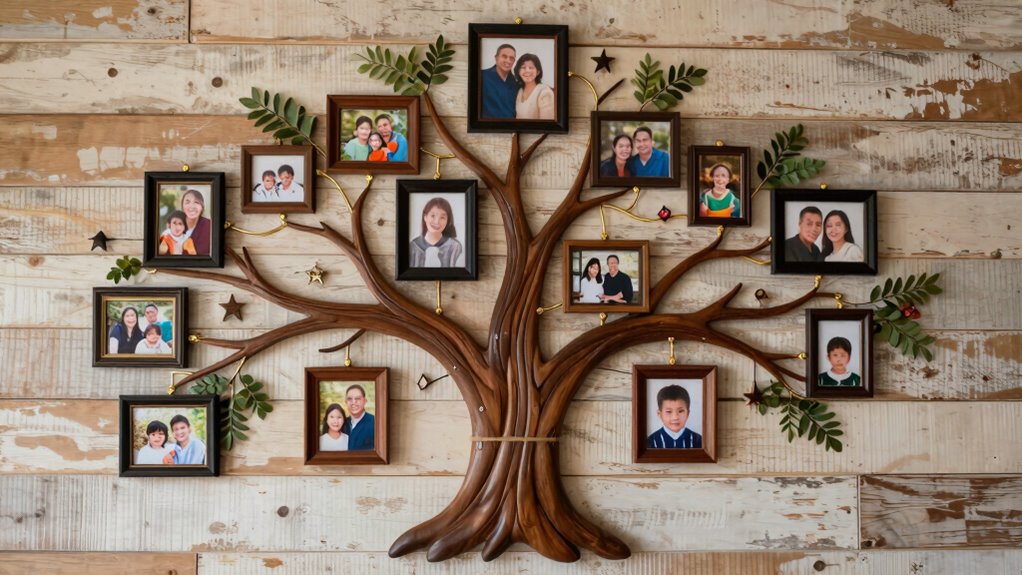

To display a blended family tree thoughtfully, organize relationships clearly using visual cues like different line styles and colors for biological, step, and half-siblings. Communicate with family members to guarantee accuracy and respect sensitivities. Keep the design simple to avoid overload and prioritize the most key relationships. Use a format that’s easy to update as your family evolves. For detailed tips on creating a respectful and clear family tree, you’ll find helpful insights if you continue exploring further.

Prime made for students and young adults
- Fast, free delivery for dorm and study essentials
- Prime Video and Amazon Music included
- Member-only deals
Key Takeaways
- Use distinct visual cues like colors and line styles to clearly differentiate biological, step, and half-sibling relationships.
- Involve family members in the design process to ensure respectful and accurate representation.
- Choose a flexible format, such as a digital diagram, for easy updates and ongoing family changes.
- Highlight important connections while simplifying complex relationships to enhance clarity.
- Maintain the family tree as a living document, regularly updating to reflect new developments and family dynamics.
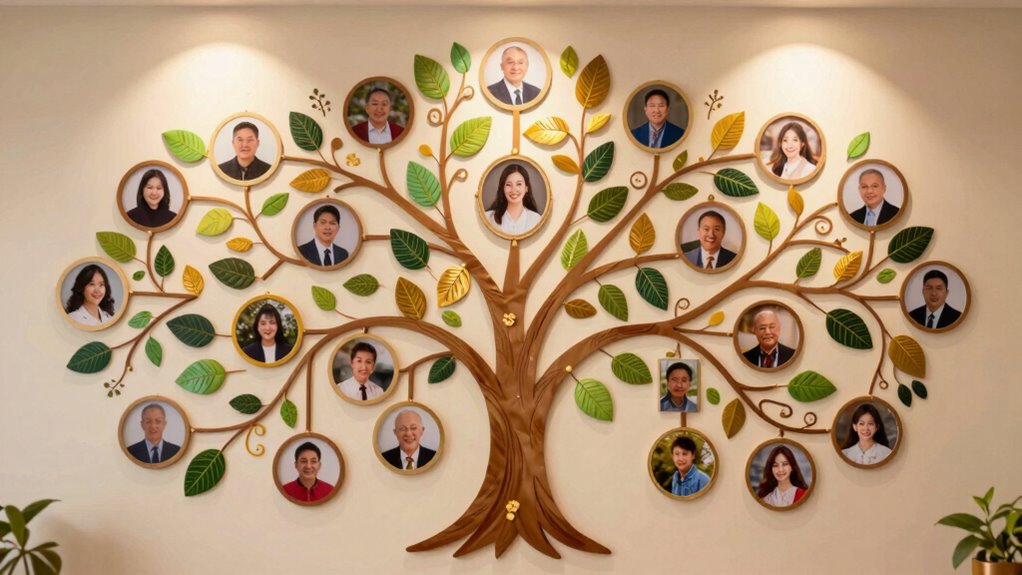
Ever wondered how to clearly showcase the complex relationships in a blended family? Creating a family tree that captures the nuances of your unique situation can feel overwhelming, but with some careful planning and step-by-step guides, you can develop a visual that respects everyone’s roles and connections. The key is to approach this project thoughtfully, recognizing common challenges like sensitive relationships, varying levels of involvement, and blended histories. By addressing these head-on, you can build a family tree that’s both accurate and considerate.
Start by gathering detailed information about your family members. List all biological parents, stepparents, children, and any other significant figures involved in your blended family. Clarify the relationships—who’s married, divorced, or separated—and note any special circumstances, such as half-siblings or adopted children. This initial step helps you understand the scope and complexity of your family network. From there, you can choose a format that best suits your needs, whether it’s a traditional chart, a digital diagram, or a creative visual like a collage. Understanding family structure can help you better communicate the connections and distinctions within your family. Additionally, considering family dynamics can support a more comprehensive and respectful representation. Incorporating family history can also enrich your understanding of how your relationships have evolved over time. Recognizing family relationships in detail can facilitate a more accurate and inclusive depiction.
When designing your family tree, keep clarity in mind. Use different shapes, colors, or lines to distinguish between biological relationships, step-relations, and adopted connections. For example, solid lines can represent biological ties, while dashed lines show step-relationships. This visual differentiation helps everyone understand the family structure at a glance, reducing confusion or misinterpretation. Remember, simplicity is key—don’t overload the chart with too much detail. Instead, focus on the most important relationships that define your family’s dynamic.
Address common challenges by being considerate of sensitive emotions. Some family members might feel uncomfortable with certain labels or placements, so it’s important to communicate openly and involve them in the process when appropriate. You might also encounter disagreements about how to depict certain relationships. Approach these conversations with empathy and flexibility, emphasizing that the goal is to create a respectful, accurate portrayal that honors everyone’s role.
Finally, keep your family tree accessible and updated. Whether you keep a physical chart on the wall or a digital version, make sure it’s easy for family members to view and modify as your family evolves. This ongoing process ensures the tree remains a living, accurate reflection of your blended family’s journey. By following these steps and being mindful of common challenges, you can create a thoughtful, clear representation of your family’s intricate relationships that celebrates your unique story.
As an affiliate, we earn on qualifying purchases.
Frequently Asked Questions
How Do I Include Step-Siblings in the Family Tree?
To include step-siblings in your family tree, use family connection symbols like dashed or dotted lines to show their step relationship clearly. You can place step-siblings on the same level as biological siblings but connect them through a different symbol or color to distinguish the blended connection. This approach respects their unique bond while maintaining an organized, thoughtful display of your blended family.
Should I Show Ex-Spouses or Just Current Family Members?
You should focus on current family members to respect privacy considerations and reflect your family dynamics accurately. Including ex-spouses might complicate the tree and cause unnecessary discomfort, so it’s best to omit them unless they are central to understanding relationships. Prioritize clarity and sensitivity, showing only those members who are actively part of your family today. This approach fosters understanding, preserves privacy, and celebrates your present family structure.
How Can I Make the Tree Respectful of Everyone’s Feelings?
To make the family tree respectful of everyone’s feelings, use emotional sensitivity and inclusive language. Focus on highlighting each person’s role and connections without emphasizing past relationships or ex-spouses. You can include step-siblings and half-siblings with neutral labels, ensuring no one feels excluded or uncomfortable. Keep the design simple and positive, and consider involving family members in the process, showing that you’re respectful of their feelings and the family’s unique story.
What Tools Are Best for Creating a Blended Family Tree?
You stumble upon a family photo that perfectly captures your blended family’s unique bond, inspiring you to create a thoughtful display. To do this, use interactive software with custom templates, making it easy to personalize and visualize your family history. These tools help you craft a respectful, meaningful family tree that honors everyone’s story, ensuring each member feels valued and included in your family’s legacy.
How Do I Handle Complex Relationships Like Half-Siblings?
To handle complex relationships like half-siblings, use genogram symbolism to clearly differentiate relationships, such as dashed lines for half-siblings. Be mindful of cultural considerations, respecting specific family structures and traditions. You can also include notes or color codes to highlight unique connections. This approach guarantees your family tree remains respectful, accurate, and easy to understand, fostering understanding among all family members.
As an affiliate, we earn on qualifying purchases.
Conclusion
Creating a blended family tree is like weaving a tapestry—each thread representing a unique story coming together to form a beautiful whole. By thoughtfully displaying your family’s diverse roots, you honor every bond and background. Remember, the way you portray your family reflects its love and resilience. Embrace the complexity with kindness and patience; in doing so, you’ll nurture a family bond stronger than any single thread, holding everyone together in a shared, vibrant masterpiece.
As an affiliate, we earn on qualifying purchases.
As an affiliate, we earn on qualifying purchases.
Halloween Picks
halloween
As an affiliate, we earn on qualifying purchases.