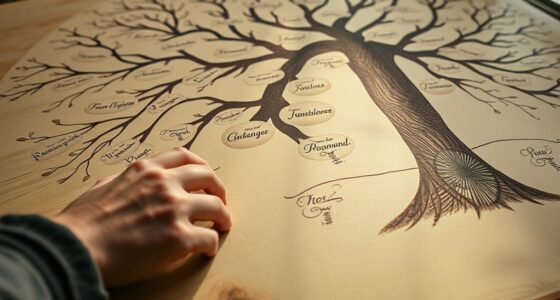
A simple mistake in name order can quickly undermine the beauty and authenticity of your family tree gift. If you swap given names with surnames or overlook cultural naming conventions, it can cause confusion and misrepresent family relationships. This not only affects the accuracy but also diminishes the emotional value of your gift. To guarantee your family history remains genuine and respectful, it’s important to spot and fix these errors early—there’s more to discover on how to do that properly.
Key Takeaways
- Incorrect name order can distort familial relationships and historical accuracy in the family tree.
- Misplaced names may cause confusion and diminish the tree’s visual and informational integrity.
- Cultural name order errors undermine authenticity and disrespect heritage traditions.
- Fixing name order mistakes promptly preserves the family’s legacy and trustworthiness.
- Accurate, culturally respectful naming practices ensure the family tree remains meaningful and error-free.
Why Proper Name Order Matters in Your Family Tree Gift
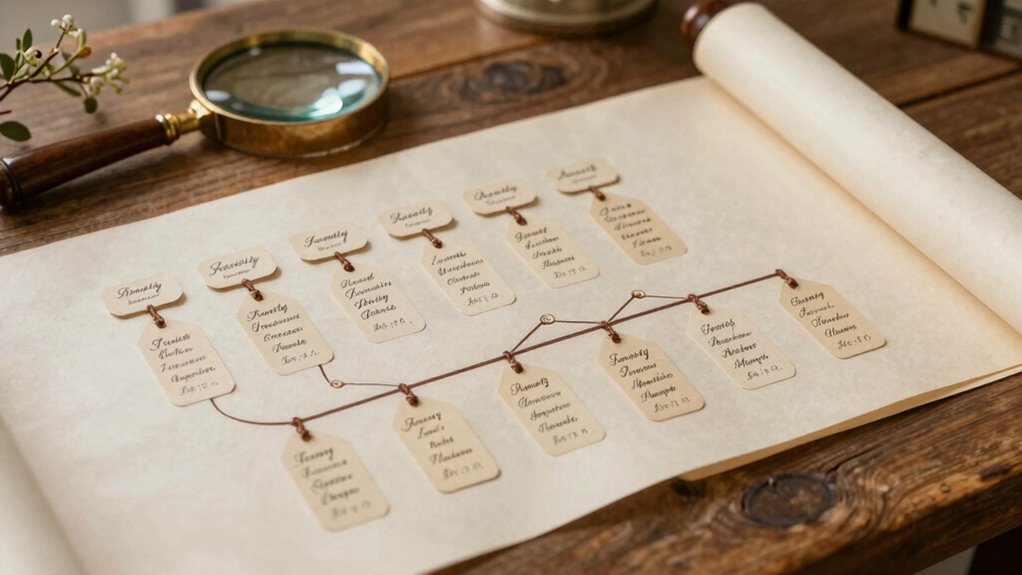
Understanding the correct name order is essential because it guarantees your family tree gift accurately reflects each person’s identity and relationships. Cultural naming customs vary widely; some traditions place the family name first, while others prioritize the given name. Ignoring these customs can lead to confusion or inaccuracies in the family tree. Additionally, modern naming trends influence how names are presented, often blending traditional order with contemporary styles. Recognizing these differences helps assure that each individual’s name is correctly recorded, honoring their heritage. Proper name order not only preserves historical accuracy but also respects personal and cultural identities. When you pay attention to these details, your family tree becomes a more meaningful and precise reflection of your family’s unique story. name order practices are important to consider to ensure the integrity of your genealogy documentation. Understanding Cultural naming customs helps prevent misrepresentation and honors diverse heritages. Being aware of naming conventions across different cultures can further enhance the accuracy of your family history records, especially as global migration increases the diversity within family trees.
Common Family Tree Name Order Mistakes and How They Happen
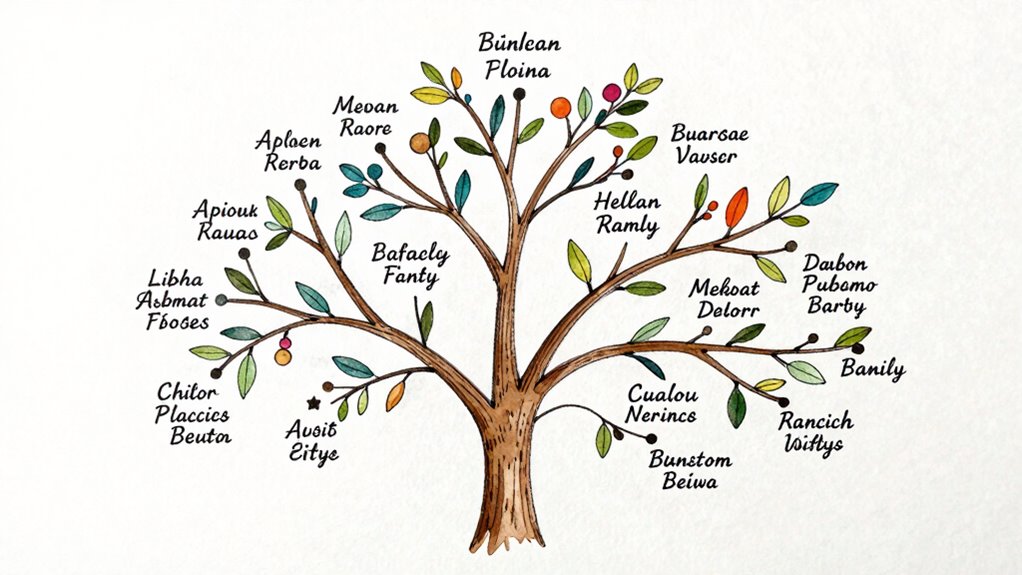
One of the most common mistakes in family tree names occurs when people confuse the traditional order of given names and surnames, especially with cultural variations. This can happen when you overlook name diversity across cultures, leading to misinterpretations. For example:
| Western Naming | East Asian Naming |
|---|---|
| John Smith | Chen Wei |
| Maria Lopez | Kim Min-jun |
| Robert Brown | Lee Ji-hye |
In these cases, Western names typically follow given name-surname order, while many Asian cultures reverse this. Misplacing these can cause confusion and inaccuracies in your family tree, so understanding cultural variations helps preserve both authenticity and clarity.
How Incorrect Name Placement Affects Family History Accuracy

When names are misplaced in your family tree, records become skewed, making it harder to trace accurate lineage. This misplacement can also cloud genealogical clarity, leading to confusion about relationships and origins. Correct name placement is essential to preserving the integrity of your family history. Implementing proper storage and organized record-keeping can help maintain accurate information over time. Additionally, understanding the contrast ratio in your records can enhance the clarity and accuracy of historical details. Recognizing how cryptid mysteries influence local folklore can also add depth to your family stories, especially if ancestors contributed to regional legends or sightings. Paying attention to record accuracy ensures that your family tree remains a reliable source for future generations.
Misplaced Names Skew Records
Have misplaced names in family records ever led you astray? Incorrect placement can distort your family history, making it hard to trace ancestors accurately. When names are swapped or misplaced, it:
- Obscures connections between generations, causing confusion.
- Misrepresents cultural naming customs, leading to misunderstandings.
- Disrupts the timeline, making records seem out of order.
- Skews data, impacting the authenticity of family stories.
Modern naming trends add complexity, with names changing or blending over time. These shifts, combined with misplaced names, can create inaccuracies that ripple through your records. Clear, correct placement guarantees your family history remains true, reflecting both cultural roots and authentic lineage.
Impact on Genealogical Clarity
Misplaced names don’t just muddle family records—they directly undermine your ability to see a clear, accurate picture of your family history. Incorrect name placement can distort relationships, especially when cultural naming customs are involved, making it harder to trace lineage accurately. For example, in cultures where family names appear first or last, mixing these up can lead to confusion about parentage or marriage connections. Additionally, historical name changes—such as name alterations due to migration, marriage, or political shifts—become even more confusing if names are incorrectly ordered. This confusion hampers genealogical clarity, making it difficult to verify ancestors, build reliable family trees, or understand cultural heritage. Accurate name placement is essential to preserving the integrity of your family history.
Why Name Errors Diminish the Sentimental Value of Your Gift

Even small name errors can considerably reduce the emotional impact of your gift. When names are incorrect, it can feel like a missed opportunity to honor family roots and personal name preferences. Such mistakes can:
- Disrespect cultural naming traditions, making recipients feel unheard or misunderstood.
- Diminish the authenticity, causing the gift to seem careless or rushed.
- Disrupt the emotional connection tied to family history, weakening its sentimental value.
- Leave relatives feeling overlooked, which can diminish the sense of pride and belonging tied to the family tree.
- Detecting and correcting passive voice can make your writing clearer and more engaging, ensuring your message is communicated effectively.
Correct names show respect and attention to detail, reinforcing the sentimental significance. When you honor personal preferences and cultural traditions, your gift becomes a heartfelt tribute that truly resonates.
Tips for Collecting Accurate Family Names From Relatives
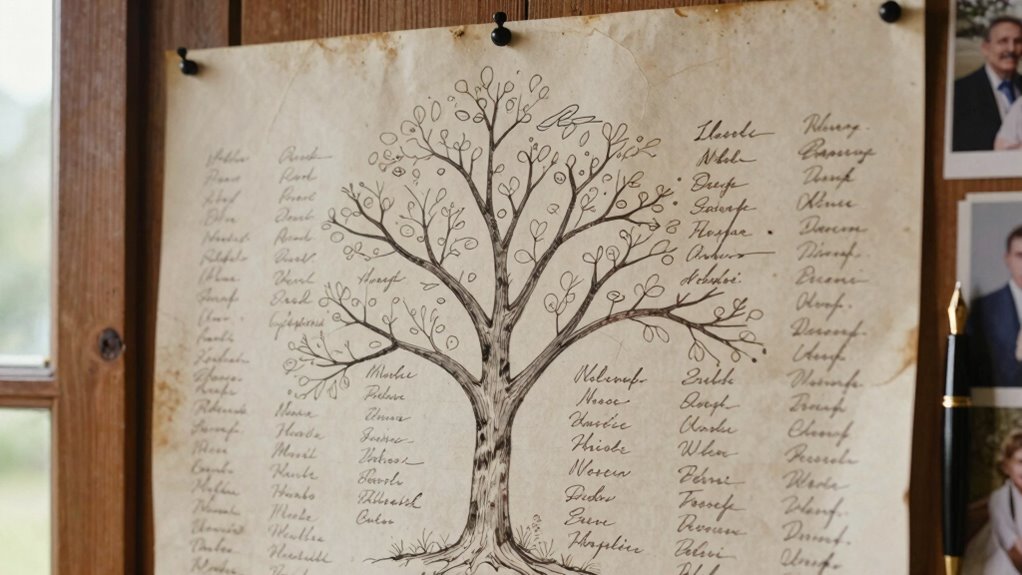
Gathering accurate family names from relatives can be straightforward if you ask clear, specific questions and verify the information you receive. Respect naming traditions and be aware of cultural differences that influence how names are passed down or recorded. To avoid confusion, create a simple chart like this:
| Relative | Name Provided | Notes on Cultural Differences |
|---|---|---|
| Grandfather | John Smith | Traditional Western naming |
| Aunt | María López | Hispanic naming conventions |
| Great-grandmother | Wei Chen | East Asian surname order |
| Cousin | Amina Khatun | Middle Eastern naming practices |
Use this table to cross-check details, clarify inconsistencies, and ensure accuracy. Recognizing cultural differences helps preserve the true heritage behind each name, preventing mistakes that could compromise your family tree’s authenticity. Being aware of cultural naming practices can further enhance the accuracy of your research. Additionally, understanding naming conventions specific to each culture can help you interpret and record names correctly.
Best Practices for Organizing and Labeling Names in Your Family Tree
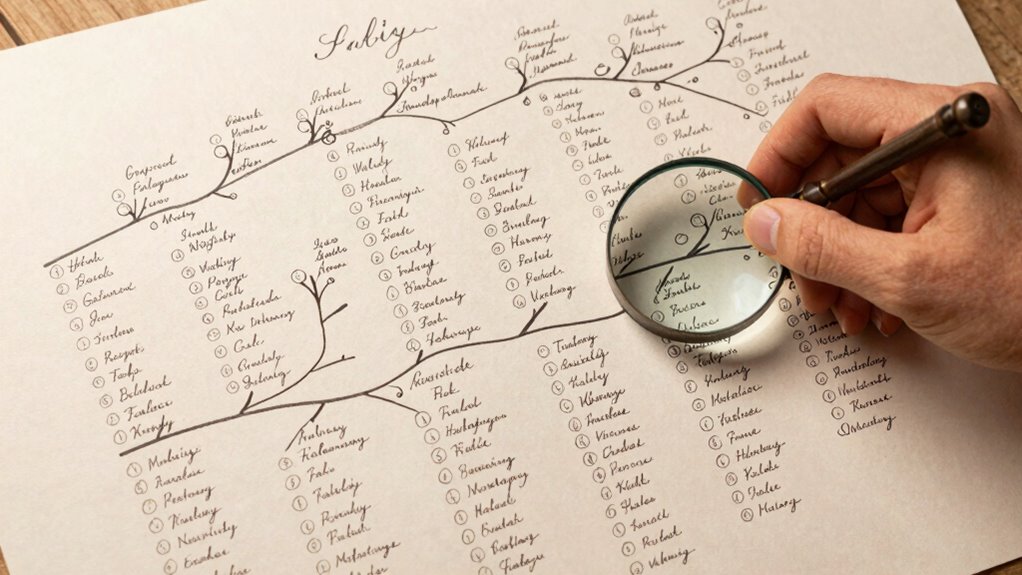
To keep your family tree clear, you should establish consistent naming conventions for all entries. Use clear labels that specify relationships and avoid abbreviations that could cause confusion. Regularly formatting names ensures your family history stays organized and easy to understand.
Standardize Naming Conventions
Establishing consistent naming conventions is essential for maintaining an organized and easily navigable family tree. By standardizing how you record names, you honor cultural naming customs and adapt to modern naming trends. To guarantee clarity, consider these best practices:
- Use a uniform format, such as First Name, Last Name, Middle Name, to prevent confusion.
- Respect cultural naming customs by including initials or traditional order.
- Keep naming styles consistent across generations to preserve family identity.
- Update naming conventions as trends evolve, balancing tradition with modern preferences.
- Incorporate naming conventions from reliable sources to ensure accuracy and respect for diverse traditions. Additionally, utilizing tools to convert text styles can help maintain uniformity in how names are documented. Regularly reviewing and standardizing naming practices can prevent inconsistencies from developing over time. Being aware of cultural naming customs ensures that your family tree accurately reflects the heritage and traditions of your ancestors.
Following these steps helps you create a family tree that feels authentic, respectful, and easy to follow—avoiding mistakes that could misrepresent loved ones or cause frustration.
Use Clear Labels
Once you’ve standardized your naming conventions, the next step is to organize your family tree with clear, descriptive labels. Using labels helps you quickly identify individuals, relationships, and key details. Avoid falling into genealogy myths that suggest overly complex or confusing labels—simplicity works best. Embrace family name diversity by clearly distinguishing different surnames, especially in cases of marriage or name changes. Use full names, birth and death dates, and relation descriptors to prevent confusion. When labels are clear and specific, you reduce the risk of misreading or misplacing someone’s position in the tree. Incorporate effective organization techniques to streamline your genealogy process and enhance clarity. Implementing standardized naming conventions can further improve consistency and understanding. Additionally, adopting naming conventions used in other organized systems can help you maintain clarity as your family tree grows. This clarity makes your family history more accessible and meaningful for everyone exploring your genealogy, ensuring the gift remains beautiful and accurate.
Maintain Consistent Formatting
Maintaining consistent formatting across your family tree is essential for clarity and ease of understanding. When you guarantee uniformity, you improve family history accuracy and make it easier for others to follow your lineage. Here are four ways to achieve this:
- Use the same font, size, and style for all names to create visual harmony.
- Follow a consistent name order (e.g., first name then last name) to prevent confusion.
- Keep dates, places, and relationships in the same format throughout.
- Apply uniform labeling conventions for titles, suffixes, and maiden names.
Essential Tools and Templates for Managing Family Tree Names

Are you struggling to keep family names organized in your tree? Using the right tools and templates can make a big difference. Family traditions and naming conventions vary, so having a clear system helps you stay consistent. Consider using spreadsheet templates designed for genealogical data, which allow you to input names, dates, and relationships systematically. Family tree software also provides customizable templates that respect naming conventions and highlight potential errors. These tools help you track name order, avoid mistakes, and guarantee your tree accurately reflects your heritage. Additionally, digital note-taking apps can store detailed notes on naming traditions, so you remember specific customs for each branch. With these tools, managing family names becomes straightforward, preserving your family’s history with accuracy and respect for traditions.
How to Spot and Fix Name Order Errors Before Printing
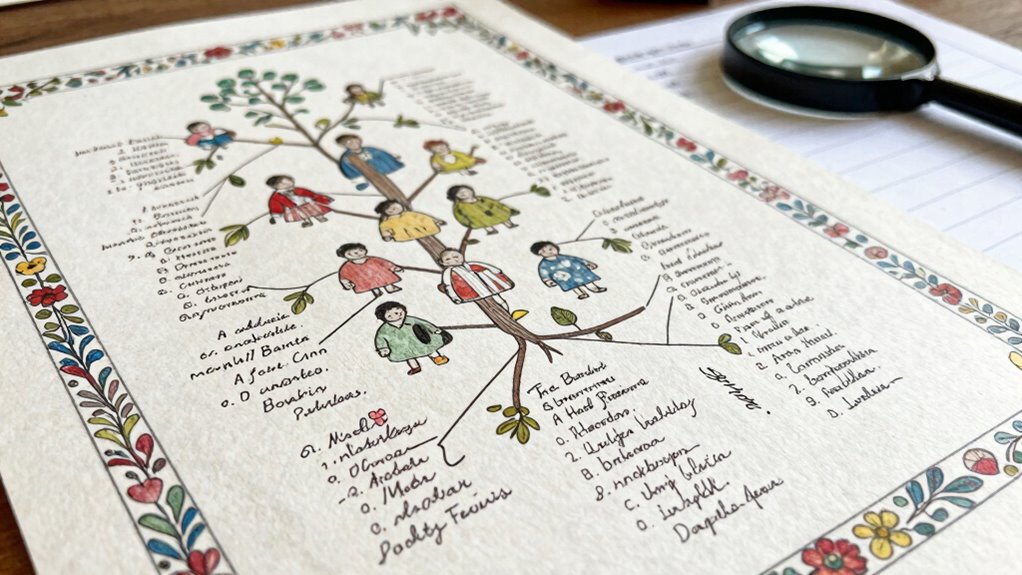
Before printing your family tree, it’s vital to verify the name sequences carefully. Double-check each name to guarantee the order is correct and consistent throughout the document. Taking these extra steps helps prevent embarrassing mistakes and saves you from reprinting later. Additionally, ensuring that skincare product details are accurate can help avoid confusion if the family tree includes references to related names or titles. Being aware of best woods for farmhouse tables can be helpful if your family tree incorporates historical or property details related to family residences. Incorporating creative storytelling for branding into your family history presentation can also make the final display more engaging and memorable.
Verify Name Sequences
How can you quickly identify if names are in the wrong order on your family tree gift? Look closely at the sequence of each name, considering naming traditions and cultural variations. Mistakes often happen when unfamiliar with cultural norms. To verify sequences:
- Check if the given name appears before the family or surname, especially in cultures where this order varies.
- Confirm that the order respects traditional naming practices—some cultures place the family name first.
- Cross-reference names with reliable sources or family records to spot inconsistencies.
- Ask family members familiar with cultural naming conventions to review the list.
- Understanding the definition of tableware and related terminology can help avoid confusion when labeling or presenting family memorabilia.
- Being aware of electric bike speeds and how motor power influences performance can serve as a helpful analogy for understanding the importance of correct name sequencing in preserving cultural accuracy.
- Familiarity with philosophical insights on existence and ethics can deepen your awareness of the significance of cultural identities and naming traditions, ensuring respectful accuracy.
Double-Check Before Printing
Double-checking your family tree gift before printing is crucial to catching name order errors that could otherwise go unnoticed. It helps prevent mistakes that might clash with genealogy myths or misrepresent family name origins. Review each name carefully, ensuring the order reflects proper conventions—such as given names first, family names second. Use a table to verify spellings and order:
| Name | Correct Order |
|---|---|
| John Smith | John Smith |
| Maria Lopez | Maria Lopez |
| William Johnson | William Johnson |
This quick check guarantees accuracy and respect for naming traditions. Spotting errors early saves embarrassment and preserves the integrity of your family history. Double-checking guarantees your family tree gift is both beautiful and precise, especially considering local naming customs that may influence name order conventions.
What to Do if You Find Errors After Completing Your Family Tree

Discovering errors in your family tree after completing it can be frustrating, but it’s important to address them promptly. Correcting mistakes shows respect for genealogical ethics and preserves the integrity of family storytelling. Here’s what to do:
Finding errors after completing your family tree? Address them promptly to preserve integrity and honor your ancestors.
- Review your sources carefully to confirm the errors.
- Update the information with verified data, noting any changes.
- Communicate transparently with family members about the correction.
- Document the revision process for future reference.
Addressing errors quickly maintains trust and helps ensure your family history remains accurate. Mistakes happen, but handling them openly and responsibly reinforces your commitment to truth and respect for your ancestors. Your diligence preserves the legacy you’re creating for future generations.
Final Checklist to Ensure Your Family Tree Honors Your Legacy
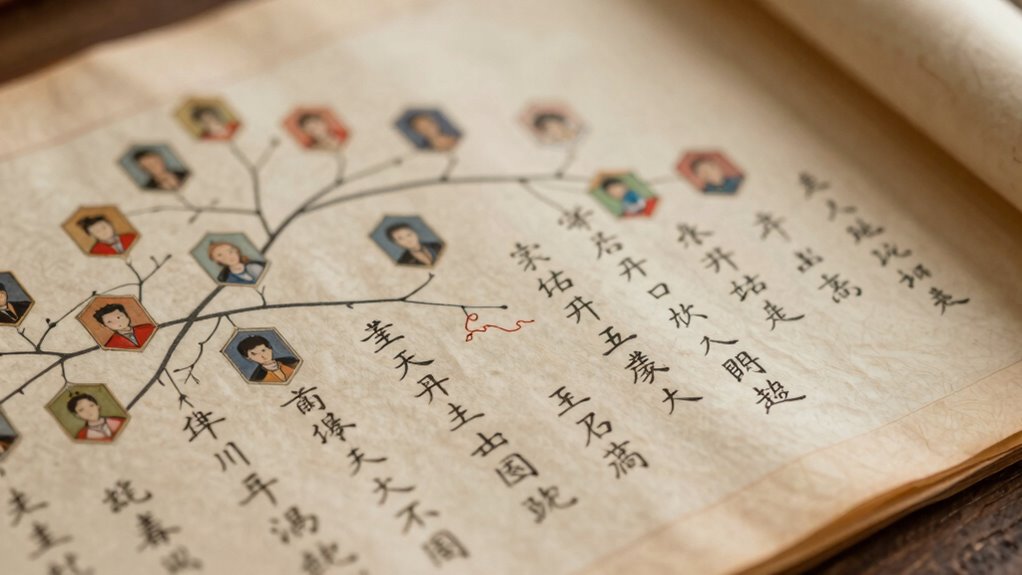
To guarantee your family tree truly honors your legacy, it’s essential to follow a final checklist that confirms every detail is accurate and thoughtfully presented. Start by verifying names against official records, paying attention to cultural naming traditions that may include patronymics or specific orderings. Check for consistency in spelling and formatting, especially if ancestors followed unique naming conventions. Consider modern naming trends to make sure your presentation feels relevant and respectful. Review the entire tree for accuracy, making sure birth and death dates align and that relationships are correctly mapped. Finally, add notes or explanations where cultural or historical context might be unclear. This thorough review ensures your family tree honors both tradition and modern understanding, creating a meaningful legacy for future generations.
Frequently Asked Questions
How Do I Verify the Correct Name Order With Relatives?
To verify the correct name order with relatives, follow proper genealogy etiquette by reaching out directly and respectfully asking about their preferred naming conventions. You can send a message or make a call, emphasizing your goal of ensuring naming accuracy. Double-check spellings and order, especially for formal documents and family trees. Clarify any cultural naming traditions, and confirm details to avoid mistakes that could impact the integrity of your family history project.
Are There Cultural Naming Conventions to Consider?
Yes, you should consider cultural naming customs and regional naming variations. Different cultures have unique conventions, like family name first or middle names adding significance. To avoid mistakes, ask relatives about their specific traditions or do some research on their cultural background. Being aware of these variations guarantees you correctly honor their naming practices, preventing errors that could detract from the beauty of your family tree gift.
What Software Options Are Best for Accurate Family Tree Labeling?
You should choose software like Family Tree Maker, RootsMagic, or Gramps, which prioritize genealogical accuracy and correct name formatting. These programs allow you to customize name order based on cultural conventions, reducing errors. They also help you verify data, ensuring your family tree is precise. By using the right software, you can avoid mistakes that might otherwise compromise the integrity of your family history and create a visually appealing, accurate family tree.
How Can I Prevent Future Name Order Mistakes?
You can prevent future name order mistakes by double-checking details against official records and communicating clearly with relatives about their preferred naming format. Be aware of generational differences and nickname inconsistencies that might cause confusion. Create a standardized template for your family tree, and verify each entry twice before finalizing. This way, you’ll avoid embarrassing errors and guarantee your family history remains accurate and respectful across generations.
Is There a Standard Format for Naming in Family Trees?
There isn’t a strict standard for naming in family trees, but many follow common conventions. Typically, you place the given name first, followed by the surname, aligning with naming traditions. Some cultures list the surname first, so it’s important to take into account your family’s naming customs. To avoid mistakes, confirm the surname placement and adhere to the preferred naming order, ensuring your family tree accurately reflects your family’s traditions.
Conclusion
Remember, paying attention to name order guarantees your family tree truly honors your ancestors. Imagine discovering a typo after printing—like mixing up your great-grandmother’s name, which could diminish her story’s significance. By double-checking details early, you preserve the integrity and sentimental value of your gift. Take the time now to verify every name—your family’s history deserves accuracy, and your effort will make your family tree a cherished keepsake for generations to come.