
Dutch names have rich meanings rooted in history, geography, and religion. Classic given names like Jan and Anna often come with familiar nickname forms such as Jan from Johan or Piet from Pieter. Surnames reveal family trades or places, like De Vries or Van den Berg. Many names draw inspiration from landscapes or religious traditions, with modern trends emphasizing unique and gender-neutral options. Explore further to uncover the fascinating stories behind these names and their cultural significance.
Key Takeaways
- Dutch names often derive from religious, geographical, or historical origins, reflecting cultural heritage and regional identity.
- Nickname forms are common, typically created through truncation or diminutive suffixes like Jan from Johan or Piet from Pieter.
- Many Dutch female names have affectionate diminutives such as Liesje for Liesbeth or Annie for Anna.
- Contemporary trends include unique, personalized, and gender-neutral names, influenced by societal shifts and self-expression.
- Surnames indicate occupations, places, or traits, serving as meaningful identifiers linked to family history and regional roots.
Classic Dutch Given Names and Their Origins
Have you ever wondered where classic Dutch given names come from? Dutch naming customs in modern society often reflect centuries-old traditions, with many names rooted in religious, historical, or linguistic origins. Names like Jan, Pieter, and Anna have deep roots in Dutch history, passed down through generations. However, the impact of immigration has introduced new influences, blending traditional Dutch names with those from other cultures. This mix enriches the naming landscape but also raises questions about maintaining cultural identity. Despite these changes, many families still choose classic Dutch names to honor their heritage. Understanding these origins helps you appreciate the cultural significance behind common names and how they continue to evolve in contemporary Dutch society. Additionally, naming customs often include the use of nicknames, which provide a more personal and informal way to address individuals while preserving their traditional names.
Popular Surnames and Their Historical Significance
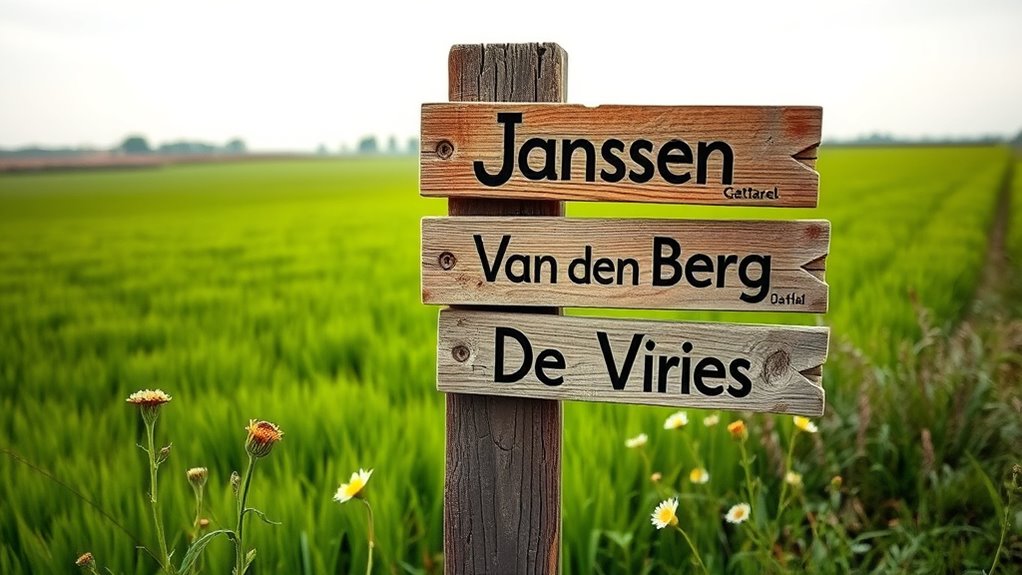
Your surname often reveals its origins and the history behind your family. Many common Dutch names reflect occupations, places, or traits from centuries ago. Understanding these names helps you see how historical influences shaped Dutch identity. Dreams of loved ones can also serve as a window into personal and cultural history, revealing deep-rooted traditions and beliefs.
Origins of Surnames
Many Dutch surnames reveal rich historical roots, often reflecting occupations, geographic origins, or personal traits. These surname origin stories showcase how names evolved over centuries, capturing cultural and social shifts. Understanding this helps you see how names like Janssen or Van den Berg originated from specific places or family roles. The surname evolution over centuries often involves spelling changes and adaptations, making tracing lineage fascinating. For example, consider the table below:
| Surname | Meaning | Origin Type |
|---|---|---|
| De Vries | The Frisian | Geographic |
| Visser | Fisher | Occupational |
| Brouwer | Brewer | Occupational |
This table illustrates how popular surnames reveal their roots, emphasizing the historical significance behind each name’s development over time. Recognizing surname origins can offer deeper insights into family histories and regional backgrounds.
Common Family Names
Dutch family names carry significant historical meaning, often reflecting the occupations, regions, or traits of ancestors. Today, Dutch naming customs in contemporary society still honor these traditions, but globalization influences how names are chosen and adapted. Common surnames like De Vries, Jansen, and Van den Berg highlight regional and occupational origins that have persisted over generations. However, modern trends show a blending of traditional names with international influences, making some surnames more diverse. The impact of globalization introduces new naming patterns and sometimes leads to the adoption of foreign names or variations. Despite these changes, many Dutch families maintain their traditional surnames, preserving their cultural heritage while adapting to an increasingly interconnected world.
Historical Influences
Have you ever wondered how Dutch surnames reveal the country’s rich history? The evolution of Dutch naming conventions over centuries reflects societal changes and cultural influences. Historical events, like wars and migrations, profoundly impacted surname development. For example:
- Patronymic names, derived from fathers’ names, became fixed surnames during the 19th century.
- Surnames related to occupations, such as Bakker (baker), highlight economic roles in Dutch history.
- Place-based names, like Van den Berg, indicate geographical origins linked to historical land ownership and settlement patterns.
- The use of Glycolic Acid in skincare reflects modern influences on personal grooming and health practices, paralleling how surnames adapt and evolve with societal shifts.
These shifts show how Dutch surnames serve as living records of the country’s complex past, illustrating how societal transformations and significant events shaped naming traditions over time.
The Cultural Roots of Dutch Names in Geography and Heritage

You’ll see that Dutch names often reflect regional traditions, revealing where families come from. These naming patterns carry deep connections to local geography and history. Understanding this heritage helps you appreciate how identity is woven into Dutch naming customs. Additionally, many Dutch names are inspired by regional dialects, further emphasizing their cultural roots.
Regional Naming Traditions
How do regional naming traditions reveal the deep connection between Dutch communities and their landscapes? These customs reflect the history, geography, and dialectal variations in naming that shape local identities. Regional naming customs often include references to natural features, such as rivers, dunes, or farmland, illustrating how communities identify with their environment. Dialectal variations in naming further highlight local linguistic differences, giving each area a unique character. Additionally, these naming practices often serve as a cultural marker, preserving local heritage and reinforcing community bonds.
Heritage and Identity
What do Dutch place names reveal about the cultural roots of their communities? They reflect local history, geography, and naming customs that have shaped regional identities. You’ll notice gender distinctions embedded in some names, highlighting historical roles and societal structures. Variations in pronunciation and spelling across regions further emphasize local heritage and linguistic influences. These differences reveal how communities preserved their unique dialects and traditions through their naming practices. Dutch place names often carry meanings tied to natural features or historical events, reinforcing a sense of belonging and cultural continuity. By exploring these geographic names, you gain insight into the values, history, and identities that define Dutch heritage today. Such naming customs serve as living symbols of the nation’s diverse cultural tapestry. Additionally, the linguistic features present in these names demonstrate how language evolved alongside cultural and environmental changes over generations.
Common Nickname Forms for Male Dutch Names
Many male Dutch names have familiar nickname forms that are widely used in everyday life. These nicknames often make communication more personal and approachable. When learning Dutch name pronunciation tips, you’ll notice that nicknames can simplify longer names and reflect cultural familiarity. Here are three key points to contemplate:
Dutch male names often have familiar nicknames that foster closeness and ease of communication.
- Nicknames like “Johan” becoming “Jan” or “Piet” for “Pieter” are common ways to create intimacy.
- Choosing a Dutch name can be influenced by tradition, but nicknames often develop naturally over time.
- Knowing popular nicknames helps you understand how to choose a Dutch name that fits both formal and informal settings.
- Understanding the cultural significance of nicknames can deepen your appreciation for Dutch naming customs.
Endearing Nickname Variations for Female Dutch Names
Endearing nickname variations for female Dutch names often emerge naturally and add warmth to everyday interactions. In Dutch naming customs in contemporary society, these nicknames reflect affection and familiarity. While Dutch naming laws in the Netherlands emphasize formal given names, nicknames provide personal expression, especially among family and friends. You might hear “Liesje” instead of “Liesbeth” or “Annie” rather than “Anna.” These variations often follow patterns like truncation or adding diminutive suffixes, making names sound more tender. Check out this table for common examples:
| Formal Name | Endearing Nickname |
|---|---|
| Elisabeth | Liesje |
| Anna | Annie |
| Johanna | Jannie |
| Cornelia | Corrie |
These nicknames help bridge Dutch naming customs with modern expressions of affection, highlighting the cultural naming practices that influence personal naming choices.
Meaningful Names Derived From Dutch Nature and Landmarks

Dutch names inspired by nature and landmarks carry deep cultural significance and often reflect the country’s rich landscape. These names embody Dutch landscape symbolism and regional flora influences, connecting individuals to their environment. For example, names derived from iconic features like rivers, forests, and hills evoke a sense of place and heritage.
Dutch landscape-inspired names reflect cultural pride and regional flora, connecting individuals to their rich natural environment.
Here are three ways these names hold deeper meaning:
- They symbolize regional identity and pride through landscape references.
- They reflect the natural environment that shaped Dutch history and culture.
- They often serve as reminders of local flora, like tulips or oak trees, emphasizing regional flora influences.
The Influence of Religion on Dutch Name Choices
Religion has played a significant role in shaping Dutch naming practices, influencing parents to choose names that reflect their faith and spiritual values. The church influence is evident in the popularity of biblical names like Johannes, Maria, and Pieter, which have been passed down through generations. Religious naming customs often involve naming children after saints or religious figures, symbolizing protection and divine blessing. These traditions show deep respect for faith and community heritage. Many families select names aligned with Christian holidays or significant religious events, reinforcing spiritual identity. Even today, religious considerations continue to guide Dutch parents in their choices, preserving a strong link between faith and naming customs. This enduring influence highlights the importance of religion in shaping cultural identity through names. Moreover, religious traditions often involve specific naming ceremonies that further emphasize the spiritual significance of a child’s name.
Trends in Modern Dutch Naming Practices
Recent trends in Dutch naming practices reveal a move toward more unique and personalized choices, reflecting broader shifts in society and culture. You’ll notice that modern naming trends emphasize individuality, with parents opting for names that stand out. Gender neutral naming practices are gaining popularity, promoting inclusivity and flexibility. Here are some key aspects:
- Emphasis on uniqueness: Parents choose less common names to express personal identity.
- Gender-neutral options: Names like Sam, Robin, or Luna are increasingly used for any gender.
- Creative spellings: Variations and novel spellings reflect a desire for originality.
These trends show how Dutch society values self-expression and diversity, shaping the way names are chosen today. Incorporating educational philosophies like Montessori principles into naming choices can also reflect a focus on fostering independence and creativity from a young age. Embracing these changes helps you understand the evolving cultural landscape of Dutch naming practices.
How Dutch Names Reflect Family and Social Connections
Naming choices often serve as a window into family histories and social ties, reflecting more than just individual preferences. Dutch family naming customs frequently honor ancestors, passing down surnames that reveal lineage and heritage. For example, patronymic names like Janssen or Pieterszoon indicate paternal origins, connecting individuals to their family roots. Additionally, certain names act as social status indicators, with some given names historically associated with wealth or nobility, influencing social perception. In communities where family reputation matters, names can signal social standing or alliances. These naming patterns help you trace relationships and understand social hierarchies, making Dutch names more than labels—they’re a reflection of your family’s history and social connections. Recognizing naming conventions can also shed light on the historical context and societal values of different regions within the Netherlands.
Frequently Asked Questions
How Have Dutch Naming Customs Evolved Over Recent Decades?
You’ve noticed that Dutch naming customs have evolved considerably over recent decades. Naming trends over time now show more diversity, with parents increasingly choosing unique or international names. The impact of globalization on Dutch names is clear, as many now incorporate global influences, blending traditional Dutch names with international styles. This shift reflects a more open, multicultural society, where parents feel freer to select names that resonate personally or globally.
Are There Regional Differences in Dutch Naming Preferences?
Names are the threads weaving regional identities, and yes, Dutch naming preferences vary across regions. You’ll notice regional dialect influences shaping local naming trends, with some areas favoring traditional names while others embrace modern or unique choices. These differences reflect local culture and history, creating a tapestry of diverse naming customs across the Netherlands. Embracing these regional trends helps you appreciate the rich cultural mosaic that Dutch names embody.
What Role Do Dutch Names Play in National Identity?
Dutch names play a significant role in reinforcing societal identity and preserving cultural heritage. When you use traditional names, you connect with history and shared values, strengthening national pride. Names reflect regional roots and cultural nuances, helping you celebrate diversity within the Netherlands. By choosing or maintaining Dutch names, you actively support cultural heritage preservation and contribute to a collective sense of belonging, ensuring these traditions endure for future generations.
How Do Dutch Nicknames Influence Personal Identity?
Dutch nicknames profoundly influence your personal identity by embodying the cultural significance of diminutives, which often express affection and familiarity. They also reflect your family heritage, connecting you to your roots and traditions. As you grow, these nicknames shape how others perceive you and how you see yourself, reinforcing your sense of belonging within Dutch culture and strengthening your personal and cultural identity.
Are Dutch Names Influenced by Neighboring Countries’ Naming Traditions?
While Dutch names are rooted in history, they’re also shaped by neighboring countries’ influences, blending tradition with cultural exchange. You’ll find that historical ties and shared language roots lead to similarities with German, Belgian, and French names. This cross-border influence enriches Dutch naming traditions, creating a tapestry of cultural exchange that reflects both the country’s history and its openness to external influences.
Conclusion
Exploring Dutch names is like uncovering a living tapestry woven through history, land, and culture. From classic roots to modern trends, your name tells a story that’s timeless yet ever-evolving—like a digital age messenger pigeon soaring through centuries. So, next time you hear a Dutch name, remember it’s more than just words; it’s a bridge connecting past, present, and future in a vibrant cultural mosaic.