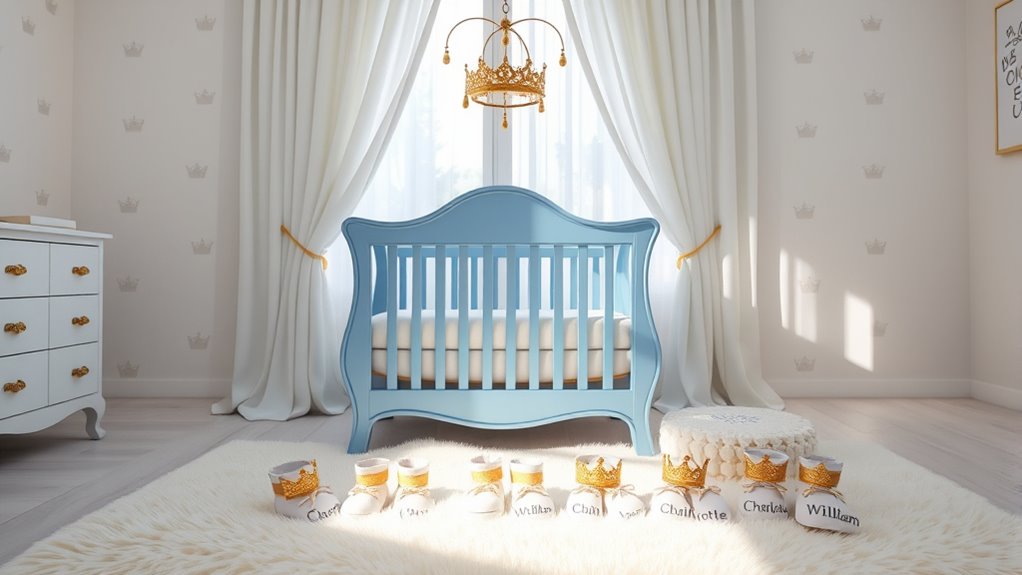

If you’re looking for baby names with royal associations, you’ve got some timeless options! Names like Charlotte and Arthur are popular choices today, inspired by the British royal family. They evoke a sense of dignity and heritage that many parents find appealing. You might also consider names that reflect cultural diversity, like Amalia from Dutch royalty. These names not only connect to a rich history but can also shape your child’s identity. Discover even more royal-inspired names ahead!
Key Takeaways
- Names like Charlotte, Arthur, and Louis are currently popular due to their royal associations and timeless appeal.
- Royal names often evoke a sense of power, grace, and cultural heritage, making them attractive options for parents.
- Modern trends showcase a blend of tradition and contemporary choices in royal baby names, reflecting societal values.
- Names from diverse royal backgrounds, such as Amalia, highlight a growing appreciation for cultural diversity in naming practices.
- Choosing royal names can inspire a child’s identity and connect personal choices to historical legacies and traditions.
Have you ever wondered how a name can carry the weight of history and prestige? When it comes to baby names, few carry as much cultural significance as those associated with royalty. These names aren’t just pretty sounds; they’re steeped in tradition and often come with a sense of dignity that can shape how a child is perceived throughout their life. The cultural significance of royal names can’t be overstated; they often evoke images of power, grace, and timelessness, making them incredibly appealing to parents looking to bestow something meaningful upon their little ones.
Names associated with royalty carry a profound sense of history, dignity, and cultural significance, shaping a child’s identity for life.
In recent years, trends in royal baby name choices have taken on a fascinating new life. You might have noticed how modern royals are breathing fresh air into age-old traditions. Names like Charlotte, Arthur, and Louis have surged in popularity, thanks to their association with the British royal family. Even if you’re not a royalist, you can’t deny the allure of these names; they resonate with a sense of heritage that many parents find attractive. People are increasingly drawn to names that connect them to a legacy, and royal names fit that bill perfectly.
Moreover, the way royal names are chosen often reflects societal changes. For instance, the decision by royals to use names from various cultures showcases a growing appreciation for diversity. You may find that names like Amalia, which belong to the Dutch royal family, are gaining traction among parents who want to celebrate global heritage. This blending of cultures in royal baby names reflects a modern mindset, showing that even time-honored traditions can evolve to embrace contemporary values. Additionally, the influence of educational philosophies on naming trends can lead to a deeper understanding of how names impact identity.
As you think about your own baby’s name, consider what these royal associations could mean for your child’s identity. You might feel that a name like Victoria could inspire a sense of strength, while a name like Henry might evoke noble characteristics. Whatever you choose, remember that names shaped by history carry a certain weight, and those with royal ties can offer a unique blend of tradition and modernity.
Choosing a name is a deeply personal decision, but perhaps the allure of royal names will inspire you to think beyond the ordinary. After all, your child’s name could carry echoes of history while paving the way for their own legacy. So, why not explore the world of royal names and see what resonates with you?
Frequently Asked Questions
How Do Cultural Differences Affect Royal Baby Names?
Cultural differences play a huge role in royal baby names. You’ll notice how regional naming customs reflect local traditions, values, and historical influences. For example, some cultures prioritize ancestral names, while others might choose names that symbolize strength or virtue. These cultural influences on naming can lead to unique choices, showcasing the identity and heritage of the royal family. Ultimately, each name tells a story that resonates within its cultural context.
What Are the Most Popular Royal Baby Names Today?
Today, the most popular royal baby names are like a dazzling crown jewels collection. Names like Charlotte, George, and Louis shine brightly, often inspired by celebrity royal baby names. You’ll notice that royal naming ceremonies not only honor tradition but also reflect modern trends. As you explore these names, you’ll find a perfect blend of heritage and contemporary flair, making them favorites among parents seeking a touch of royalty for their little ones.
Are There Any Trends in Royal Baby Names Over Time?
Yes, there are noticeable trends in royal baby names over time. You’ll see royal naming patterns often reflect historical influences, with names like Victoria and Arthur gaining popularity during certain eras. Recently, modern names have emerged, signaling a shift towards a blend of tradition and contemporary choices. As you explore these names, consider how each generation adapts royal influences, showcasing both heritage and the changing cultural landscape.
How Does Naming a Baby After Royalty Impact Their Future?
Naming your baby after royalty can substantially impact their future. It often instills a sense of pride and connection to historical naming traditions. Your child might benefit from the royal influence on perceptions, as people may view them as dignified or prestigious. This can shape their identity and the way others interact with them. However, it can also create expectations, so it’s essential to balance tradition with your family’s unique values.
Can I Legally Name My Child After a Royal Figure?
Yes, you can legally name your child after a royal figure, but be mindful of potential royal name trademarks. Some names might be protected, so it’s wise to research. Additionally, consider the public perception of royal names; they can evoke both admiration and scrutiny. Ultimately, choose a name that resonates with you while understanding the implications of its royal associations. Your child’s name can shape their identity in unique ways.
Conclusion
Choosing a baby name with royal associations can feel intimidating, but remember, it’s not just about the title; it’s about the legacy of strength, grace, and elegance that comes with it. Names like William, Charlotte, and Henry carry centuries of history and charm, making them timeless choices. So, even if you’re worried about uniqueness, these names can still give your child a sense of nobility while allowing them to create their own distinct identity in the world.