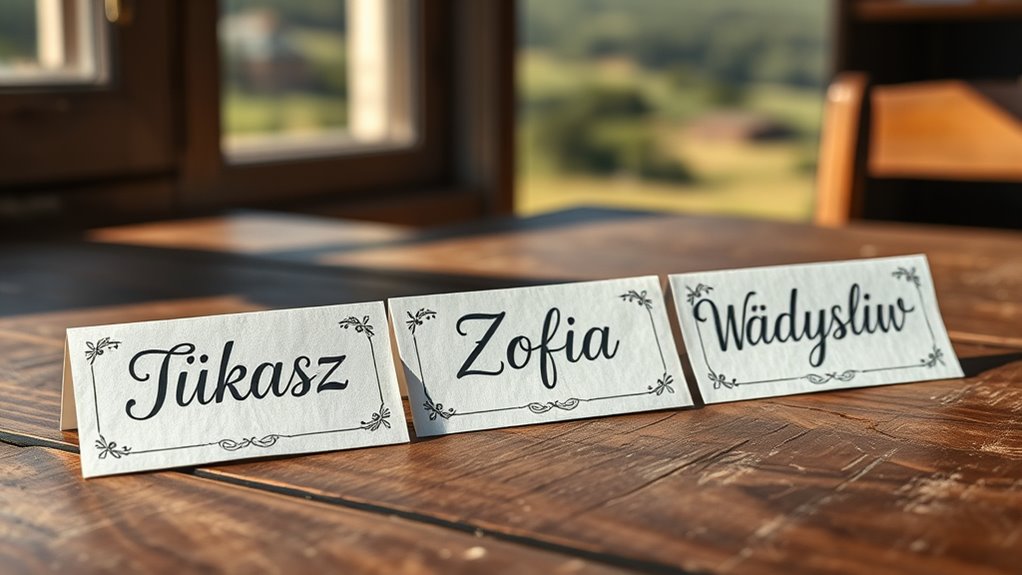

Pronouncing Eastern European names like Łukasz, Zofia, and Władysław can be tricky, but it’s rewarding. For Łukasz, say “Woo-kash” with a softened “L” that sounds like a “W.” Zofia is pronounced “Zoh-fee-ah,” where the “Z” and crisp “f” are key. For Władysław, go with “Vwah-dih-swahf,” honoring its leadership roots. Mastering these pronunciations shows respect for their cultural backgrounds, and you’re just scratching the surface of their rich significance.

Get school and study supplies delivered free — and shop member deals
- Fast, free delivery on millions of items
- Access to Prime Big Deal Days deals on October 6–7
- Prime Video, Amazon Music and more included
Key Takeaways
- The name Łukasz is pronounced as “Woo-kash,” with the “Ł” resembling a softened “L” sound.
- Zofia, translating to “wisdom,” is pronounced “Zoh-fee-ah,” with a crisp “f” sound.
- Władysław means “to rule with glory” and is pronounced “Vwah-dih-swahf,” where “Wł” is pronounced as “Vwah.”
- Understanding the cultural roots of these names enhances appreciation and respect for their significance.
- Correct pronunciation fosters meaningful interactions and honors the cultural heritage behind Eastern European names.

Have you ever stumbled over an Eastern European name, unsure of how to pronounce it? You’re not alone. Names like Łukasz, Zofia, and Władysław can feel like tongue twisters, but with a little practice and some name pronunciation tips, you can navigate these beautifully complex names with confidence. Understanding the cultural significance behind these names can also enhance your appreciation for their uniqueness.
Navigating Eastern European names like Łukasz and Zofia can be challenging, but with practice, you can embrace their beauty and cultural significance.
Take Łukasz, for instance. This Polish name has a rich history, derived from the Latin name Lucas, meaning “light.” When you see the “Ł,” think of it as a softened “L” sound, almost like a mix between “L” and “W.” So, you pronounce it as “Woo-kash.” Knowing this not only helps you say the name correctly but also gives you insight into its meaning and cultural roots. Names often carry stories, and Łukasz is no exception.
Next up is Zofia. This name, popular in several Eastern European countries, including Poland and Bulgaria, translates to “wisdom.” Pronouncing it might seem tricky at first, but it’s quite straightforward. You say it as “Zoh-fee-ah.” The “Z” sounds more like an English “Z,” and the “f” is crisp and clear. By mastering Zofia, you’re not just getting the pronunciation right; you’re engaging with a name steeped in cultural significance and history.
Then there’s Władysław, a name that may leave you scratching your head. It’s a traditional Polish name, meaning “to rule with glory.” The initial “Wł” can be challenging, but with practice, you can pronounce it as “Vwah-dih-swahf.” The “Ł” again comes into play, softening the “L” sound, and the rest flows quite naturally. Each syllable carries weight, reflecting the historical rulers and leaders associated with the name.
When you take the time to learn these pronunciation tips, you’re not just reciting names; you’re honoring the cultural significance behind them. Each name tells a story, and by pronouncing them correctly, you show respect for the cultural heritage they represent. So, the next time you encounter an Eastern European name, remember these tips and the meaning that lies beneath. You’ll feel more connected to the culture and the people, making your interactions richer and more meaningful. Additionally, understanding how cultural significance shapes these names can deepen your appreciation for their origins and meanings.
Eastern European name pronunciation guide
As an affiliate, we earn on qualifying purchases.
As an affiliate, we earn on qualifying purchases.
Frequently Asked Questions
What Are the Origins of Eastern European Names?
Eastern European names have rich origins, often reflecting linguistic roots and cultural influences. You’ll find that many names derive from Slavic, Germanic, and Romance languages, showcasing the region’s diverse history. Various ethnic groups and historical events shape these names, adding layers of meaning. As you explore, you’ll notice that names like Zofia and WłAdysłAw highlight regional characteristics, demonstrating how identity and heritage intertwine through language and tradition in this vibrant part of the world.
Are There Common Naming Traditions in Eastern Europe?
Yes, there are common naming traditions in Eastern Europe. You’ll find that cultural naming customs often reflect historical influences on names, such as religious significance or ancestral ties. Many families follow the tradition of naming children after grandparents or other relatives to honor lineage. Additionally, using diminutive forms of names is popular, helping to create a sense of affection and familiarity within communities. These practices reveal a deep connection to heritage and identity.
How Do Accents Affect Name Pronunciation?
Accents considerably affect name pronunciation. When you see accent marks, they influence pronunciation by indicating which syllables to stress or how to articulate certain sounds. For example, a name with an accent might change its vowel sound or make it elongated. Additionally, regional pronunciation differences can lead to variations, even for the same name. So, it’s essential to understand these nuances to pronounce names accurately and respectfully in different cultural contexts.
What Resources Can Help With Name Pronunciation?
Imagine a traveler seeking treasures in a vast library. You’ll find name pronunciation guides like a map, leading you to the right sounds. Language learning apps act like wise companions, whispering tips and examples in your ear as you explore unfamiliar names. Together, they’ll help you navigate the intricate paths of pronunciation, ensuring you honor the beauty of each name you encounter on your journey. Embrace these resources, and you’ll master them in no time!
Are There Regional Variations in Name Pronunciation?
Yes, there are definitely regional variations in name pronunciation. You’ll notice how regional dialect influences can change sounds and stress patterns. For instance, names might be pronounced differently in urban versus rural areas, reflecting local accents. Additionally, historical pronunciation shifts over time can lead to variations, as names adapt to the phonetic preferences of different communities. So, when you encounter names, be aware that their pronunciations can vary widely based on these factors.
Polish pronunciation practice books
As an affiliate, we earn on qualifying purchases.
As an affiliate, we earn on qualifying purchases.
Conclusion
In the tapestry of Eastern European culture, names like Łukasz, Zofia, and Władysław are vibrant threads that weave connections to history and identity. By mastering their pronunciations, you open a door to deeper understanding and appreciation. Each syllable is a key, revealing stories of resilience and heritage. So, embrace these names with confidence; they’re not just sounds but symbols of a rich legacy waiting for you to explore. Let your voice carry their beauty into the world.
As an affiliate, we earn on qualifying purchases.
Eastern European name pronunciation app
As an affiliate, we earn on qualifying purchases.
As an affiliate, we earn on qualifying purchases.
Halloween Picks
halloween
As an affiliate, we earn on qualifying purchases.