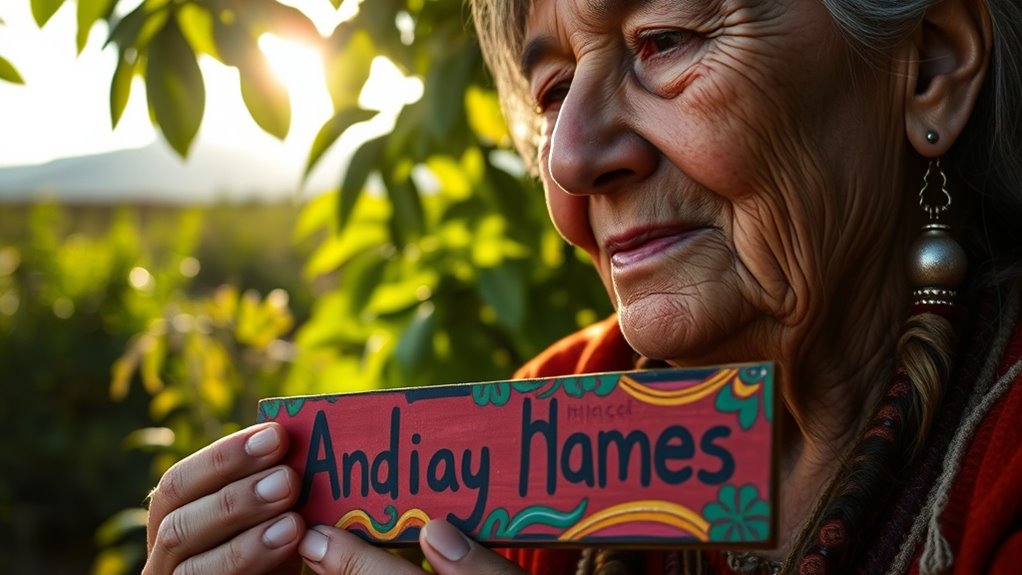

To pronounce Indigenous American names respectfully, start by breaking them into syllables, making it easier to master each sound. Listen to native speakers to capture unique pronunciations and intonations, paying special attention to unfamiliar sounds. Seek guidance from Indigenous communities; they appreciate your efforts. Practice regularly and keep a list of names with correct pronunciations handy. This approach not only enhances your skills but also shows cultural respect. There’s much more to discover about this fascinating topic.
Key Takeaways
- Break down names into syllables to simplify pronunciation and reduce errors.
- Seek guidance from Indigenous communities or knowledgeable individuals for authentic pronunciation.
- Familiarize yourself with unique phonetic sounds in Indigenous languages to enhance accuracy.
- Practice names aloud regularly and maintain a list of correct pronunciations for reference.
- Show respect and willingness to learn by engaging with cultural histories and communities.

When you encounter Indigenous American names, you might find their pronunciation challenging, especially since many reflect unique cultural and linguistic histories. These names often carry deep meanings, connected to the land, history, and traditions of Indigenous communities. Respecting this significance is essential, not only for accurate communication but also for honoring the cultures they represent. To help you navigate this complex terrain, here are some pronunciation tips that can make a difference.
First, take the time to listen. If you have access to audio recordings, whether through language resources or community events, use them. Hearing the names pronounced by native speakers can provide you with an authentic model to emulate. Pay attention to the sounds that may not exist in your native language; this can help you appreciate the sounds and rhythms unique to Indigenous languages.
Next, break the names down into syllables. This technique can simplify the pronunciation process. For example, if you come across a name like “Navajo,” break it into “Na-va-ho.” This approach allows you to tackle each part individually, making it easier to say the name correctly. Also, don’t shy away from asking for help. If you’re unsure about how to pronounce a name, asking someone knowledgeable can show your respect and willingness to learn. Indigenous communities often appreciate when people make an effort to pronounce names correctly.
Another tip is to familiarize yourself with common phonetic sounds in Indigenous languages. Many Indigenous names contain sounds that might be unfamiliar to you. For instance, you may encounter the “tl” sound in some names, which can be pronounced like the combination of “t” and “l.” Understanding these unique sounds can enhance your pronunciation considerably.
Lastly, practice makes perfect. Repeating names out loud can help solidify your ability to pronounce them correctly. You might even consider keeping a list of names you encounter along with their correct pronunciations. This way, you can refer back to them and continue improving your skills over time.
Frequently Asked Questions
Why Is It Important to Pronounce Indigenous Names Correctly?
It’s important to pronounce Indigenous names correctly because doing so shows cultural sensitivity and respect for their heritage. When you make an effort to get it right, you’re preserving the language and traditions tied to those names. Mispronouncing them can perpetuate misunderstandings and disrespect. By valuing the correct pronunciation, you help foster connections and honor the rich histories and identities of Indigenous cultures. It’s a simple yet powerful way to show your respect.
Can I Ask Someone How to Pronounce Their Name?
Absolutely, you can ask someone how to pronounce their name! It shows cultural sensitivity and respect for their identity. Most people appreciate when you take the time to learn their name correctly. By asking, you contribute to language preservation, helping to keep their heritage alive. Just approach the conversation with genuine curiosity and openness, and you’ll likely find that they’re happy to share the correct pronunciation with you.
What Resources Can Help With Name Pronunciation?
You’ve stumbled into a treasure chest of resources for name pronunciation! Immerse yourself in language apps like Duolingo or Babbel, which are bursting with cultural pronunciation guides. Websites like Forvo let you hear names pronounced by native speakers, making it feel like you’ve got a personal tutor. Don’t forget YouTube, where you can find videos dedicated to specific names and languages. With these tools, you’ll tackle any name’s pronunciation like a pro!
Are There Regional Variations in Indigenous Name Pronunciations?
Yes, there are definitely regional dialects that create pronunciation differences in Indigenous names. When you hear a name pronounced in one area, it might sound quite different in another. These variations often reflect local languages and cultural influences, so it’s important to recognize them. If you’re unsure, try asking someone from that community for guidance. Embracing these differences can show respect and appreciation for the rich diversity of Indigenous cultures.
How Do I Address Someone if I Mispronounce Their Name?
You’ve stumbled over a name like a pebble on a smooth path, but it’s not the end of the world. Gently acknowledge the mispronunciation; a sincere apology shows respect. Ask the person for the correct pronunciation, demonstrating your willingness to learn. Remember, names carry cultural significance, and getting it right honors their identity. Embracing pronunciation etiquette not only strengthens connections but also enriches your understanding of diverse backgrounds.
Conclusion
Just as a river flows through the land, weaving its way with grace and purpose, so should you navigate the sounds of Indigenous American names. Each syllable is a stepping stone, connecting you to the rich tapestry of culture and history. By embracing the beauty in their pronunciation, you honor the stories carried through generations. Remember, it’s not just about the words; it’s about the heart behind them. Let your voice be a gentle breeze, carrying respect and understanding.