

Thai names have both formal long versions and informal nicknames, reflecting cultural traditions and social customs. Transliteration can be tricky due to unique sounds and tonal markers, leading to various spellings for the same name. Nicknames are often playful and easy to remember, while full names are used in official settings. If you want to understand how to properly pronounce, address, and respect Thai names, there’s much more to discover below.

Prime made for students and young adults
- Fast, free delivery for dorm and study essentials
- Prime Video and Amazon Music included
- Member-only deals
Key Takeaways
- Thai names often have formal long forms used officially, and informal nicknames derived from personal traits or sounds.
- Transliteration of Thai names into Latin script varies due to pronunciation, tonal markers, and regional dialects.
- Nicknames are typically playful, short, and easy to remember, often reflecting personal traits or animals.
- Proper transliteration aims to capture Thai pronunciation accurately, balancing phonetic clarity with cultural respect.
- Recognizing the difference between formal names and nicknames aids in correct pronunciation and social communication.
As an affiliate, we earn on qualifying purchases.
The Structure of Thai Names: Formal and Informal Versions
Thai names often have both formal and informal versions, which serve different social functions. Understanding Thai naming customs helps you appreciate how these variations reflect cultural identity. Formal names are typically long and include meaningful elements, often chosen with care to convey good fortune or virtues. These names are used in official documents and formal settings. Informal versions, or nicknames, are shorter and more personal, used by friends, family, and in everyday life. This duality allows you to navigate social hierarchies and relationships smoothly. Recognizing the difference between these types of names highlights how Thai culture values both respect and familiarity. Names are often carefully chosen to reflect social status and personal traits. By mastering this structure, you’ll better understand how Thai identities are expressed through naming practices.
As an affiliate, we earn on qualifying purchases.
Origins and Cultural Significance of Thai Names

Names in Thailand carry deep cultural roots and reflect centuries of tradition. They embody various cultural origins and historical influences, shaping identities uniquely. For example:
Thai names reflect rich cultural roots, history, and spiritual significance shaping individual identities.
- Religious beliefs: Many names are inspired by Buddhist or Hindu traditions, honoring spiritual values.
- Royal and historical figures: Names often commemorate royalty or significant historical events, emphasizing respect and heritage.
- Nature and auspicious qualities: Names may incorporate words related to nature or positive traits, symbolizing good fortune.
These naming practices reveal how cultural origins and historical influences influence Thai naming customs. They serve as a bridge connecting individuals to their heritage, values, and societal expectations. Understanding this background helps appreciate the significance behind each name’s long history and cultural symbolism.
As an affiliate, we earn on qualifying purchases.
Common Patterns in Thai Nicknames

Have you ever wondered why Thai nicknames often seem playful, short, and easy to remember? The nicknames origin often traces back to informal naming patterns, where simplicity and affection play key roles. Thai nicknames typically draw from various sources like personal traits, favorite animals, or sounds that sound cute or amusing. These patterns reflect a cultural tendency to create names that are approachable and personable, often deviating from formal long names. Many nicknames are just shortened versions of longer names or entirely new, spontaneous creations. This playful approach makes nicknames memorable and endearing, fostering closer social bonds. Additionally, the cultural significance of nicknames highlights the importance of warmth and friendliness in Thai society. By understanding these common patterns, you gain insight into Thai social customs and the lighthearted spirit behind many Thai naming choices.
As an affiliate, we earn on qualifying purchases.
Transliteration Challenges and Variations in Thai Names
Transliteration of Thai nicknames into the Latin alphabet often presents unexpected challenges due to the language’s unique sounds and tonal system. Achieving transliteration accuracy can be difficult because Thai’s tonal distinctions and consonant clusters don’t always have direct equivalents. To navigate this, consider these factors:
- Variations in pronunciation may lead to multiple acceptable spellings, impacting consistency.
- Cultural sensitivity is vital; misrepresenting names can cause misunderstanding or offense.
- Ambiguities in tonal markers may alter the intended meaning or sound of a name.
You need to balance phonetic accuracy with respect for cultural nuances. Recognizing these challenges helps guarantee transliterations reflect both pronunciation and cultural integrity, making names understandable and respectful across languages.
Tips for Correctly Pronouncing Thai Names and Nicknames

To pronounce Thai names and nicknames correctly, focus on mastering proper tones, as they change the meaning of words. Practice each syllable carefully to guarantee you’re getting the sounds right. With consistent attention to these points, you’ll speak with greater accuracy and confidence. Additionally, being aware of affiliate marketing disclosures can help you understand the importance of transparency when sharing language learning resources.
Emphasize Proper Tones
Mastering the correct tones is essential for pronouncing Thai names and nicknames accurately, as a single tone change can alter the meaning entirely. To improve tone accuracy and demonstrate cultural sensitivity, focus on these key tips:
- Practice listening carefully to native speakers to recognize subtle tone differences.
- Use tone markers or guides when learning new names to reinforce correct pronunciation.
- Repeat names aloud, paying close attention to tonal variations, until it feels natural.
- Understanding tone dynamics can significantly enhance your ability to pronounce names properly and avoid misunderstandings.
Practice Correct Syllables
Practicing correct syllables is essential for accurately pronouncing Thai names and nicknames. To do this, focus on pronunciation techniques that emphasize proper syllable stress and clarity. Break down the name into manageable parts, paying attention to each syllable’s tone and vowel sound. This helps you avoid mispronunciations that could distort meanings or offend cultural nuances. Listening carefully to native speakers and mimicking their pronunciation can improve your accuracy. It’s also important to understand the cultural context behind names, as pronunciation nuances often reflect respect and familiarity. Regular practice, combined with active listening and repetition, will help you master correct syllables. Ultimately, this effort shows your respect for Thai culture and ensures your pronunciation is both respectful and precise.
Differences Between Formal Thai Names and Nicknames in Usage

When interacting with others, you’ll notice that formal Thai names are used in professional and respectful settings, while nicknames are common among friends and family. Using the appropriate form shows your understanding of social cues and respect for Thai culture. Recognizing these differences helps you navigate various situations appropriately. Additionally, understanding the different naming conventions can aid in building rapport and demonstrating cultural sensitivity.
Formal vs. Casual Contexts
Have you ever wondered why Thais use different names in formal settings compared to casual ones? It’s mainly about showing politeness in language and respecting cultural identity. In formal situations, you’ll use your full name or respectful titles to demonstrate politeness and professionalism. Conversely, in casual contexts, nicknames are common and foster closeness. To clarify:
- Formal settings often require full names or titles to convey respect.
- Casual situations favor nicknames, reflecting familiarity.
- Using the appropriate form enhances social harmony and respects cultural norms.
- Understanding the distinctions between formal and casual names can also improve interpersonal relationships.
This distinction helps maintain politeness in language and reinforces cultural identity. It’s a way for Thais to show respect and maintain social harmony while expressing their personality in less formal environments.
Name Usage and Respect
Ever wondered how Thais show respect through their names? In Thai culture, using the correct name form reflects cultural etiquette and acknowledges the name hierarchy. When speaking to someone older or in a formal setting, you use their full name or title to show respect. For close friends or peers, nicknames are common and accepted, but only after establishing familiarity. The distinction between formal names and nicknames highlights social roles and relationships. Addressing someone appropriately demonstrates politeness and awareness of cultural norms. Using a person’s full name or title in formal situations maintains respect and professionalism, while nicknames foster intimacy and friendliness. Understanding these differences helps you navigate Thai social interactions with sensitivity and respect for their cultural etiquette.
How to Respectfully Address People With Thai Names
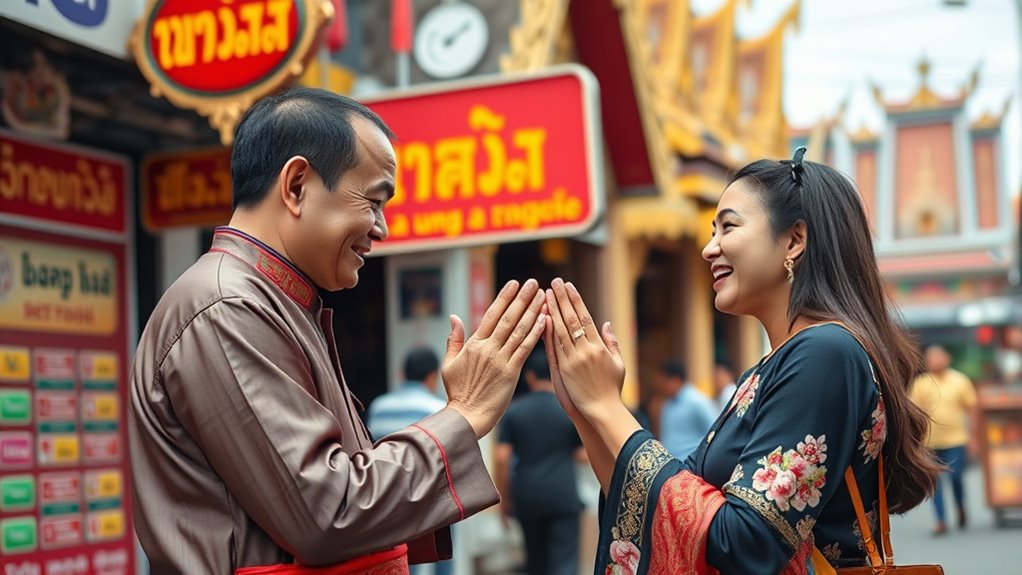
Wondering how to show respect when addressing someone with a Thai name? Respectful communication in Thai culture relies on understanding cultural etiquette and recognizing name customization. Here are three tips:
- Use titles like “Khun” before their name, which shows politeness and respect.
- Address elders or those in authority by their full name or appropriate title, avoiding casual nicknames unless invited.
- Pay attention to how they introduce themselves—many prefer using their full name initially, then their nickname after trust develops.
- Remember that understanding Thai naming customs can help foster respectful interactions.
Practical Examples of Thai Name Transliterations

Understanding how Thai names are transliterated into the Latin alphabet can greatly improve your communication and respect for Thai culture. Practical examples of Thai name transliterations highlight how cultural naming customs influence spelling and pronunciation etiquette. For instance, the name “สมชาย” becomes “Somchai,” reflecting the correct pronunciation while respecting local traditions. Recognizing these transliteration patterns helps you pronounce names accurately and shows appreciation for cultural nuances. transliteration patterns can vary depending on regional dialects and historical influences, further emphasizing the importance of cultural awareness. Nicknames often differ considerably from formal names, emphasizing the importance of context in pronunciation. By paying attention to these transliteration examples, you’ll better navigate social interactions, avoid mispronunciations, and demonstrate cultural sensitivity in both formal and informal settings. This understanding promotes respectful and effective communication with Thai speakers.
Frequently Asked Questions
How Do Thai Names Change After Marriage or Significant Life Events?
After marriage or significant life events, Thai names may change due to naming customs, reflecting new social status or personal identity. You might adopt a surname that signifies your union or honor family traditions. These name changes hold cultural significance, symbolizing respect, respectability, or a fresh start. Although some keep their original names, many embrace the change to honor their evolving roles and connections within Thai society.
Are There Regional Differences in Thai Naming Conventions?
Yes, regional dialect influences shape Thai naming conventions. In northern Thailand, you might find names influenced by Lao or Shan languages, while southern names often reflect Malay or local customs. These regional differences affect pronunciation, spelling, and nicknames. Local naming customs also vary, with some areas using traditional, clan-based, or spiritual names. You notice these differences especially in rural communities, where local culture strongly influences how people choose and adapt their names.
Can Foreigners Legally Adopt Thai Nicknames?
Yes, foreigners can legally adopt Thai nicknames, though it’s not common. Like a key opening cultural mysteries, understanding the cultural significance of nicknames helps you appreciate their importance. You’ll need to navigate legal considerations, such as registering your chosen nickname with Thai authorities. While adopting a nickname may seem simple, respecting local customs and ensuring proper legal procedures are essential to avoid misunderstandings.
How Do Thai Names Reflect Social or Family Status?
Thai names often reflect social or family status through the use of Thai honorifics and traditional naming rituals. You’ll notice that elders or respected individuals typically have honorifics like “Khun” or “Ajarn,” showing their rank or respect. Traditional rituals may also influence name choices, emphasizing family heritage and social standing. These naming customs help you understand a person’s position within Thai society and their connection to cultural traditions.
What Are the Common Mistakes to Avoid When Transliterating Thai Names?
Avoid common mistakes like neglecting proper pronunciation or ignoring cultural sensitivity. You might think transliterating Thai names is straightforward, but mispronouncing or misspelling can lead to disrespect or confusion. Double-check the spelling, listen carefully to native speakers, and respect the nuances of tone and pronunciation. By paying attention to these details, you guarantee your transliteration is accurate, respectful, and culturally appropriate, fostering better understanding and connections.
Conclusion
Understanding Thai name transliteration helps you connect more respectfully and accurately. Remember, the long forms and nicknames reveal rich cultural stories and personal identities. With a little effort, you can master pronunciation and honor traditions. Isn’t it worth getting it right to show genuine respect? Embrace the nuances, and you’ll build meaningful connections that transcend language barriers. After all, isn’t respect the foundation of true cultural appreciation?
Fall Picks
fall essentials
As an affiliate, we earn on qualifying purchases.