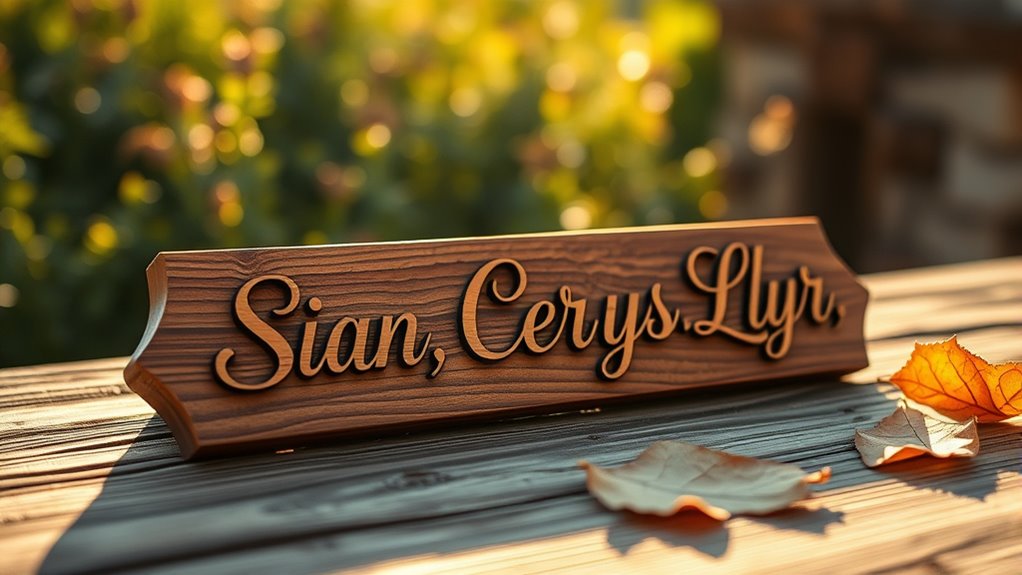

Welsh names like Siân, Cerys, and Llyr are beautiful and meaningful. You pronounce Siân as “shahn,” Cerys as “ker-iss,” and Llyr as “leer.” Each name tells a story, showcasing Welsh heritage. Siân connects with tradition, Cerys embodies love, and Llyr draws from rich mythology. These names carry both emotional depth and cultural significance. As you explore Welsh names further, you’ll discover even more fascinating connections to Welsh identity and pride.

Prime made for students and young adults
- Fast, free delivery for dorm and study essentials
- Prime Video and Amazon Music included
- Member-only deals
Key Takeaways
- Siân is pronounced “shahn,” a traditional Welsh form of the name Joan.
- Cerys is pronounced “ker-iss” and means “love” in Welsh.
- Llyr is pronounced “leer” and is linked to Welsh mythology and the sea.
- Welsh names reflect cultural heritage, making their pronunciation significant.
- Understanding these pronunciations helps honor and preserve Welsh identity and language.

Have you ever wondered about the rich tapestry of Welsh names? They’re not just labels; they carry stories and reflect the deep Welsh cultural heritage that’s been woven through centuries. Each name has roots in history, mythology, and language, making them fascinating not only to pronounce but also to understand. Names like Siân, Cerys, and Llyr encapsulate the essence of Wales, embodying everything from personal identity to regional pride.
Welsh names like Siân, Cerys, and Llyr weave together stories of culture, history, and identity, reflecting a rich heritage.
Let’s start with Siân. This name is a lovely Welsh form of Joan, and it’s pronounced like “shahn.” You might notice its beautiful simplicity, which resonates with many who appreciate traditional names. Siân has a timeless quality that connects with the past while still feeling fresh in today’s modern Welsh naming trends. It’s popular among parents who want to honor their heritage while giving their children names that are easy to say and remember.
Then there’s Cerys, a name that’s gained traction in recent years. Pronounced “ker-iss,” it means “love” in Welsh, making it a perfect choice for those who value sentiments in names. Cerys reflects the modern Welsh naming trends, where there’s a blend of traditional and contemporary influences. It’s not just a name; it’s a statement of affection and connection, embodying the warmth of Welsh culture.
Now, let’s look at Llyr. This name is rich with mythological significance, as it’s associated with the sea and is often linked to the legendary figure Llŷr. Pronounced “leer,” it carries an air of mystique. Parents choosing Llyr today are tapping into the depths of Welsh folklore, adding layers of meaning to their child’s name. This trend of naming children after mythological figures is becoming increasingly popular, as families seek to connect their children with their cultural roots.
When you explore these names, you realize they’re more than just sounds. They’re vessels of history, culture, and emotion. As modern Welsh naming trends evolve, names like Siân, Cerys, and Llyr remind us of the importance of language and the stories that names can tell. Interestingly, many parents today are also considering the significance of halal certification when selecting names that may carry cultural weight. Whether you’re Welsh or simply drawn to the beauty of these names, embracing them allows you to participate in the ongoing narrative of Welsh identity. So next time you hear these names, take a moment to appreciate the culture and heritage behind them.
As an affiliate, we earn on qualifying purchases.
Frequently Asked Questions
What Are the Origins of Welsh Names?
Welsh names often stem from the rich Welsh language and cultural heritage, showcasing the country’s history and traditions. Many names have roots in ancient Celtic origins, reflecting the geography and mythology of Wales. In recent years, modern trends in Welsh naming have emerged, with names like Cerys gaining popularity. You’ll find that these names not only hold significant meaning but also connect you to a vibrant cultural identity.
Are Welsh Names Used Outside of Wales?
Yes, Welsh names are used outside of Wales, especially within the Welsh diaspora. Picture a vibrant tapestry of cultures where names like Cerys and Siân weave connections across generations. As communities grow globally, they carry their heritage with them, embracing these names as symbols of cultural preservation. You’ll find them in various countries, reflecting pride in Welsh identity while enriching the multicultural landscape. It’s a beautiful way to celebrate and honor one’s roots.
How Do I Choose a Welsh Name for My Child?
To choose a Welsh name for your child, explore Welsh naming traditions that reflect your heritage or values. Look into popular names and their meanings, which often carry deep significance. Consider modern Welsh name trends, which blend traditional sounds with contemporary flair. You might want to pick a name that resonates with you personally or one that honors family history. Don’t forget to think about how it’ll be pronounced in different contexts!
Do Welsh Names Have Specific Meanings?
Yes, Welsh names often carry rich meanings rooted in nature, mythology, and history, reflecting Welsh culture and heritage. When you choose a Welsh name, you’re not just picking a label; you’re embracing a story and a connection to the past. For example, names like Cerys mean “love,” while others may symbolize elements like rivers, mountains, or historical figures. Each name adds a unique layer of meaning to your child’s identity.
Are There Any Famous People With Welsh Names?
You’ll find plenty of famous Welsh personalities with traditional names, shining like stars in popular culture. Think of actors like Ioan Gruffudd and Ruth Jones, or musicians like Tom Jones and Charlotte Church. These Welsh names resonate in film, music, and literature, showcasing the rich heritage of Wales. Their contributions to the arts help keep these beautiful names alive and celebrated. So, immerse yourself in the world of Welsh names and enjoy their stories!
As an affiliate, we earn on qualifying purchases.
Conclusion
As you embrace the beauty of Welsh names like Siân, Cerys, and Llyr, think of a gentle breeze whispering through ancient oaks, each name carrying a rich history and melody. Just as the roots of these trees intertwine with the earth, the sounds of these names connect you to a vibrant culture. So, let their unique pronunciations dance on your tongue, inviting you into a world where language and heritage unite, like a harmonious symphony echoing through the valleys of Wales.
As an affiliate, we earn on qualifying purchases.
Welsh mythology inspired jewelry
As an affiliate, we earn on qualifying purchases.
As an affiliate, we earn on qualifying purchases.
Halloween Picks
halloween
As an affiliate, we earn on qualifying purchases.