Creative writing prompt journals can make it easier to start writing, but they differ in how much structure, variety, and daily commitment they ask of you. I’d choose 642 Things to Write About as the best overall pick for writers who want a wide range of open-ended ideas, while 5-Minute Daily Writing Prompts suits short, repeatable sessions and Create a Story is a better fit for building a longer narrative. The main tradeoff is between breadth and guidance: a large prompt collection gives you freedom, while a focused journal can help you stay on track. Some options are also made for children, poetry, or warm-ups rather than general creative writing. Read on for the full breakdown and help matching a journal to your routine.

Prime made for students and young adults
- Fast, free delivery for dorm and study essentials
- Prime Video and Amazon Music included
- Member-only deals
Key Takeaways
- 642 Things to Write About stands out for prompt variety, while its Young Writer’s Edition is aimed at a different audience and should not be treated as an interchangeable pick.
- 5-Minute Daily Writing Prompts and 365 Daily Writing Prompt Journal favor a recurring practice; their appeal depends on whether a daily cadence motivates you or feels restrictive.
- Create a Story focuses on story development, making it a more directed choice than broad prompt collections such as 642 Things to Write About.
- One Poem a Day serves writers seeking a poetry-centered routine, while general-purpose journals leave more room to move between forms.
- 5-Minute Writing Prompts for Kids is designed for young writers, so adults choosing for themselves should favor the adult-oriented titles instead.
| 642 Things to Write About |  | Best for Prompt Variety | Format: Guided journal | Prompt count: 642 | Purpose: Inspire creative writing | VIEW LATEST PRICE | See Our Full Breakdown |
| 5-Minute Writing Prompts for Kids: Fun Story Starters and Questions to Unleash Your Creativity |  | Best for Young Writers | Format: Writing prompt book | Audience: Kids | Session style: Brief writing sessions | VIEW LATEST PRICE | See Our Full Breakdown |
| 5-Minute Daily Writing Prompts: 501 Prompts to Unleash Creativity and Spark Inspiration | 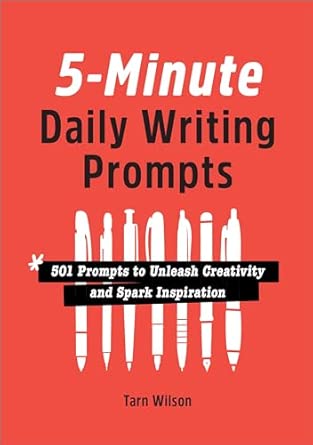 | Best for a Quick Daily Habit | Number of prompts: 501 | Suggested session length: 5 minutes | Format: Writing prompt collection | VIEW LATEST PRICE | See Our Full Breakdown |
| One Poem a Day: A Writer’s Daily Journal of Words & Inspiration |  | Best for Poetry Practice | Format: Daily writer’s journal | Focus: Poetry | Writing cadence: Daily | VIEW LATEST PRICE | See Our Full Breakdown |
| 365 Daily Writing Prompt Journal |  | Best for a Yearlong Routine | Format: Journal | Prompts: 365 daily writing prompts | Cadence: Daily | VIEW LATEST PRICE | See Our Full Breakdown |
| One Creative Writing Prompt a Day: A Journal to Build Your Craft and Unlock Your Inner Storyteller |  | Best for Daily Practice | Product type: Creative writing prompt journal | Prompt schedule: Daily | Stated focus: Building creative writing craft | VIEW LATEST PRICE | See Our Full Breakdown |
| Create a Story: A Prompt Journal to Help You Write a Story |  | Best for Developing a Story | Product type: Prompt journal | Stated purpose: Help the writer create a story | Series: Creative Keepsakes | VIEW LATEST PRICE | See Our Full Breakdown |
| Prompt Me: Creative Writing Journal & Workbook |  | Best Journal-and-Workbook Format | Product type: Creative writing journal and workbook | Series: Prompt Me | Content focus: Creative writing prompts | VIEW LATEST PRICE | See Our Full Breakdown |
| 642 Things to Write About: Young Writer’s Edition |  | Best for Young Writers | Product type: Writing prompt journal | Edition: Young Writer’s Edition | Stated prompt count: 642 | VIEW LATEST PRICE | See Our Full Breakdown |
| Writer’s Prompt Journal: Creative Writing Warm-Up Workbook |  | Best for Spacious Warm-Ups | Product type: Creative writing warm-up workbook | Format: Lined journal | Pages per prompt: 2 | VIEW LATEST PRICE | See Our Full Breakdown |
| creative writing prompt journal | Format | Prompt count | Purpose | ASIN |
|---|---|---|---|---|
| 642 Things to Write About | Guided journal | 642 | Inspire creative writing | 1452105448 |
| 5-Minute Writing Prompts for K | Writing prompt book | — | Encourage creative writing | B0FHNV8R5S |
| 5-Minute Daily Writing Prompts | Writing prompt collection | — | Encourage creativity and inspire ideas | 1638787905 |
| One Poem a Day: A Writer’s Dai | Daily writer’s journal | — | Words and inspiration | 1250202388 |
| 365 Daily Writing Prompt Journ | Journal | — | Spark inspiration and imagination | 0999342762 |
| One Creative Writing Prompt a | — | Not provided | — | — |
| Create a Story: A Prompt Journ | — | Not provided | — | — |
| Prompt Me: Creative Writing Jo | — | Not provided | — | — |
| 642 Things to Write About: You | — | — | — | — |
| Writer’s Prompt Journal: Creat | Lined journal | Not provided | — | — |
More Details on Our Top Picks
642 Things to Write About
642 Things to Write About is the strongest fit for writers who want a deep pool of ideas rather than a set daily routine. Its 642 prompts give it more stated variety than 5-Minute Daily Writing Prompts, which offers 501 prompts and frames them around brief sessions. That larger count can help when one idea falls flat: move on and find another starting point. The tradeoff is that the available details do not explain the prompts’ topics, layout, or progression, so buyers cannot tell whether the collection suits a particular genre or skill level. Compared with the clearly time-boxed books, this journal offers less guidance on how long to write. I’d choose it for open-ended exploration, not for a tightly structured daily habit.
Pros:- Provides 642 prompts, the largest stated prompt count among these five picks.
- Offers a ready-made starting point when choosing a subject feels difficult.
- Supports open-ended creative writing rather than limiting sessions to a stated time.
Cons:- Prompt topics and variety across genres are not specified.
- No session length or daily schedule is provided.
- Layout and journal features are not described, making usability harder to judge.
Best for: Writers who want a large selection of prompts to browse when they feel short on ideas.
Not ideal for: Writers seeking timed exercises, specified genres, or a clearly described daily structure.
- Format:Guided journal
- Prompt count:642
- Purpose:Inspire creative writing
- Idea support:Prompts help writers find ideas to explore
- Audience:Writers seeking creative prompts
- ASIN:1452105448
Our verdict“Choose this journal if breadth of prompt choice matters more to you than timed sessions or a defined routine.”
5-Minute Writing Prompts for Kids: Fun Story Starters and Questions to Unleash Your Creativity
5-Minute Writing Prompts for Kids is the most clearly age-directed choice here, pairing story starters and questions with short writing sessions. That makes it a better match for a child who benefits from a quick, approachable task than 642 Things to Write About, whose description gives no age guidance or session length. The story-starter framing also gives young writers a launch point, rather than asking them to invent a subject from scratch. The tradeoff is limited information: the prompt count, book length, and range of topics are not stated, so a parent or teacher cannot gauge how much material it offers. I’d pick it for brief creative-writing practice with kids, but not for buyers who need a known curriculum or extensive specifications.
Pros:- Designed specifically for kids, unlike the broadly described 642 Things to Write About.
- Short prompts suit brief writing sessions.
- Story starters and questions offer more than one kind of entry point.
- Encourages creative writing without requiring a long session.
Cons:- The number of prompts and total book length are not provided.
- The specific age range and reading level are unspecified.
- Prompt topics and any progression through the book are not described.
Best for: Parents and educators looking for short creative-writing activities for children who may find a blank page difficult.
Not ideal for: Adult writers or teachers who need a specified prompt count, age range, or detailed lesson structure.
- Format:Writing prompt book
- Audience:Kids
- Session style:Brief writing sessions
- Prompt types:Story starters and questions
- Purpose:Encourage creative writing
- ASIN:B0FHNV8R5S
Our verdict“Pick this for children who need quick story starters, and skip it if you need a clearly quantified or age-graded resource.”
5-Minute Daily Writing Prompts: 501 Prompts to Unleash Creativity and Spark Inspiration
5-Minute Daily Writing Prompts combines a substantial prompt supply—501 ideas—with an explicit five-minute session format. That makes it more routine-friendly than 642 Things to Write About, which offers more prompts but no stated time limit, and more suitable for adult daily practice than the kid-focused 5-Minute Writing Prompts for Kids. A short time box can make it easier to fit writing into a busy day and reduce the pressure to produce a finished piece. The main tradeoff is that the prompt topics and presentation are not described, so buyers cannot judge whether the ideas match their interests or build toward particular skills. I’d favor this for consistent, low-commitment practice over deep instruction or a specialized poetry focus.
Pros:- Includes 501 prompts for ongoing use.
- Five-minute sessions offer a manageable routine for busy writers.
- Combines a stated prompt count with a clear session-length suggestion.
- A more structured time commitment than 642 Things to Write About.
Cons:- Prompt topics and genre coverage are not specified.
- The format and page layout are not described.
- Five minutes may feel restrictive to writers who want longer exercises.
Best for: Adults who want a large bank of prompts organized around short, repeatable daily writing sessions.
Not ideal for: Writers looking for known prompt themes, detailed craft lessons, or a journal dedicated to poetry.
- Number of prompts:501
- Suggested session length:5 minutes
- Format:Writing prompt collection
- Practice style:Daily writing sessions
- Purpose:Encourage creativity and inspire ideas
- ASIN:1638787905
Our verdict“Choose this if you want plentiful prompts and a clear five-minute practice, rather than topic-specific guidance.”
One Poem a Day: A Writer’s Daily Journal of Words & Inspiration
One Poem a Day is the clearest choice for writers who want poetry—not general story ideas—to shape their regular practice. Its daily poem focus gives it a narrower purpose than 365 Daily Writing Prompt Journal, whose prompts are described as broad creative-writing inspiration, and a different rhythm from the five-minute sessions in 5-Minute Daily Writing Prompts. That focus can help poets return to a specific form of expression each day, though the product details do not confirm whether prompts are included or simply space for writing. The missing layout and prompt information is a real limitation: buyers cannot tell how much guidance or writing room each entry provides. I’d choose it for a poetry-centered routine, not for a varied prompt library or explicit craft instruction.
Pros:- Has a clear poetry focus unlike the broader 365 Daily Writing Prompt Journal.
- Daily framing supports a regular writing practice.
- A poem-per-day concept gives the journal a distinct, repeatable purpose.
Cons:- The available details do not confirm whether daily prompts are included.
- Journal layout and writing space are unspecified.
- No prompt count or range of poetry exercises is provided.
Best for: Poets who want a daily journal centered on writing one poem and collecting creative inspiration.
Not ideal for: Writers seeking a stated prompt count, varied prose exercises, or confirmed guidance for each entry.
- Format:Daily writer’s journal
- Focus:Poetry
- Writing cadence:Daily
- Stated concept:One poem a day
- Purpose:Words and inspiration
- ASIN:1250202388
Our verdict“Choose this for a daily poetry habit, but opt for a general prompt collection if you want varied writing tasks.”
365 Daily Writing Prompt Journal
365 Daily Writing Prompt Journal pairs a prompt for every day of the year with a journal format, making it the most explicitly yearlong option in this group. Unlike 5-Minute Daily Writing Prompts, it does not specify a short session length; the emphasis is on a daily prompt rather than a timed exercise. It is also broader than One Poem a Day, which centers its daily practice on poetry. That flexibility suits writers who want a general creative nudge each day, but the description gives no prompt count beyond the daily-year framing, nor does it specify topics, size, or binding. I’d choose it for a simple calendar-based habit, while writers who want a larger stated prompt bank or a clear time limit have better-defined alternatives.
Pros:- Provides 365 daily prompts for a full-year practice.
- Journal format connects each prompt with a writing routine.
- General creative-writing focus offers broader scope than the poetry-specific One Poem a Day.
Cons:- Prompt topics and difficulty range are not described.
- No session length is specified, unlike 5-Minute Daily Writing Prompts.
- Size, materials, binding, and page layout are not provided.
Best for: Writers who want a general creative prompt each day and prefer a yearlong journal structure.
Not ideal for: Buyers who need a specified session length, known prompt themes, or detailed information about the journal’s physical format.
- Format:Journal
- Prompts:365 daily writing prompts
- Cadence:Daily
- Intended span:A year of prompts
- Focus:Creative writing
- Purpose:Spark inspiration and imagination
- ASIN:0999342762
Our verdict“Choose this if a daily prompt across the year matters more than a timed format or a stated topic range.”
One Creative Writing Prompt a Day: A Journal to Build Your Craft and Unlock Your Inner Storyteller
A daily prompt gives this journal a clear routine-based role: it is aimed at writers who want a regular starting point rather than a large collection to browse. Its stated focus on building craft and encouraging storytelling makes it a better fit for ongoing practice than Create a Story, whose listing only confirms that it helps develop a story without describing a daily structure. The tradeoff is that the available details do not say how many prompts there are, what kinds of exercises they use, or how much writing space each prompt gets. Compared with Writer’s Prompt Journal, which specifies two pages per prompt, this option gives less guidance about the practical writing setup. It makes the most sense if the daily format itself is your main motivation.
Pros:- Daily prompt format offers a regular starting point for practice.
- Designed to support creative writing skill development.
- Storytelling focus gives the practice a clear creative direction.
Cons:- The available product information does not specify the number or variety of prompts.
- Page layout and writing space are not described.
- The listing does not indicate whether prompts build on one another or stand alone.
Best for: Writers who want a recurring prompt to build a daily storytelling habit and do not need detailed format information before buying.
Not ideal for: Writers who need a confirmed prompt count, defined exercise types, or specified writing space before choosing a journal.
- Product type:Creative writing prompt journal
- Prompt schedule:Daily
- Stated focus:Building creative writing craft
- Stated activity:Storytelling
- Prompt count:Not provided
- Writing space:Not specified
Our verdict“Choose this for a daily storytelling routine, but pick Writer’s Prompt Journal if confirmed writing space matters more than the daily framing.”
Create a Story: A Prompt Journal to Help You Write a Story
Story development is this journal’s clearest distinction: its stated purpose is to help a writer create a story, rather than simply offer a daily practice. That makes it a more focused choice than One Creative Writing Prompt a Day, which frames its prompts around regular skill-building and storytelling practice. The journal format also suggests a place to work through ideas, though the listing does not explain its prompt sequence, page layout, or how much room each entry provides. Compared with Writer’s Prompt Journal, which specifies two writing pages for each prompt, this option leaves the working space uncertain. It may suit someone who wants a story-oriented prompt journal, but buyers who need clear details about structure should favor a more fully specified listing.
Pros:- Story-writing purpose gives the journal a focused creative aim.
- Prompt journal format pairs ideas with a place to develop them.
- Its story-centered framing differs from journals built around daily practice.
Cons:- The available information does not describe prompt types or sequence.
- The amount of writing space is not stated.
- No prompt count or schedule is provided.
Best for: Writers who want prompts framed around creating a story and are comfortable choosing without details about prompt sequence or page layout.
Not ideal for: Writers who want a stated daily schedule, a known prompt count, or confirmed space for drafting each response.
- Product type:Prompt journal
- Stated purpose:Help the writer create a story
- Series:Creative Keepsakes
- Volume:19
- Prompt count:Not provided
- Writing space:Not specified
Our verdict“Pick this if your main goal is developing a story, and choose Writer’s Prompt Journal instead if known drafting space is a priority.”
Prompt Me: Creative Writing Journal & Workbook
Journal and workbook is the useful distinction in this title: it signals a format intended to combine writing prompts with a more guided activity than a blank journal alone. That could make it a middle ground between One Creative Writing Prompt a Day, which emphasizes a daily routine, and Create a Story, which centers on story creation. The available listing, however, gives no details about the actual exercises, prompt count, or page layout, so buyers cannot tell how much instruction the workbook element adds. Writer’s Prompt Journal is clearer about its writing setup because it specifies lined pages and two pages per prompt. This pick is best for someone drawn to a workbook-style approach, provided they are comfortable with limited product information.
Pros:- Combines creative writing journal and workbook framing.
- Prompt-focused concept offers a starting point for writing.
- Provides an alternative to journals described only as daily practice or story development.
Cons:- The available information does not describe the workbook exercises.
- Prompt count and variety are not provided.
- Page layout and space for writing are unspecified.
Best for: Writers who prefer a journal-and-workbook concept and want prompts paired with guided creative activity.
Not ideal for: Buyers who need to know the exercises, prompt volume, or writing-page layout before choosing.
- Product type:Creative writing journal and workbook
- Series:Prompt Me
- Content focus:Creative writing prompts
- Prompt count:Not provided
- Exercise details:Not provided
- Writing space:Not specified
Our verdict“Choose this if the workbook format appeals to you, but favor Writer’s Prompt Journal if you want confirmed details about writing space.”
642 Things to Write About: Young Writer’s Edition
Young writers are the clear audience for this edition, giving it a more age-specific role than 642 Things to Write About in its general form. The title also states a substantial prompt collection, which may appeal to kids and teens who want plenty of starting points rather than the daily cadence of One Creative Writing Prompt a Day. A large collection can offer freedom to choose, but it may be less useful for a young writer who benefits from a prescribed routine or step-by-step story development. The available details do not describe the prompts’ topics, difficulty, layout, or amount of writing room. That leaves parents and educators with less information about whether the material fits a particular age or writing level.
Pros:- Young Writer’s Edition identifies kids and teens as its intended audience.
- The title states 642 things to write about, offering many possible starting points.
- Choice-based prompts contrast with journals organized around a daily routine.
Cons:- The available information does not describe prompt topics or difficulty.
- Page layout and writing space are not specified.
- No daily schedule or progression is stated.
Best for: Kids and teens who enjoy choosing from a broad collection of creative writing prompts rather than following a daily sequence.
Not ideal for: Young writers who need prompts tailored to a stated age or skill level, or who benefit from a structured daily writing plan.
- Product type:Writing prompt journal
- Edition:Young Writer’s Edition
- Stated prompt count:642
- Intended audience:Kids and teens
- Prompt topics:Not provided
- Writing space:Not specified
Our verdict“Choose this for a young writer who wants many prompts to select from, and choose One Creative Writing Prompt a Day for a more routine-based approach.”
Writer’s Prompt Journal: Creative Writing Warm-Up Workbook
Two pages per prompt make this the clearest choice here for writers who want room to answer rather than just collect ideas. Its lined journal format supports drafting directly in the book, while the warm-up workbook framing suggests a practical way to get writing started. Compared with One Creative Writing Prompt a Day, it offers more concrete information about the writing space, though its listing does not state a daily schedule. It is also more specific about layout than Prompt Me, whose workbook description comes without details about its pages. The tradeoff is that the prompt count, exercise types, and progression are not given, so writers seeking a defined curriculum may want more information.
Pros:- Lined journal format provides a defined place to write.
- Two pages per prompt allow more room than a brief response space.
- Prompts and exercises are framed as creative writing warm-ups.
Cons:- The prompt count is not provided.
- No daily schedule or progression is specified.
- The available details do not describe the exercise types.
Best for: Writers who want lined space to respond to prompts and prefer having two pages for each warm-up.
Not ideal for: Writers who need a stated prompt count, a daily schedule, or a clearly described sequence of writing exercises.
- Product type:Creative writing warm-up workbook
- Format:Lined journal
- Pages per prompt:2
- Content:Writing prompts and exercises
- Prompt count:Not provided
- Prompt schedule:Not specified
Our verdict“Choose this if writing space is your priority; One Creative Writing Prompt a Day is a better fit if you want the daily schedule stated in the title.”

How We Picked
I compared these journals by the kind of writing practice they support: open-ended idea generation, daily habit-building, story development, poetry, warm-ups, or writing for children. I also weighed how clearly each title signals its audience and format, since a journal can be engaging yet still be a poor fit if it asks for the wrong level of structure or serves a different age group.
The ranking favors broad usefulness for general creative writers, then gives distinct positions to journals with a clear specialty. That places 642 Things to Write About first for its wide creative scope, while focused titles rank well for readers who specifically want a daily rhythm, a story-building path, poetry, or a child-friendly starting point. I treat the two 642 titles as separate choices because their intended audiences differ, and I do not assume that a prompt count alone guarantees a better writing experience.
| creative writing prompt journal | Format | Purpose | Product type |
|---|---|---|---|
| 642 Things to Write About | Guided journal | Inspire creative writing | — |
| 5-Minute Writing Prompts for K | Writing prompt book | Encourage creative writing | — |
| 5-Minute Daily Writing Prompts | Writing prompt collection | Encourage creativity and inspire ideas | — |
| One Poem a Day: A Writer’s Dai | Daily writer’s journal | Words and inspiration | — |
| 365 Daily Writing Prompt Journ | Journal | Spark inspiration and imagination | — |
| One Creative Writing Prompt a | — | — | Creative writing prompt journal |
| Create a Story: A Prompt Journ | — | — | Prompt journal |
| Prompt Me: Creative Writing Jo | — | — | Creative writing journal and workbook |
| 642 Things to Write About: You | — | — | Writing prompt journal |
| Writer’s Prompt Journal: Creat | Lined journal | — | Creative writing warm-up workbook |
Factors to Consider When Choosing Creative Writing Prompt Journals
Before choosing a journal, decide what you want the prompt to do for you: provide a quick starting point, build a routine, or guide a piece of writing toward a finished form. The right fit depends less on the biggest number of prompts than on whether you will want to return to the format.
Choose Between Open Prompts and Guided Projects
Open-ended prompts work well when you want to follow an idea wherever it leads, but they can leave you unsure how to develop a promising first paragraph. Guided journals offer more direction and can help turn a spark into a story or other finished work. The tradeoff is freedom: more scaffolding may feel limiting if you prefer to change genre or ignore a prescribed sequence. A common mistake is buying the most structured option because it sounds productive, then feeling boxed in by its path. If you want a blend, look for prompts that invite a scene or character without requiring a fixed outcome.
Match the Schedule to Your Actual Routine
A daily title can create a useful cue, but a missed day should not make the journal feel like a failed project. Short-session prompts suit people fitting writing between other tasks; longer, less frequent sessions may work better if you need time to warm up. Decide whether a numbered sequence motivates you or makes you feel behind. If consistency is a challenge, choose a journal you can use out of order and return to after a break. A realistic routine you can restart is more useful than an ambitious schedule you abandon.
Pick for the Writer, Not Just the Buyer
Age and experience shape whether a prompt feels inviting or awkward. A child-focused journal may use accessible story starters, while an adult writer may want prompts that leave room for ambiguity and experimentation. For a gift, consider whether the recipient likes fiction, poetry, or short exercises before selecting a specialized format. Avoid assuming that a beginner needs child-oriented material; adult beginners may prefer straightforward prompts without simplified themes. When the writer’s preferences are unclear, a broad collection is generally a safer starting point than a narrowly focused journal.
Think About Form and Creative Goals
Writers who want to practice poetry may benefit from a journal centered on poems, while fiction writers may prefer character, setting, and plot prompts. A general collection offers flexibility, but it may not give sustained attention to any one craft. Choosing by goal can reduce the friction of deciding what to write each time. The tradeoff is that a specialized journal may be less useful if your interests change. If you switch between forms, a broad prompt source may serve you longer than a workbook dedicated to one practice.
Look Beyond the Prompt Count
A large prompt total sounds generous, but quantity matters only if the ideas feel varied enough for your needs. A smaller, focused journal may offer a more coherent practice, while a broad collection can provide more options for days when one type of prompt does not appeal. Do not choose by the number in the title alone; think about how often you write and how much repetition you tolerate. If you write often, a varied collection may stretch further. If you mainly want a dependable cue, a daily format may be easier to use than a very large menu of choices.
Decide How Much Structure You Want
Some writers want only a sentence to react to; others want a workbook that directs a warm-up or gives an exercise more shape. More structure can reduce blank-page hesitation, but it may also leave less room for spontaneous work. Before buying, ask whether you want a journal to generate ideas or teach you a repeatable writing exercise. Those are related but different jobs, and one book may not do both equally well. Choose the lightest level of guidance that helps you begin, then move toward a workbook if you want more deliberate practice.
Frequently Asked Questions
Which kind of prompt journal is best if I want to finish a story?
Choose a journal that supports story development rather than one designed only to supply isolated ideas. A single prompt can start a scene, but finishing a story often calls for attention to character choices, conflict, and what happens next. A guided format may help you keep moving, though it can feel restrictive if you already have a process. If you prefer freedom, use broad prompts to generate ideas and make your own outline separately. The best fit depends on whether you need help starting or help carrying an idea through.
Should I choose a daily journal or a collection I can use at any time?
Choose a daily format if a recurring cue makes it easier to sit down and write. A flexible collection may suit you better if your schedule varies or you dislike feeling behind after missing a day. Neither format guarantees consistency; the useful one is the one you can return to without guilt. You can also create your own routine with a non-sequential collection by choosing one prompt whenever you write. Think about your past habits rather than the routine you hope to have.
Are writing prompt journals for children suitable for adult beginners?
They can help if you want simple story starters, but child-focused themes or presentation may not match what an adult beginner wants. Starting out does not mean you need material intended for younger writers. An adult-oriented journal with clear, open-ended prompts can offer an accessible entry point while leaving more room for personal interests. Consider whether you want an easy prompt or a child-specific approach; those are not the same thing. For a gift, check the intended audience before choosing.
Is a poetry prompt journal a good choice if I also write fiction?
A poetry-focused journal makes sense if you want to build a regular poetry practice, even if fiction remains your main form. It may also help you experiment with image, sound, or compressed language. If you expect to use the journal mainly for fiction, a broad collection is likely to offer more directly relevant starting points. Some writers enjoy keeping separate journals for different forms, while others prefer one flexible source of ideas. Let your intended use, not the appeal of a specialty title alone, guide the choice.
How can I tell whether I need a prompt collection or a writing workbook?
A prompt collection is usually the better match when your main obstacle is deciding what to write. A workbook is more suitable when you want an exercise or warm-up to shape how you practice. If you already have ideas but struggle to develop them, a guided exercise may offer more help than a larger prompt list. If you mainly need a starting point, extra instruction can add steps without solving the problem. Ask yourself what tends to stop you: finding an idea, beginning the session, or working on a piece once it has started.
Conclusion
For most general creative writers, I recommend 642 Things to Write About because its broad prompt approach leaves room to explore different ideas. For a value-minded pick centered on regular short sessions, choose 5-Minute Daily Writing Prompts; for beginners who want a more directed path toward a story, consider Create a Story. Writers focused on poetry have a clear specialty option in One Poem a Day, while young writers are better matched with 5-Minute Writing Prompts for Kids or 642 Things to Write About: Young Writer’s Edition. If your main need is a warm-up or workbook structure, compare Writer’s Prompt Journal and Prompt Me with the more open-ended collections. Pick the format you are most likely to revisit, not simply the one with the most prompts.