

The name Margot, rooted in Latin *Margareta*, means “pearl,” symbolizing value, beauty, and rarity. Over time, it’s come to carry a sense of elegance and timeless charm, influenced by French cultural refinement and literary associations. Its variations, like Margarita, also reflect purity and innocence, adding layers of cultural significance. If you look closer, you’ll discover how this name embodies history, sophistication, and cherished qualities that still resonate today.

Prime made for students and young adults
- Fast, free delivery for dorm and study essentials
- Prime Video and Amazon Music included
- Member-only deals
Key Takeaways
- Margot derives from Margareta, Latin for “pearl,” symbolizing value, rarity, and beauty.
- It carries historical significance linked to elegance and classic charm across European cultures.
- The name reflects a legacy of cultural exchange, blending Latin roots with French, Spanish, and Italian influences.
- Its older forms emphasize qualities of purity, innocence, and preciousness associated with the pearl and daisies.
- Margot’s enduring appeal connects past notions of worth and beauty with modern perceptions of sophistication.
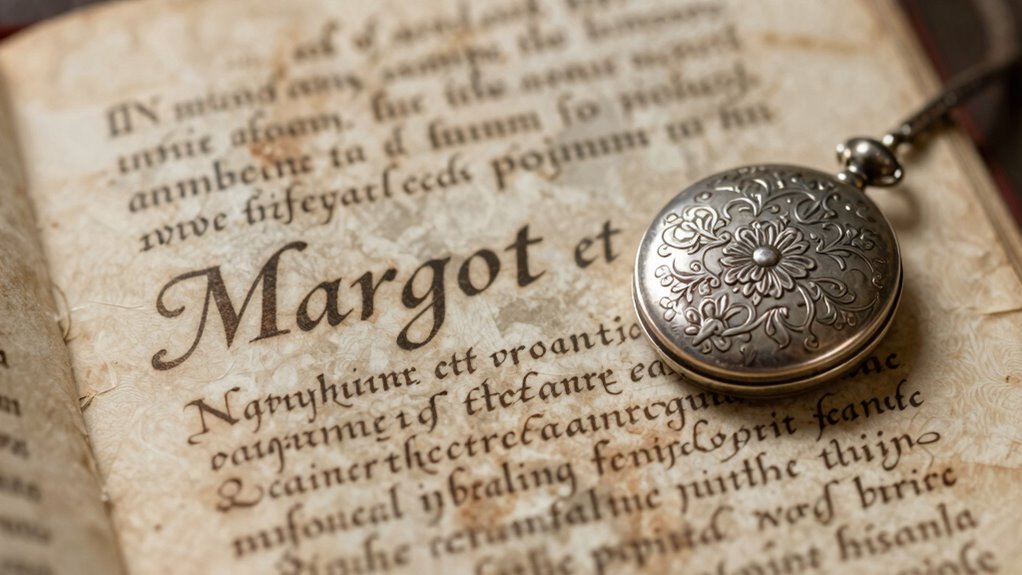
If you’ve ever wondered about the true origins of the name Margot, you’ll find that its history reveals much more than just a simple label. The name etymology traces back to older forms rooted in European languages, especially French and Latin, carrying centuries of cultural significance. Originally, Margot is a diminutive of Marguerite, which itself derives from the Latin *Margareta*, meaning “pearl.” This connection highlights a sense of value and beauty, suggesting that those who bear the name are linked to qualities of rarity and preciousness. Over time, Margot evolved into a standalone name, gaining popularity across different regions and cultures.
Cultural variations add a fascinating layer to the name’s story. In French, Margot is often associated with elegance and classic charm, frequently used in literature and cinema, which helps maintain its timeless appeal. Meanwhile, in Spanish and Italian contexts, variations of the name—such as Margarita—share the same roots but might carry slightly different connotations. For instance, Margarita is also linked to the flower, the daisy, symbolizing purity and innocence, which can influence how the name is perceived in different communities. In English-speaking countries, Margot gained a reputation for sophistication, partially thanks to iconic actresses like Margot Robbie, who helped modernize its image while preserving its historical depth. The cultural significance of the name continues to evolve as it adapts to new generations and societal shifts. Additionally, the popularity of the name has been influenced by linguistic nuances, which shape its pronunciation and spelling across regions. Understanding the etymology of the name can deepen appreciation for its enduring charm and versatility.
Other cultural variations reflect local linguistic nuances, making the name versatile and adaptable. In some regions, the pronunciation shifts subtly; in others, the spelling may differ to fit linguistic patterns. Despite these differences, the core meaning remains consistent: a symbol of something cherished or precious. The name Margot, thus, carries a rich history that spans centuries and borders, blending Latin roots with cultural influences that shape its perception today. Whether you see it as a vintage favorite or a name with a modern twist, knowing its etymology and cultural variations enriches your understanding of what Margot truly embodies. It’s more than just a name; it’s a reflection of history, beauty, and cultural exchange, passed down through generations but still vibrant and relevant now. As you consider its significance, you realize that the name Margot’s true power lies in its ability to connect past and present, carrying a legacy that continues to inspire and captivate.
As an affiliate, we earn on qualifying purchases.
Frequently Asked Questions
What Are the Earliest Origins of the Name Margot?
You’ll find that the name Margot’s origins trace back to the French diminutive of Marguerite, meaning “pearl.” Its historical name variations include Marguerite in France and Margarita in Spain. The name gained popularity during medieval times, often associated with queens and noblewomen. Its roots are linked to Latin and Greek influences, highlighting a rich history of elegance and beauty that continues today.
How Has the Pronunciation of Margot Evolved Over Time?
Imagine the pronunciation of Margot as a river, flowing and shifting with each linguistic influence. Over time, its sound has evolved from the French “mar-GOH” to various forms like “MAR-go” or “mar-GOT.” These shifts reflect cultural exchanges and regional accents shaping its melody. As language travels and adapts, the name’s pronunciation continues to dance, showcasing how linguistic influences mold even the most timeless of names.
Are There Any Cultural Variations of the Name Margot?
You’ll find that the cultural significance of the name Margot varies across regions, reflecting local traditions and languages. In France, it’s seen as elegant and sophisticated, while in English-speaking countries, it’s often associated with vintage charm. Regional variations in usage include spelling differences like Margaux or Margot, and pronunciation shifts. These cultural nuances give the name a diverse, international appeal, making it a timeless choice worldwide.
What Are Common Nicknames for Margot Historically?
You might think “Margot” has many common nicknames, but historically, diminutive forms like “Maggie,” “Meg,” or “Margo” are popular. Nickname trends often favor shorter, friendly versions, and these have endured over time. While “Maggie” is a classic choice, “Meg” offers a sleek, modern feel. Depending on the era, these diminutive forms reflect a tendency to create affectionate, casual variations for the name Margot.
How Popular Has the Name Margot Been in Different Eras?
You’ll notice that Margot’s popularity has fluctuated over the years, with peaks in the early 20th century and a resurgence in recent decades. Regional usage patterns show it’s more common in Europe, especially France and the UK, while less popular in the US. Trends reveal that modern naming preferences favor vintage and classic names, helping Margot regain popularity as a stylish, sophisticated choice for parents today.
As an affiliate, we earn on qualifying purchases.
Conclusion
So, next time you meet a Margot, remember she’s carrying a name packed with history, charm, and a dash of old-world flair. It’s not just a pretty sound—it’s a badge of timeless elegance, daring to stay relevant through ages. Basically, calling her Margot is like whispering, “Hey, I appreciate a woman who’s been through centuries of chic.” Cheers to keeping classics alive, one name at a time!
As an affiliate, we earn on qualifying purchases.
As an affiliate, we earn on qualifying purchases.
Fall Picks
fall essentials
As an affiliate, we earn on qualifying purchases.