
The name David comes from ancient Semitic roots, meaning “beloved” or “friend,” and has deep biblical significance as Israel’s greatest king, symbolizing leadership and divine favor. Variations like Dawid or Davide show how cultures adapt it over time. It’s a timeless name linked to history, religion, and influential figures. If you want to explore how its story and popularity have evolved across cultures, there’s plenty more to discover.
Key Takeaways
- The name David originates from Hebrew, meaning “beloved” or “friend,” with roots in Semitic languages.
- It is biblically associated with King David, symbolizing leadership, strength, and divine favor.
- Variations like Davide, Davi, and Dawid reflect regional pronunciation and cultural adaptations.
- The name has cultural significance across religions and societies, influencing its enduring popularity worldwide.
- Modern usage includes secular, gender-neutral, and cross-cultural contexts, maintaining its classic and versatile appeal.
The Etymology and Linguistic Roots of David
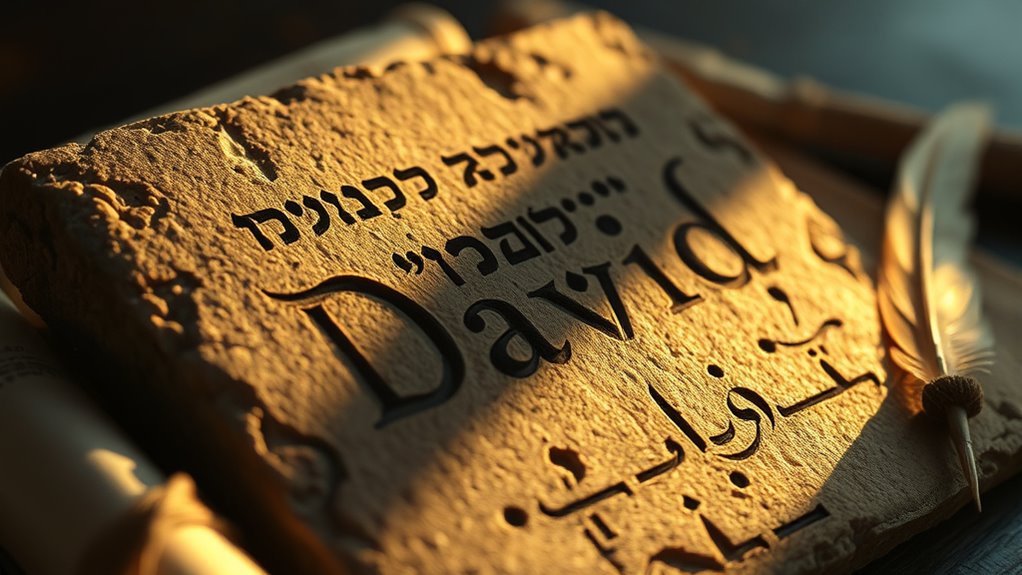
The name David has deep linguistic roots that trace back to ancient Semitic languages. Over time, its linguistic evolution reflects various phonetic variations across regions and cultures. In Hebrew, it’s דָּוִד (Dāwīḏ), which emphasizes specific consonant and vowel sounds. As the name spread, different languages adapted its pronunciation to fit their phonetic patterns, resulting in variations like “Dawid” in Polish or “Davide” in Italian. These phonetic variations highlight how language influences the way names are spoken and understood. The core meaning, “beloved” or “friend,” remains consistent, but its pronunciation shifts depending on linguistic context. Linguistic evolution demonstrates how names can transform across cultures while maintaining their original significance. Understanding these roots helps you see how the name’s sound and significance have evolved across different linguistic landscapes.
Historical Significance of the Name in Ancient Cultures
You’ll see how the name David shaped ancient traditions through its biblical roots and significance. It also appeared in Greek and Roman contexts, influencing various cultural practices. Exploring these variations reveals the name’s deep historical impact across different civilizations. Additionally, the name is associated with water-related symbolism, reflecting its enduring presence in stories of purification and life.
Biblical Roots and Traditions
Have you ever wondered about the biblical significance behind the name David? In biblical tradition, David is known as a shepherd who became Israel’s greatest king, symbolizing leadership and divine favor. During medieval times, the name gained associations with royalty and spiritual strength, reinforcing its deep religious roots. These medieval name associations helped preserve the name’s sacred status through generations. Today, modern name adaptations often emphasize qualities like courage and faith, reflecting its biblical heritage. You might find the name David used across different cultures, maintaining its core spiritual meaning. Its enduring popularity shows how biblical roots shape cultural perceptions, linking ancient traditions to contemporary identity. The name’s significance continues to inspire those who value its historical and spiritual foundations. Additionally, the historical significance of names demonstrates how names like David have been used to convey divine qualities and leadership throughout history.
Ancient Greek and Roman Usage
Although the name David is most famously linked to biblical traditions, it also holds a notable place in ancient Greek and Roman cultures. In ancient Greek mythology, similar names appeared in stories of heroes and gods, emphasizing noble qualities. The Romans, following their naming conventions, sometimes adopted biblical names like David into their personal names, especially in the later empire. This association highlights how the name transcended cultural boundaries. You might find inscriptions or references where ancient Greeks or Romans used variants of David, reflecting admiration or connection. The integration of biblical names into Roman society shows their flexibility in adopting foreign influences. Additionally, in some cases, the name David was associated with leadership qualities reflected in ancient naming practices, underscoring its cultural significance. Overall, David’s presence in these cultures underscores its broader historical significance beyond biblical roots.
Cultural Variations Worldwide
The influence of the name David extended far beyond Greek and Roman societies, shaping cultural identities across various ancient civilizations. In many regions, it reflected regional naming customs, often symbolizing leadership or divine favor. Cross-cultural symbolism linked David to qualities like strength and justice, resonating differently worldwide. For instance, in Hebrew traditions, David represented a heroic and spiritual figure, while in Persia, it signified wisdom. The name’s significance varied across cultures, adapting to local beliefs and practices. The table below highlights some of these variations:
| Culture | Meaning/Role | Symbolism |
|---|---|---|
| Hebrew | King, hero, spiritual figure | Leadership, divine favor |
| Persian | Wisdom | Knowledge, insight |
| African | Protector, ancestor | Strength, lineage |
| Indian | Warrior, noble | Valor, nobility |
| Chinese | Respected elder | Wisdom, authority |
Additionally, the cultural significance of the name has influenced its enduring popularity and varied representations throughout history.
The Biblical Legacy of King David

King David’s legacy in the Bible is profound, shaping both religious beliefs and cultural narratives. His story influences how you see leadership, faith, and redemption. Through name evolution and linguistic comparisons, his significance endures across generations. You’ll find his life reflected in poetic psalms, prophetic writings, and historical texts, emphasizing his role as a divine chosen leader. The biblical account highlights his courage, flaws, and unwavering trust in God. These elements foster a deep connection with his story, inspiring countless interpretations. Additionally, understanding the Vortex concept can deepen appreciation for his spiritual journey and divine favor.
Variations and Popularity Across Different Regions
The way the name David is used and recognized varies widely across regions, reflecting local cultures and linguistic traditions. You’ll notice regional name variations like Davide in Italy, Davi in Brazil, and Dawid in Poland. These differences illustrate how global naming trends adapt to local pronunciation and customs. In some areas, David remains a popular choice due to its biblical significance, while in others, it’s less common. The name’s enduring popularity is influenced by religious, historical, and cultural factors, making it a versatile and enduring name worldwide. As a result, you see a rich diversity of forms and uses, demonstrating how a simple name can evolve across different regions while maintaining its core identity. Additionally, the cultural significance of the name often contributes to its continued popularity across diverse communities.
Notable Figures Named David Through History

Have you ever wondered how many influential figures throughout history shared the name David? You’ll find that many famous Davids left a lasting impact on the world. For example:
- King David: The biblical king known for uniting Israel and writing many psalms.
- David Ben-Gurion: Israel’s founding father and first Prime Minister.
- David Bowie: The legendary musician who revolutionized rock and pop music.
- David Hume: An influential philosopher whose ideas shaped modern skepticism.
- The name David is also associated with skincare innovations, reflecting its popularity across different cultures and eras.
These historical figures demonstrate the name’s significance across different eras and fields. Whether in leadership, arts, or philosophy, the name David has been associated with influential figures who changed history and culture. Their legacies continue to inspire many today.
The Modern Relevance and Usage of the Name

Today, the name David remains popular across many cultures, frequently appearing in baby name charts. Its cultural significance has evolved, blending tradition with modern influences. As naming choices shift, David continues to hold a meaningful place in contemporary society. Additionally, the enduring popularity of the name reflects its cultural significance, which has been shaped by historical and social factors over time.
Popularity Trends Today
Ever wondered how the name David maintains its relevance in modern times? Its popularity continues to thrive, influenced by celebrity name trends and modern baby naming choices. Today, David remains a top pick for parents seeking timeless appeal.
- Many celebrities, like David Beckham and David Bowie, keep the name in the public eye.
- Its versatility makes it suitable for various cultural backgrounds and styles.
- The name often ranks high in baby name charts worldwide, reflecting ongoing popularity.
- Its classic yet adaptable nature guarantees it remains relevant across generations.
- Additionally, the name David is often associated with historical significance and cultural relevance, further cementing its enduring appeal.
Cultural Significance Shift
The name David has experienced a notable shift in its cultural significance, reflecting broader societal changes and evolving naming trends. Historically, David’s religious symbolism connected it deeply to biblical traditions, often representing strength and leadership. Today, these associations remain, but the name’s usage has expanded beyond religious contexts, making it more secular and universal. You’ll notice that gender associations with David have become more flexible; although traditionally male, the name now appears for all genders in some cases. This shift indicates a move toward personal choice over cultural or religious expectations. Additionally, the increasing popularity of unisex names exemplifies this broader trend toward gender-neutral naming practices, which has influenced how traditional names like David are perceived and used. As a result, David’s modern relevance blends historical reverence with contemporary openness, allowing the name to adapt to diverse identities and societal values while maintaining its core symbolic significance.
Contemporary Naming Choices
As society’s attitudes toward gender and identity continue to evolve, the name David reflects these changes through its growing versatility in modern naming choices. Today, parents often blend traditional naming rituals with contemporary trends, creating unique identities for their children. The name David remains popular due to its timeless appeal, but it’s also used in diverse ways to express individuality. You might notice more unisex or gender-neutral variations, highlighting shifting perceptions. People choose David to honor heritage while embracing modern values. This flexibility shows how naming choices adapt to current cultural shifts. Incorporating attention to detail and awareness of social trends, parents are increasingly customizing names like David to reflect personal and cultural identities.
Frequently Asked Questions
How Has the Popularity of the Name David Changed in Recent Decades?
You’ll notice that the popularity of the name David has fluctuated over recent decades. Trends in baby naming show it peaked mid-20th century, remaining a favorite into the 1980s and 1990s. However, historical popularity charts reveal a gradual decline since then, as newer names gain attention. Despite this, David still remains a classic choice, holding steady in many regions due to its timeless appeal and cultural significance.
What Are Some Common Nicknames or Diminutives of David?
Imagine holding a shining gem; that’s what nicknames and diminutives of David feel like. Common ones include Dave, Dai, and Davy, each reflecting cultural variations across English, Welsh, and other traditions. These shorter forms symbolize closeness and familiarity, like a warm handshake or a whispered secret. By using these variations, you connect more deeply, honoring the diverse ways people around the world personalize and cherish the name David.
Are There Any Famous Fictional Characters Named David?
You’ll find plenty of famous fictional Davids, like David in literature, who appear in various stories. These characters often symbolize strength or leadership, making them memorable. For example, David from the Bible is a legendary figure, and in modern fiction, characters named David often embody qualities of bravery or wisdom. These fictional Davids help shape stories across genres, leaving a lasting impression on audiences worldwide.
How Does the Name David Vary in Pronunciation Across Cultures?
Think of pronunciation differences like a tapestry of voices echoing around the world. Across cultures, the name David varies in pronunciation, reflecting local language rhythms and sounds. For instance, in English, it’s pronounced “DAY-vid,” while in Spanish, it’s “DAH-vid,” and in Hebrew, “DAH-vid” with a different emphasis. These cultural pronunciation variations make the name rich and diverse, connecting you to global traditions.
What Are the Cultural or Religious Significance Attached to the Name Today?
You’ll find that the name David holds deep religious significance today, often used in religious ceremonies and prayers, symbolizing faith and leadership. Many cultural festivals celebrate David’s legacy, especially in Jewish, Christian, and Islamic communities, honoring his historical and spiritual importance. These events reinforce his role as a symbol of strength and devotion, making the name a meaningful part of cultural identity and religious practice across various societies today.
Conclusion
You now see how the name David carries a rich history that spans centuries and cultures. From ancient kings to modern icons, it’s a name that’s woven into the fabric of history itself. Its significance is so profound, it’s like a beacon that shines brighter than a thousand suns. Whether you’re inspired by its biblical roots or its global popularity, David’s legacy continues to influence lives in ways that are truly unstoppable.