
Celtic saints’ names hold deep meanings and reflect a rich spiritual heritage. These names, like Brendan and Columba, aren’t just labels; they tell stories of virtue, faith, and heroism. They link the past with the present, shaping identities and offering life lessons. Each name carries a legacy that inspires reflection on your own values and beliefs. Keep exploring, and you’ll uncover even more about the fascinating influence of Celtic saints on culture and spirituality.
Key Takeaways
- Celtic saints’ names reflect their virtues, lives, and divine connections, serving as historical and spiritual symbols within medieval hagiography.
- Each saint’s name carries unique narratives of faith, inspiring personal and collective identities across generations and cultures.
- Iconography associated with saints enhances understanding of their virtues and miraculous deeds, reinforcing their significance in spiritual heritage.
- The legacies of Celtic saints are preserved through stories, guiding contemporary reflections on virtue and identity.
- Recognizing the power of these names fosters appreciation for cultural heritage and encourages individuals to embody the virtues they represent.
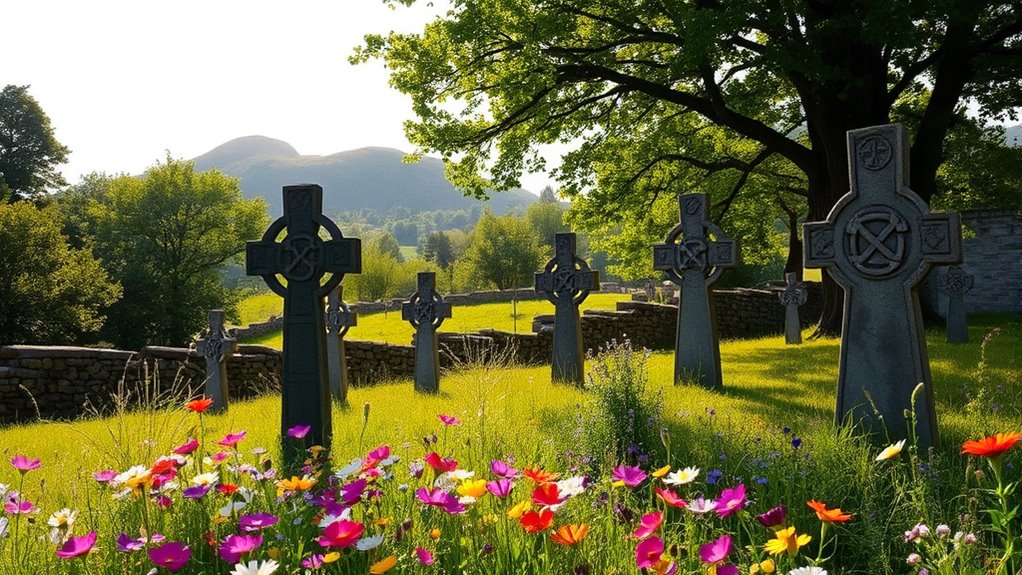
Have you ever wondered how Celtic saints’ names carry the weight of history and spirituality? These names aren’t just labels; they’re threads woven into the rich tapestry of medieval hagiography, reflecting the lives, virtues, and miraculous deeds of these revered figures. When you hear names like Brendan, Columba, or Aidan, you’re not just encountering a name; you’re exploring a narrative filled with devotion, struggle, and the deep connection between the earthly and the divine.
Celtic saints’ names weave rich narratives of devotion and spirituality, inviting exploration of their enduring legacies.
The legacy of these saints is intricately tied to the stories told about them. Medieval hagiography—essentially the biographies of saints—serves as a vital medium through which their names resonate. These texts highlight their virtues, emphasizing qualities like compassion, bravery, and steadfast faith. For instance, think about St. Brendan the Navigator; his name invokes a spirit of adventure and exploration, and his story inspires countless journeys across seas and through life. Each saint’s name echoes with the lessons they imparted, and their legacies continue to guide and inspire.
Then there’s the fascinating aspect of saintly iconography. When you visualize these saints, you often picture them adorned with specific symbols that represent their lives and miracles. Whether it’s St. Patrick with a shamrock, illustrating the Holy Trinity, or St. Brigid with her cross made of rushes, these images deepen your understanding of their names. They serve as visual storytelling, reinforcing the attributes and virtues associated with each saint. In many ways, the iconography crystallizes the essence of their names, merging the visual and the verbal into a singular, powerful representation.
As you explore more deeply into the significance of Celtic saints’ names, you’ll find that they carry an enduring legacy that transcends time and geography. These names symbolize a shared spiritual heritage, shaping identities and communities. Each time you encounter a Celtic saint’s name, you’re invited to participate in a narrative that spans centuries, one that celebrates faith and the quest for meaning in life. Additionally, understanding the importance of names can further enhance your appreciation for their historical and cultural significance.
In a world where names often lose their significance, Celtic saints’ names remind you of the power embedded in identity. They encourage you to reflect on the virtues you aspire to embody and the legacy you wish to leave behind. So, the next time you hear a Celtic saint’s name, remember: it’s not just a name; it’s a story waiting to inspire you.
Frequently Asked Questions
What Is the Significance of Celtic Saints in Modern Culture?
Celtic saints hold significant value in modern culture, as they embody Celtic spirituality and reflect deep-rooted traditions. You’ll find their stories inspiring, often emphasizing themes of compassion and community. Many people seek out saint relics, which connect them to history and provide a sense of belonging. By celebrating these figures, you’re honoring a rich heritage that influences art, literature, and local customs, fostering a greater appreciation for spiritual connections in today’s world.
How Do Celtic Saints Influence Contemporary Naming Practices?
Imagine walking through a sea of names that echo history. Celtic saints influence contemporary naming practices by inspiring name choices that connect you to your cultural identity. Parents often select names like Aidan or Fiona, invoking the legacy of these saints. By choosing these names, you honor tradition while instilling a sense of belonging in future generations. The resonance of these names serves as a bridge between past and present, enriching your cultural tapestry.
Are There Any Myths Associated With Celtic Saints?
Yes, there are numerous myths associated with Celtic saints. You’ll find miraculous legends that highlight their divine powers, like healing the sick or performing extraordinary feats. These stories often revolve around sacred relics, believed to possess magical properties. For instance, the remains of a saint might be thought to cure ailments or protect a community. Engaging with these myths can deepen your appreciation for the cultural heritage surrounding Celtic saints.
How Were Celtic Saints Venerated in Their Time?
Celtic saints were venerated through various practices, including the creation of medieval relics and the establishment of pilgrimage sites. You’d visit these sites to seek blessings, healing, or guidance, often leaving offerings. Communities celebrated feast days dedicated to the saints, fostering a sense of unity and devotion. These practices not only honored the saints but also strengthened the cultural identity of the people, connecting them to their spiritual heritage in meaningful ways.
What Role Did Celtic Saints Play in Local Communities?
Celtic saints played a crucial role in local communities by serving as spiritual leaders and focal points for community gatherings. They inspired devotion and unity, often becoming the subjects of local legends that reinforced cultural identity. You’d find people coming together to celebrate feast days and share stories about their lives, fostering a strong sense of belonging. Their influence helped shape the values and traditions that defined these communities for generations.
Conclusion
In exploring the names of Celtic saints, you uncover a rich tapestry of meaning and heritage that contrasts the simplicity of modern life. Each name whispers tales of devotion and sacrifice, inviting you to reflect on the profound impact these figures had on their communities. While today’s world often prioritizes the fleeting, these saints remind you of the enduring power of faith and tradition, encouraging you to cherish the legacies that shaped your culture and identity.