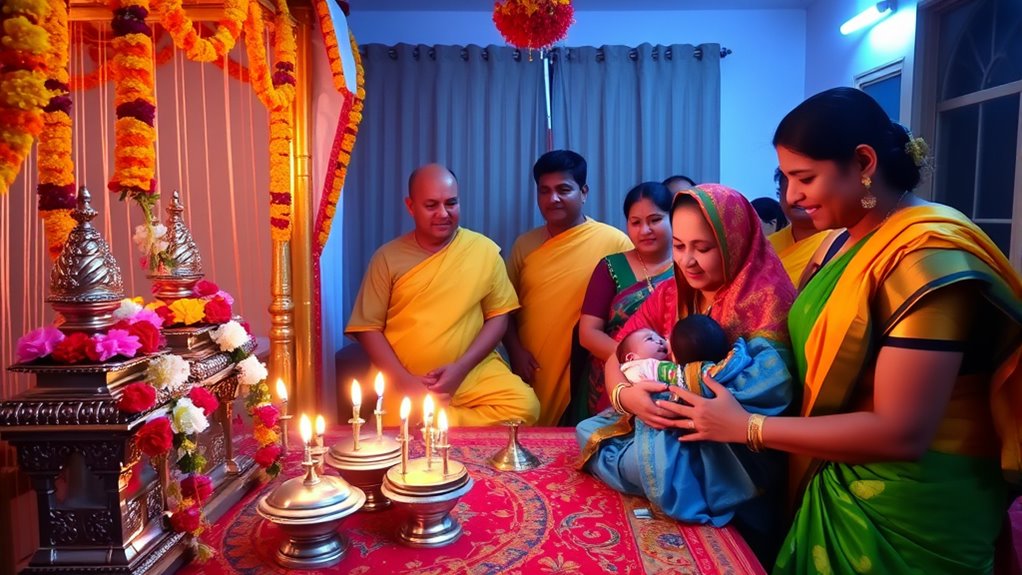

When choosing an auspicious Hindu baby name, you should consider traditional rituals, cultural significance, and astrological factors like Nakshatra and planetary influence. Focus on names that are easy to pronounce, meaningful, and align with spiritual virtues or divine attributes. Incorporate auspicious sounds or initials for positive energy. Balancing tradition with modern preferences helps create a unique yet meaningful name. To learn more about custom practices and selecting the perfect name, keep exploring these sacred traditions.
Key Takeaways
- Incorporate planetary influences and nakshatra compatibility to select auspicious names aligned with the child’s astrological chart.
- Consider pronunciation, simplicity, and cultural significance to ensure the name resonates and is easy to use.
- Include divine names or attributes to enhance spiritual meaning and reflect virtues like wisdom or purity.
- Follow traditional rituals such as Ganesh Puja and Aarti to bless the child and invoke positive energies.
- Consult elders or spiritual advisors for guidance on auspicious initials, sounds, and timing of the naming ceremony.
Significance of the Namkaran Ceremony in Hindu Culture

The Namkaran ceremony holds deep significance in Hindu culture because it marks the official naming of a newborn, symbolizing their identity and future path. This event is rooted in cultural rituals that have been passed down through generations, emphasizing the importance of family traditions. During the ceremony, you participate in specific rites that reflect your cultural heritage, often involving sacred chants and prayers. These rituals serve to bless the child and embed the name within a spiritual context, guiding their destiny. Family traditions play a crucial role, with relatives gathering to celebrate the new life and support the child’s journey ahead. Overall, the Namkaran is more than just naming; it’s a sacred rite that connects your child to your cultural roots and spiritual beliefs.
Factors to Consider When Choosing a Baby Name

Choosing a baby name is an important decision that involves several meaningful factors. First, consider the name pronunciation; guarantee it’s easy to say and spell, avoiding confusion. Second, think about name uniqueness—a distinctive name helps your child stand out while still respecting tradition. Third, reflect on cultural and religious significance to choose a name that resonates with your beliefs. Fourth, evaluate how the name sounds with the family surname, maintaining harmony. These factors help you select a name that is meaningful, memorable, and respectful of your heritage. By paying attention to pronunciation and uniqueness, you guarantee the name feels right now and for your child’s future. Additionally, understanding the symbolism behind certain names can deepen their significance and align with spiritual or cultural values.
The Role of Astrology in Selecting Auspicious Names

Astrology plays a key role in choosing auspicious names by considering planetary influences and their effects. You also need to check nakshatra compatibility to guarantee the name aligns with your child’s lunar mansion. Additionally, selecting the right timing based on astrological charts can enhance the name’s positive impact. Incorporating traditional tea ceremonies can symbolize harmony and respect in family rituals during naming ceremonies.
Planetary Influences on Names
Planetary influences play a significant role in selecting auspicious names during Hindu namkaran ceremonies. Your planetary symbolism and planetary charts help determine which syllables or sounds bring good luck and positive energy. When evaluating planetary charts, astrologers look at specific planetary positions that influence your child’s future. Here are key points to contemplate:
- The planet ruling your child’s birth ascendant guides name choices.
- The Moon’s position influences the sound vibrations for naming.
- Mercury’s placement affects names related to intelligence and communication.
- Jupiter’s influence suggests choosing names linked to growth and prosperity.
Nakshatra Compatibility Factors
Nakshatra compatibility plays a crucial role in selecting an auspicious name, as it guarantees the name aligns with the child’s lunar constellation. You should consider nakshatra and zodiac alignment to confirm harmony between the child’s star and planetary influences. Each nakshatra corresponds to specific star-planet combinations, which influence personality and destiny. When choosing a name, check the star planet correspondence to find a balanced match, enhancing positive energies. This compatibility helps create a name that supports the child’s growth and aligns with cosmic forces. By paying attention to nakshatra and zodiac alignment, you ensure that the name resonates with the child’s celestial blueprint, fostering auspicious beginnings and spiritual harmony from the outset. Understanding essential oils and their properties can also add positive energies to the naming ceremony and celebrations.
Astrological Timing for Naming
Choosing the right time to name your baby can considerably influence the auspiciousness of the name and the child’s future. Astrology guides you to select moments when celestial alignments are most favorable. Here are key points to consider:
- Check the lunar calendar for auspicious moments aligned with your baby’s birth nakshatra.
- Identify specific planetary positions that support positive energy and growth.
- Select a time during favorable planetary transits for naming ceremonies.
- Ascertain the chosen moment aligns with auspicious planetary combinations in your child’s birth chart.
- Consulting with an experienced astrologer can help determine the most auspicious timing for the naming ritual.
Traditional vs. Modern Naming Trends

You notice how traditional names carry deep cultural significance, connecting you to heritage and history. At the same time, modern naming trends reflect evolving preferences, often emphasizing uniqueness and individual identity. This shift sparks a conversation about balancing tradition with personal expression in naming practices. Additionally, some parents consider meaningful tattoos as a way to honor their cultural roots.
Cultural Significance of Names
Names hold deep cultural significance in Hindu tradition, serving as more than just labels—they reflect spiritual beliefs, family heritage, and social identity. Traditional names often embody cultural symbolism and carry historical significance, connecting you to your roots. Modern naming trends may focus on uniqueness, but many still honor these deeper meanings. To understand this better:
- You might choose names linked to deities or virtues for spiritual connection.
- Names passed down through generations preserve family history.
- Cultural symbolism influences names that represent qualities like wisdom or strength.
- Recognizing historical significance helps maintain cultural continuity through naming choices.
- Self Watering Plant Pots exemplify innovative design by combining practicality with sustainability, much like traditional names encapsulate cultural values.
Evolving Naming Preferences
Traditional naming practices in Hindu culture emphasize honoring ancestors and preserving cultural heritage through meaningful, often Sanskrit-based names. However, evolving preferences show a shift toward modern trends that embrace gender-specific naming, making it easier to identify a child’s gender at birth. Many parents now blend traditional and contemporary influences, choosing names that reflect personal or global preferences. Regional naming customs also influence choices, with some areas favoring unique and locally inspired names over classical ones. While some families uphold the deep-rooted customs, others prefer innovative or simplified names that suit modern lifestyles. This blending of old and new illustrates how Hindu naming practices adapt to changing times, balancing cultural significance with personal expression, and market demand can influence the popularity of particular names.
Popular Hindu Baby Names and Their Meanings
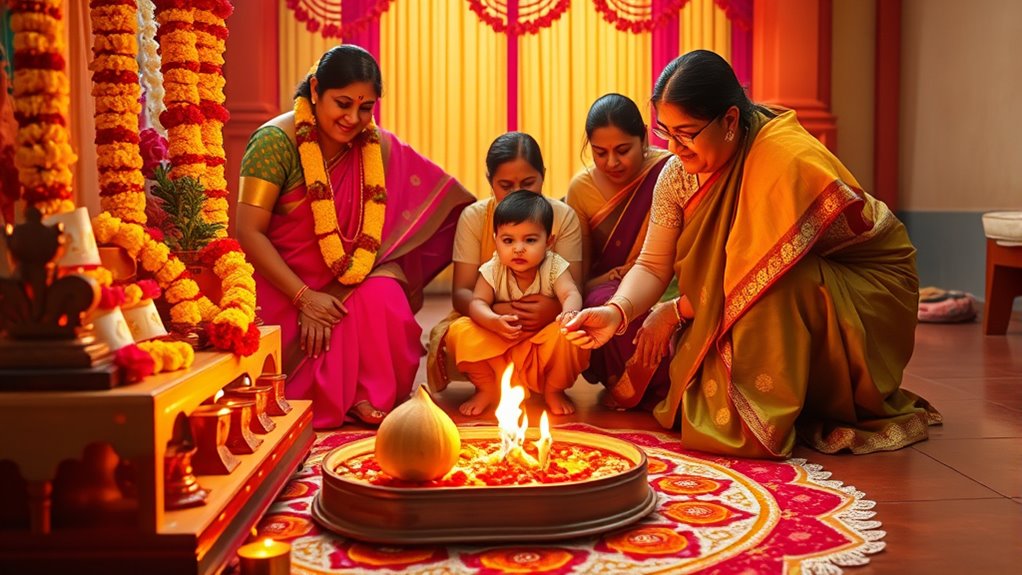
Have you ever wondered about the significance behind popular Hindu baby names? These names often reflect rich Hindu baby name origins and are influenced by historical name trends. To help you understand, here are some common choices:
Discover the meaning and cultural significance behind popular Hindu baby names.
- Aarav – Meaning “peaceful” or “calm,” popular for boys.
- Ananya – Signifies “unique” or “incomparable,” often chosen for girls.
- Rohan – Meaning “ascending” or “growing,” a common name with roots in Hindu culture.
- Deepa – Signifies “lamp” or “light,” representing enlightenment and positivity.
- Many names are chosen based on their phonetic appeal and meaningful symbolism, aligning with cultural and spiritual values.
These names are rooted in tradition but also adapt to modern preferences, reflecting cultural values and the evolving landscape of Hindu name choices.
Incorporating Divine Names and Attributes

Incorporating divine names and attributes into Hindu baby names allows parents to bestow spiritual significance and divine blessings upon their children. Divine name selection involves choosing names that reflect qualities of gods, goddesses, or revered saints, infusing the name with sacred energy. Attribute incorporation strategies focus on highlighting virtues like wisdom, strength, compassion, or purity, aligning the child’s character with divine qualities. For example, selecting names that mean “knowledge” or “protector” can inspire positive traits. You can also combine divine names with meaningful attributes to create unique names that carry deep spiritual symbolism. This approach not only honors Hindu traditions but also encourages your child to embody divine virtues throughout life. Additionally, understanding the role of attention in creative practice can help parents focus thoughtfully on selecting names that truly resonate with their spiritual aspirations.
Tips for Parents in the Naming Process

Choosing the right name for your baby can feel overwhelming, but focusing on a few practical tips can make the process smoother. First, understand the significance of naming traditions, which often emphasize auspicious initials or specific sounds. Second, consider cultural variations that influence naming styles and rituals, ensuring the name aligns with your family’s heritage. Third, consult elders or spiritual advisors for guidance, as their experience can help you select meaningful names. Fourth, keep the name simple and easy to pronounce, making it easier for your child to grow into it. By balancing tradition with personal preferences, you’ll find a name that honors your roots and feels right for your family’s future. Additionally, understanding the auspicious initial or sound associated with traditional naming practices can help you choose a name that brings positive energy and blessings.
Celebrating the Naming Ceremony: Rituals and Customs

The naming ceremony, or Namkaran, is a joyful occasion filled with meaningful rituals that celebrate your child’s new identity. These cultural rituals symbolize blessings, purity, and auspicious beginnings. You might observe specific naming ceremony traditions, such as chanting mantras, applying turmeric, or offering flowers to deities. Each ritual holds significance, connecting your child to spiritual and cultural roots. To understand better, here’s a quick overview:
| Ritual | Significance | Timing |
|---|---|---|
| Ganesh Puja | Remove obstacles, invoke blessings | Before naming |
| Naming Ritual | Officially give the child’s name | During ceremony |
| Aarti and Arti | Protect and bless the child | Throughout the day |
| Feast and Celebrations | Share joy with family and friends | Post-ceremony |
These customs create a memorable and sacred experience for your family. Additionally, incorporating traditional customs can enhance the spiritual significance of the ceremony.
Frequently Asked Questions
How Early Should Parents Decide on a Baby Name Before the Ceremony?
You should decide on a baby name at least a few weeks before the naming ceremony to allow for proper timing considerations and naming preparation. This gives you ample time to select an auspicious name, consult elders or astrologers if needed, and make sure everything is organized smoothly. Early decision-making helps you avoid last-minute stress, making the process more meaningful and respectful of tradition.
Are There Specific Names Recommended for Twins or Multiple Births?
For twins or multiples, you might choose names following twin naming traditions, like matching initials or themes. For example, in a recent case, parents named their twins Aarav and Anika, both beginning with ‘A’ to symbolize unity. When considering multiple birth name considerations, opt for harmonious names that reflect individual personalities yet maintain a connection. This approach celebrates their bond while honoring cultural naming customs.
Can Non-Hindu Family Members Participate in the Namkaran Ceremony?
Yes, non-Hindu family members can participate in the namkaran ceremony. Interfaith participation is often welcomed, and you can incorporate non-Hindu rituals to make everyone feel included. It’s a beautiful way to honor diverse traditions and strengthen family bonds. Just communicate openly with the priest or officiant beforehand, so they can guide you on respectful ways to involve everyone and blend elements from different faiths seamlessly.
What Are Common Mistakes to Avoid During the Name Selection Process?
You should steer clear of mispronunciation pitfalls and cultural insensitivity when choosing a name. Avoid rushing the process like a storm passing through—take your time to understand the name’s meaning and significance. Double-check pronunciation and cultural roots to honor traditions respectfully. Ignoring these steps risks hurting feelings or misrepresenting heritage, so treat the process as a precious journey, ensuring your child’s name resonates with love, respect, and cultural harmony.
How Can Modern Influences Be Balanced With Traditional Naming Practices?
To balance modern influences with traditional naming practices, you can incorporate modern naming trends while respecting cultural roots. Use cultural integration strategies like combining traditional names with contemporary ones or choosing names that hold significance yet sound fresh. This approach helps you honor heritage while embracing current trends, creating meaningful names that reflect both tradition and modernity. Keep in mind, consulting elders or cultural guides guarantees your choices stay respectful and auspicious.
Conclusion
Your child’s name is like a seed you plant with love and hope, destined to grow into a beautiful tree of virtues and blessings. By choosing an auspicious name with care and devotion, you nurture their future with divine energy and positive vibrations. Remember, this sacred act is the first step in shaping their journey—an eternal flame that guides them through life’s seasons. Embrace this moment, and watch their spirit blossom.