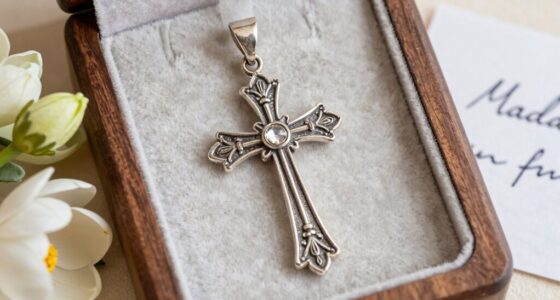
Marian names stem from the veneration of Mary, representing faith, hope, and protection across different cultures. They originate from Latin “Maria” and take variations like Marie, María, or Miriam, reflecting local languages and customs. These names often symbolize religious devotion, specific stories, or titles associated with Marian apparitions. They serve as cultural symbols of identity and spiritual connection. If you keep exploring, you’ll discover even more about the rich meanings and significance behind these names worldwide.

Prime made for students and young adults
- Fast, free delivery for dorm and study essentials
- Prime Video and Amazon Music included
- Member-only deals
Key Takeaways
- Marian names originate from the Latin “Maria” and reflect religious devotion to Mary, mother of Jesus.
- Variations across languages represent local cultural, linguistic, and religious influences.
- Names often embody specific Marian titles, apparitions, or miracles, symbolizing faith and cultural identity.
- Regional adaptations serve as markers of community pride and religious heritage.
- Marian names are believed to offer spiritual protection and blessings, reinforcing their symbolic significance.

Marian names are deeply rooted in various cultures, reflecting diverse linguistic traditions and religious influences. When you explore these names, you’re delving into a rich tapestry of history and cultural expression. The historical origins of Marian names trace back to the veneration of Mary, the mother of Jesus, whose significance in Christianity has made her a central figure across many regions. Over centuries, her name has been adapted to fit different languages and dialects, creating a multitude of variations that carry unique meanings and connotations. For example, the Latin form “Maria” is the root of many Marian names, and it has given rise to variants like Marie in French, María in Spanish, and Miriam in Hebrew. Each variation carries its own historical weight and cultural nuance, often influenced by local religious practices and linguistic structures.
As you consider the cultural variations of Marian names, you’ll notice how these names evolve to reflect local customs and traditions. In some cultures, Marian names are associated with specific attributes or stories. For instance, in Italy, names like Maria and Maria Grazia are common and often linked to particular Marian apparitions or titles, such as Our Lady of Lourdes or Our Lady of Mount Carmel. In Eastern Europe, variations like Marija or Marusya carry a sense of regional identity, often intertwined with local religious festivals or saints. In Latin America, Marian names are frequently combined with other elements to honor specific titles or miracles, creating unique compound names that emphasize particular devotions. Additionally, the cultural significance of Marian names often plays a role in community identity and religious celebrations. You might also observe that Marian names often carry deep symbolic meanings rooted in their cultural contexts. In many traditions, these names are not just identifiers but are believed to bring protection, blessings, or spiritual connection. For example, a name like “Our Lady of Guadalupe” holds immense cultural significance and embodies national identity, while in other regions, simply carrying a name like Maria symbolizes faith and hope. Whether it’s a name that’s been passed down through generations or a more modern adaptation, each variation reflects a community’s religious devotion and cultural pride.
As an affiliate, we earn on qualifying purchases.
Frequently Asked Questions
How Do Marian Names Influence Cultural Identity?
Marian names influence your cultural identity by reflecting celebratory naming traditions and regional linguistic influences. When you carry a Marian name, you connect to a community’s faith, history, and local customs. These names often honor the Virgin Mary, emphasizing shared spiritual values. They also showcase regional language nuances, helping you feel rooted in your heritage while fostering a sense of belonging and cultural pride across different regions.
Are Marian Names Associated With Specific Religious Practices?
Sure, Marian names are deeply tied to specific religious practices, especially in art and literature where they symbolize devotion and purity. When you see Marian names in art, they often represent prayers made visible, while in literature, they echo themes of grace and mercy. These names aren’t just labels—they’re a spiritual shorthand, guiding your heart and actions through centuries of tradition, reminding you that faith is often painted and written into history itself.
How Have Marian Names Evolved Over Centuries?
You’ll notice Marian names have evolved considerably over centuries, reflecting changing cultural and religious influences. Historical naming trends show how these names adapted through linguistic variations, from Latin origins like Maria to local forms such as Marie or Mariam. As societies interacted and languages blended, Marian names grew more diverse, symbolizing evolving devotion and cultural identity. This evolution highlights how language shapes religious expression across different periods and regions.
Do Marian Names Have Different Meanings in Various Regions?
You might wonder if Marian name variations carry different meanings across regions. The answer is yes—regional naming customs influence how these names are understood and cherished. In some areas, Marian names symbolize purity and devotion, while in others, they reflect local traditions or historical figures. This diversity makes Marian names uniquely fascinating, revealing a tapestry of cultural meanings that evolve and adapt, capturing the spirit of each region’s faith and heritage.
What Are the Most Common Marian Names Worldwide?
You’ll find that Mary, Maria, Mariam, and Miriam are among the most common Marian names worldwide. Variations like Marie in French, María in Spanish, and Miriam in Hebrew reflect diverse Marian name variations in different languages. These names hold deep cultural significance in history, symbolizing faith, devotion, and cultural identity. Their widespread use highlights the enduring importance of Marian names across cultures, connecting people through shared religious and historical traditions.
As an affiliate, we earn on qualifying purchases.
Conclusion
You’ve seen how Marian names vary across languages, reflecting rich cultural stories and religious traditions. Notably, over 20 million people worldwide bear the name Maria or its variants, showcasing its universal appeal. By understanding these names’ meanings, you connect deeper with diverse cultures and histories. So, next time you hear a Marian name, remember it’s more than a label—it’s a symbol of shared faith and heritage that unites millions globally.
As an affiliate, we earn on qualifying purchases.
As an affiliate, we earn on qualifying purchases.
Halloween Picks
halloween
As an affiliate, we earn on qualifying purchases.