TL;DR

Prime made for students and young adults
- Fast, free delivery for dorm and study essentials
- Prime Video and Amazon Music included
- Member-only deals
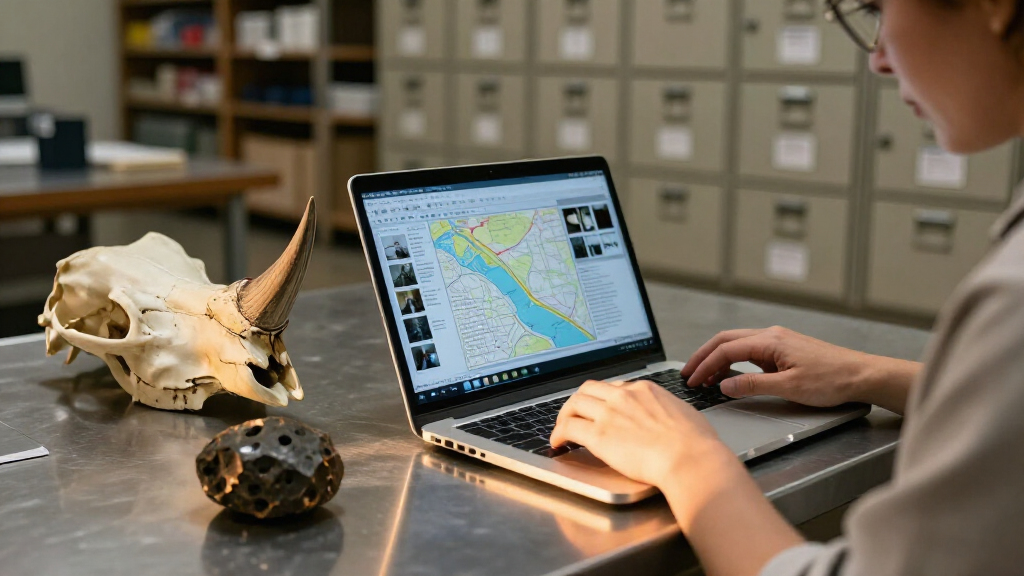
Software engineer Jesse Waites used an AI-assisted workflow to sift millions of historical records, reporting a forgotten meteorite account, records of three rhinoceroses and possible unrecorded volcanic eruptions. The findings are leads grounded in archival documents, not a claim that AI independently verified new discoveries; each candidate was checked against scans and existing catalogues.
Software engineer Jesse Waites says an AI-assisted search of millions of historical records surfaced a forgotten meteorite report, documents concerning three rhinoceroses and possible unrecorded volcanic eruptions. The findings show how machine-assisted screening can help researchers locate obscure material in large archives, but the source presents them as records to investigate and verify, not as discoveries established by AI alone.
Waites described the work in a post published after historian Benjamin Breen reported finding a 1615 eyewitness account of dodos in Dutch East India Company records. Breen’s discovery, Waites wrote, prompted him to test whether similar tools could search across several historical questions at once. The archive transcription project GLOBALISE contains 4.35 million pages of Company records dating from the 1600s to the 1790s.
Waites said his workflow also drew on digitized Dutch newspapers, two centuries of American newspapers and some ship logbooks. It converted 5.7 million passages from the Company archive into meaning-based mathematical representations, allowing searches to find related passages even when historical spelling or text recognition errors obscured a keyword. A small, fast model screened candidate passages; a larger model then reviewed a smaller set, translated material and extracted dates and places.
Waites said he checked promising results against scans of original pages and consulted catalogues used by specialists before treating a record as potentially new. The reported outcomes include the meteorite account, rhinoceros records and references that may relate to eruptions not yet recorded in existing accounts. The source does not provide enough detail to independently evaluate each item’s date, location or status, so the archival documents and their interpretation remain central to confirming the claims.
AI Can Triage Historical Records
The project addresses a practical obstacle in archival research: the volume of material. Waites estimated that reading the GLOBALISE pages himself at two minutes per page, eight hours a day and five days a week would take about 70 years. His system, he said, processed the archive in a twelve-hour overnight run. That comparison describes his estimate and workflow; it does not mean the AI completed historians’ work or verified every record.
Historical documents often contain inconsistent spelling, difficult handwriting and errors introduced by optical character recognition. A search based only on modern spellings can miss relevant records. Waites’s use of semantic search and staged review offers one way to narrow that problem: inexpensive initial screening limits what a more capable model and a human researcher need to inspect closely.
The payoff, if specialists confirm the candidates, could be more precise evidence for questions about past wildlife, geological events and travel. The method also carries risks: machine summaries may misread an old passage, and a plausible match is not automatically a new historical fact. Waites’s stated practice of returning to original scans is therefore an important part of the reported approach.
As an affiliate, we earn on qualifying purchases.
From Dodo Record to Wider Searches
The immediate inspiration was Breen’s account of a newly identified dodo reference in a 1615 ship’s journal. In the passage, sailors on Mauritius reportedly wrote that they “caught many tortoises, dodos.” The record was found in Dutch East India Company material made searchable through GLOBALISE. Waites said he wanted to extend that kind of search to several archival questions rather than focus on a single animal or document.
His candidate topics included reports of animals in Company records, historical earthquakes, meteorite falls, vanished ships and an unexplained major eruption dated to 1808. The records are particularly challenging because seventeenth-century Dutch spellings varied, while handwritten pages and old printed text can be imperfectly transcribed. Waites’s system sought passages by meaning, then used model-based filtering before a closer check against the page image.
Waites said the screening design combined a narrow-question model, which he called Jev, with Claude Haiku and the Claude Code agent. He reported that screening 59,000 mentions of elephants with Jev cost about US$3. That is his example of the pipeline’s cost, not a general estimate for archival AI research; prices and performance depend on the models, data and task.
“AI models can be confidently wrong, so every claim had to end at a real document.”
— Jesse Waites, describing the verification standard in his project post
As an affiliate, we earn on qualifying purchases.
Which Records Are Newly Verified?
The source does not publish full archival citations or detailed transcriptions for the meteorite and rhinoceros records in the supplied account. It also does not specify the dates, locations or documentary evidence for each reported item, or name the specialist catalogues against which every candidate was checked. Without those details, readers cannot independently judge whether the records are genuinely overlooked, how they change existing accounts, or whether the eruption references point to the 1808 event under investigation.
It is also unclear how many candidates the pipeline screened overall, how many were rejected after human review, and whether outside historians or subject specialists have evaluated the results. Waites describes an active research process, so the reported leads should not be treated as a completed catalogue or as independently confirmed historical conclusions.
As an affiliate, we earn on qualifying purchases.
Specialist Checks and Full Citations
The next step is to make the relevant archive references and page images available so historians and other specialists can inspect the evidence. Further checking would establish whether each record is accurately transcribed, correctly dated and genuinely absent from prior catalogues. It could also clarify whether the material changes the accepted timeline or merely adds detail to a known event.
Waites’s post frames the effort as an ongoing investigation rather than a final set of findings. Until full citations and independent assessments are available, the meteorite, rhinoceros and eruption material is best understood as a set of promising archival leads found with AI-assisted search.
optical character recognition scanner
As an affiliate, we earn on qualifying purchases.
As an affiliate, we earn on qualifying purchases.
Key Questions
What did the AI-assisted search find?
Jesse Waites reports finding a forgotten meteorite account, records concerning three rhinoceroses and references that may indicate unrecorded volcanic eruptions. The supplied account does not include complete citations or enough detail to independently confirm each item.
Did AI discover the dodo record?
No. Waites says his project was inspired by historian Benjamin Breen, who reported identifying a 1615 ship’s journal mentioning dodos on Mauritius. Waites then applied an AI-assisted workflow to other historical questions.
How did the archive-search workflow work?
Waites used meaning-based search to surface relevant passages despite spelling variation and transcription errors. A smaller model screened large numbers of results, a larger model reviewed selected passages, and Waites said he checked promising candidates against scans of the original documents.
Are the reported findings confirmed?
The source describes them as results of Waites’s investigation, but it does not supply the full documentation or outside specialist assessments needed to establish each as a new historical finding. The original pages and catalogue comparisons are necessary for that evaluation.
Why use AI to search historical archives?
Large archives can contain millions of pages, and historical spelling and imperfect text recognition make ordinary keyword searches unreliable. AI-assisted screening can narrow the material researchers need to examine, but archival claims still require checking against the documents themselves.
Source: hn
Fall Picks
fall essentials
As an affiliate, we earn on qualifying purchases.