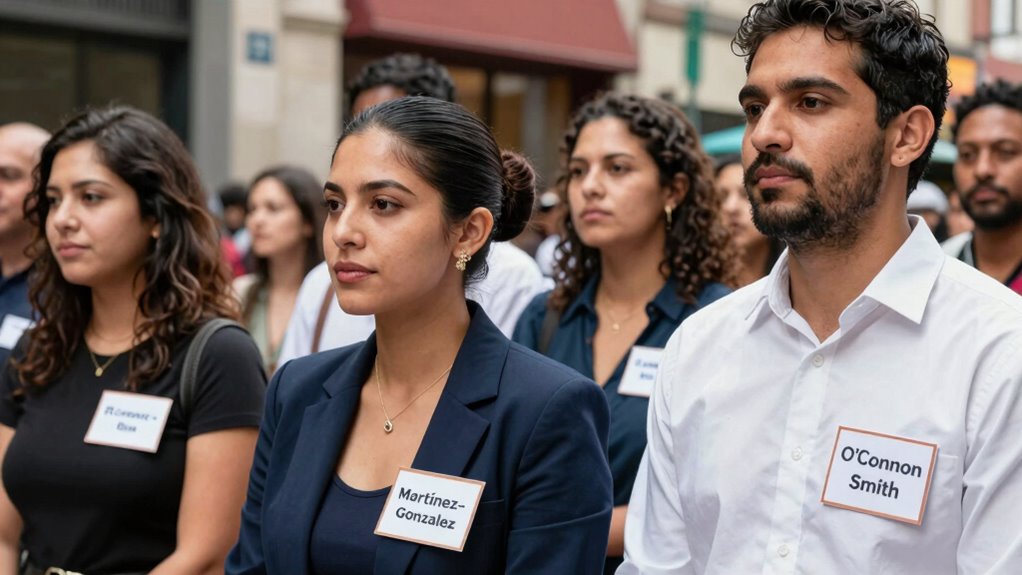

In many countries like the UK and Germany, hyphenated surnames are widely accepted and legally recognized, often requiring official registration or court approval. In contrast, cultures such as Japan and Korea rarely use hyphens due to traditional naming norms, while Latin American countries tend to be more flexible. Social perceptions vary, with some viewing hyphenation as a sign of equality or blending identities, but legal procedures and cultural norms can influence how these names are understood and used. Continue exploring to learn more.

Prime made for students and young adults
- Fast, free delivery for dorm and study essentials
- Prime Video and Amazon Music included
- Member-only deals
Key Takeaways
- Legal acceptance and regulations for hyphenated surnames vary, with some countries requiring official registration or court approval.
- Cultural norms influence whether hyphenation is common, accepted, or considered unconventional in different societies.
- Countries like the UK and Germany generally recognize hyphenated names, while Japan and Korea often do not support them.
- Hyphenation can impact legal documents, inheritance rights, and official identification, depending on national laws.
- Social perceptions of hyphenated surnames differ, symbolizing identity blending or challenging traditional naming conventions.
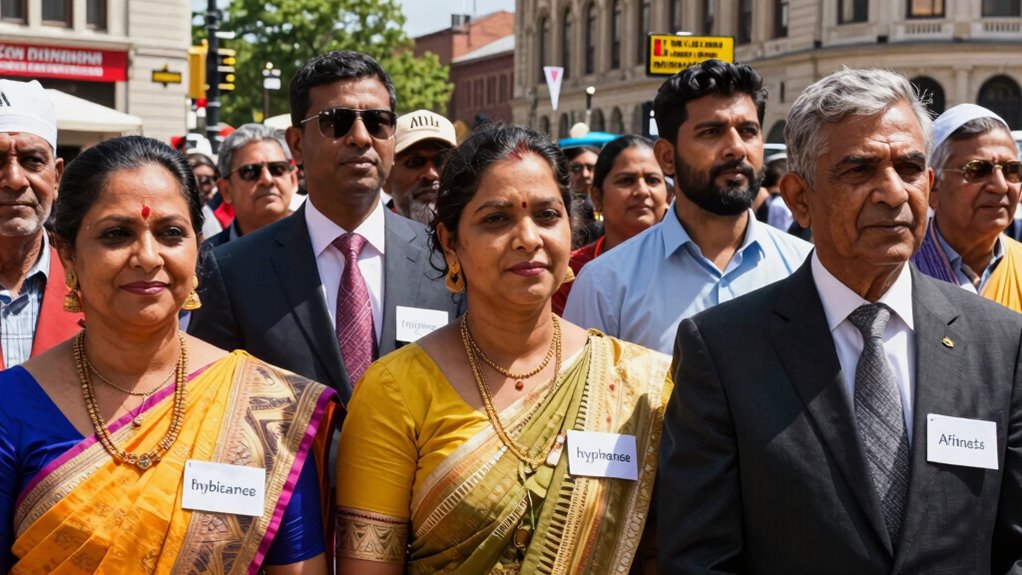
Hyphenated surnames are a common way to combine family names, but how they function varies widely across countries. In many places, adopting a hyphenated surname involves legal procedures that differ markedly from one nation to another. For instance, in some countries, you can freely choose to hyphenate your name at birth or during marriage, while in others, there are strict regulations or restrictions. Legal implications are important here; in certain jurisdictions, changing or hyphenating a surname requires court approval or official registration, which can be a lengthy and costly process. These legal steps ensure clarity in identification and prevent confusion in official records, but they can also introduce complications when dealing with inheritance rights, passports, or official documentation. Additionally, the process and acceptance of hyphenation can be influenced by legal procedures, which vary significantly around the world. Understanding these legal requirements is essential for anyone considering a hyphenated surname to ensure compliance with local laws. Moreover, some countries have specific naming conventions that may limit or influence hyphenation options, further complicating the process. Recognizing the legal frameworks that govern naming practices can help individuals navigate potential challenges more effectively.
Cultural significance deeply influences whether hyphenated surnames are embraced or discouraged. In many Western societies, hyphenation often symbolizes a blending of family identities, especially after marriage, reflecting a commitment to both lineages. It can serve as a statement of equality, especially when both partners wish to retain their original surnames. Conversely, in cultures where lineage and family names carry strong traditional weight, hyphenating might be viewed as a break from convention or even as disrespectful to ancestral practices. Some cultures see hyphenated surnames as a modern invention, while others consider them a sign of social status or progressive values. The cultural significance can determine how easily a person’s hyphenated name is accepted socially and professionally, affecting everything from personal identity to societal perceptions. Furthermore, social perceptions can evolve over time, influencing how hyphenated names are viewed in different generations or communities. In some societies, cultural perceptions about hyphenated names have shifted, leading to greater acceptance or rejection depending on social trends. These shifting perceptions can also be influenced by broader societal debates about identity and tradition.
You’ll find that in countries like the UK and Germany, hyphenated names are quite common and often legally recognized without much hassle, serving as a way to preserve both family names. Meanwhile, in countries like Japan or Korea, where family names are deeply rooted in tradition, hyphenation is rare and sometimes even legally complicated, as it might conflict with long-standing naming conventions. In Latin American countries, hyphenation might be more flexible, but it often depends on individual preference and family customs. Overall, understanding the legal implications and cultural significance of hyphenated surnames helps you navigate the complexities of identity and tradition across different contexts. Recognizing these differences enables you to appreciate the diverse ways people express their family heritage and personal choices through their names.
As an affiliate, we earn on qualifying purchases.
Frequently Asked Questions
Can Hyphenated Surnames Be Legally Changed or Removed Later?
Yes, you can legally change or remove hyphenated surnames later. You’ll need to go through legal name change processes, which vary by jurisdiction. Keep in mind, cultural perceptions can influence how such changes are received. You might face some paperwork and possible court hearings, but ultimately, the process allows you to update your name for personal, professional, or cultural reasons.
How Do Hyphenated Surnames Affect Inheritance Rights?
Hyphenated surnames generally don’t affect your inheritance rights directly, but gender implications and societal perceptions can influence how heirs are viewed or recognized. In some cultures, a hyphenated name might complicate legal documentation, potentially affecting inheritance processes. You should check local laws, as some jurisdictions treat hyphenated names as separate entities, which could impact your rights or obligations related to inheritance.
Are Hyphenated Surnames Common in Non-Western Cultures?
Hyphenated surnames are quite rare in most non-Western cultures, but they’re not nonexistent. You might find some instances where cultural naming traditions, like combining family names, influence this practice. Historically, the origins of hyphenation stem from Western customs, especially in Europe, but they haven’t gained widespread popularity elsewhere. In many cultures, names follow specific patterns, so hyphenation remains a unique, Western-influenced phenomenon rather than a common tradition.
Do Hyphenated Surnames Impact Travel or Visa Applications?
Hyphenated surnames can impact travel or visa applications, as they sometimes cause confusion or delays. You might face pronunciation challenges or mismatched documents, especially if officials are unfamiliar with your cultural perceptions of hyphenation. To avoid issues, make sure your paperwork matches the spelling and pronunciation, and carry supporting documents. Clarifying your surname’s structure beforehand helps smooth the process and reduces misunderstandings during your travels.
How Do Hyphenated Surnames Influence Digital Identity and Email Addresses?
Ever wondered how your hyphenated surname shapes your digital identity? It can make email management more complex, as it might be longer or less common, affecting how people find or remember you online. Hyphenated surnames add a layer of uniqueness but can also cause inconsistencies across platforms. You might need to update multiple accounts or explain your name’s structure. Does this make your online presence more memorable or harder to manage?
As an affiliate, we earn on qualifying purchases.
Conclusion
No matter where you are, understanding hyphenated surnames can feel like deciphering a secret code. Each country has its own rules, and it’s important to stay adaptable. Remember, the world’s your oyster—embrace the diversity, and you’ll find it’s easier to navigate these naming customs than you might think. So, keep an open mind, and you’ll see that sometimes, the proof is in the pudding when it comes to cultural differences.
As an affiliate, we earn on qualifying purchases.
As an affiliate, we earn on qualifying purchases.
Halloween Picks
halloween
As an affiliate, we earn on qualifying purchases.