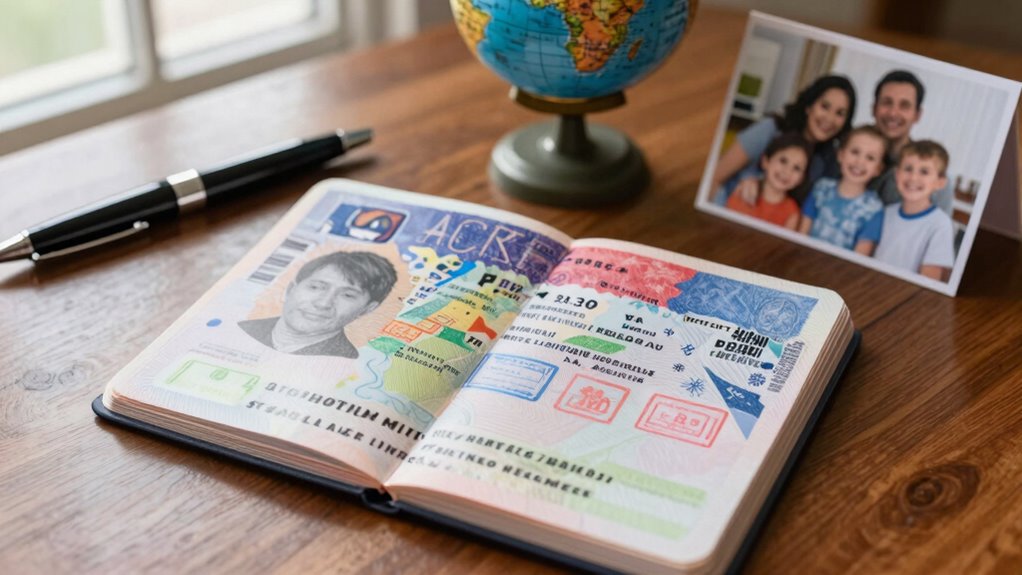

Before traveling abroad, you should understand that different countries have unique naming conventions, and these can impact how your child’s name appears on passports and documents. Make certain the child’s name matches local requirements—pay attention to hyphens, accents, and character limits. It’s important to update names well in advance and carry legal proof of any changes. Being aware of these rules helps avoid delays or issues at borders. Keep learning to make your travel smooth and hassle-free.

Prime made for students and young adults
- Fast, free delivery for dorm and study essentials
- Prime Video and Amazon Music included
- Member-only deals
Key Takeaways
- Verify the child’s name format matches the passport and travel documents, including hyphens and accents.
- Understand the country’s specific naming conventions and cultural practices before applying for travel documents.
- Ensure legal name changes are completed well in advance of travel to avoid discrepancies.
- Carry official proof of the child’s legal name, such as birth certificates or court orders.
- Familiarize yourself with international documentation standards to prevent border entry issues.
When traveling abroad, understanding the naming rules for your documents is essential to guarantee smooth entry and avoid unnecessary delays. Different countries have unique cultural naming conventions that influence how names are recorded on official documents. As a parent, it’s crucial to be aware of these variations to ensure your child’s passport and travel documents match local requirements. Familiarizing yourself with passport name requirements helps prevent issues at border controls, where discrepancies can cause hold-ups or even denial of entry.
Many countries follow distinct cultural naming conventions that may differ considerably from what you’re used to. For example, some cultures place the family name before the given name, while others might include multiple middle names or use patronymic naming systems. When applying for a passport for your child, it’s vital to record their name exactly as it appears on their birth certificate, but also to consider how the country’s rules might interpret it. Some nations might have strict character limits or specific formatting rules for names, so double-checking these can save trouble later.
Cultural naming conventions vary; ensure your child’s name matches birth certificate and country-specific passport rules.
In addition to understanding cultural naming conventions, you should pay close attention to passport name requirements. Each country’s passport application form will specify how to enter names, including whether hyphenated names, suffixes, or special characters are allowed. If your child has a hyphenated surname, for example, confirm whether it should be entered with or without the hyphen, as inconsistency can lead to mismatches with travel documents. It’s helpful to check if the country’s rules specify how to handle names with accents or special characters, which can vary widely. Being aware of international documentation standards can help you better prepare your child’s travel paperwork.
Another key point is to avoid making last-minute changes to your child’s name before traveling. If you plan to modify their name legally, do so well in advance, as changing official documents close to departure can cause delays or complications. It’s also wise to carry copies of legal documents that prove your child’s official name, especially if there’s any potential discrepancy between their birth certificate and passport. Being aware of naming conventions and how they are applied internationally can help you navigate the process more smoothly. Additionally, understanding official documentation requirements can prevent unexpected issues at border crossings.
As an affiliate, we earn on qualifying purchases.
Frequently Asked Questions
Are There Specific Naming Restrictions for Certain Countries?
Yes, different countries have specific naming restrictions influenced by international name formats and cultural naming traditions. You should research each destination’s rules, as some nations restrict certain characters, name lengths, or titles. For example, some countries avoid using symbols or numbers, while others have strict rules based on cultural traditions. Knowing these restrictions helps prevent legal issues and guarantees your child’s name adheres to local regulations when traveling abroad.
Can I Change My Child’s Name After Traveling Abroad?
Changing your child’s name after traveling abroad isn’t impossible, but it can be a complex process. You’ll need to go through a legal name validation, which varies depending on the country’s cultural naming rules. Some countries are strict, so make certain your child’s new name complies with local laws. Be prepared for paperwork, court approvals, and possible delays. Research the specific country’s procedures beforehand to avoid a bureaucratic nightmare.
How Do Dual or Multiple Names Affect Travel Documentation?
Dual or multiple names can complicate travel documentation because authorities might struggle with name pronunciation and verifying identities. You should guarantee that all names are consistently spelled across passports, visas, and other documents. Be aware of cultural variations, as some cultures list multiple names differently. Preparing clear, accurate documentation helps prevent delays and misunderstandings during travel, making the process smoother for you and your child.
Are There Age Restrictions for Naming Conventions Internationally?
Age restrictions for naming conventions vary internationally, but generally, there’s flexibility based on cultural traditions. Some countries allow naming flexibility regardless of age, while others have specific rules for infants and minors. It’s essential to comprehend local laws because certain cultures value traditional naming practices that might influence documentation. As a parent, researching each country’s cultural naming traditions ensures your child’s name aligns with local regulations and avoids issues during travel or registration.
What Happens if a Name Doesn’T Comply With Foreign Country Rules?
If a name doesn’t comply with foreign country rules, it may not be recognized legally, potentially causing issues with identification or official documents. Around 30% of countries have strict naming customs that could reject unconventional names. Understanding cultural naming customs is essential for legal name recognition, ensuring your child’s documents are valid abroad. Non-compliance might lead to delays, extra paperwork, or even name changes to meet local standards.
As an affiliate, we earn on qualifying purchases.
Conclusion
Remember, understanding the naming rules before your journey is like planting a sturdy tree before a storm—you’ll stand firm amid the winds of change. By familiarizing yourself with these guidelines, you safeguard your child’s identity and avoid unforeseen hurdles. So, pack this knowledge like a compass, guiding you through unfamiliar terrain, ensuring your travels are smooth and your family’s identity remains as steadfast as a lighthouse in the night. Safe travels!
international travel name correction kit
As an affiliate, we earn on qualifying purchases.
As an affiliate, we earn on qualifying purchases.
As an affiliate, we earn on qualifying purchases.
Columbus Day / Indigenous Peoples' Day Picks
long weekend sales
As an affiliate, we earn on qualifying purchases.