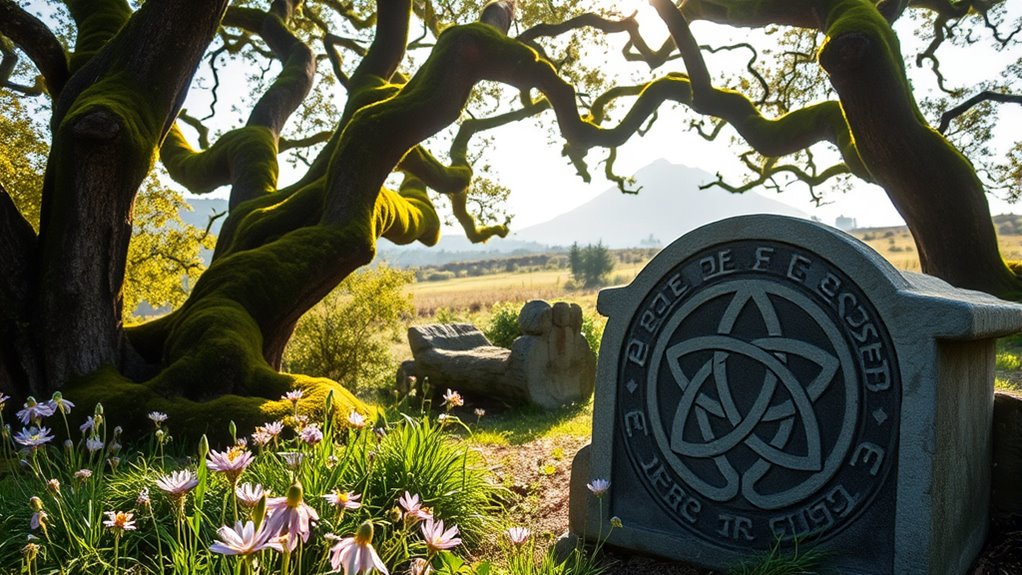

Celtic goddesses are powerful archetypes representing life, spirituality, and nature. For instance, Brigid embodies inspiration and protection, while Morrigan explores themes of war and fate. Danu symbolizes fertility and maternal care, while Aine reflects love and emotional balance. Each goddess carries unique meanings and attributes that can enrich your spiritual journey. By exploring their stories and symbolism, you’ll discover deeper connections and insights into their wisdom, enhancing your understanding of these divine figures.
Key Takeaways
- Brigid represents fire, poetry, and healing, symbolizing inspiration and protection in rituals.
- Morrigan embodies war and fate, highlighting the duality of life and death.
- Danu is the mother goddess of earth and fertility, linked to nurturing and natural cycles.
- Aine symbolizes love and fertility, representing passion, empowerment, and emotional balance.
- Each goddess serves as an archetype, reflecting universal themes in personal growth and spirituality.
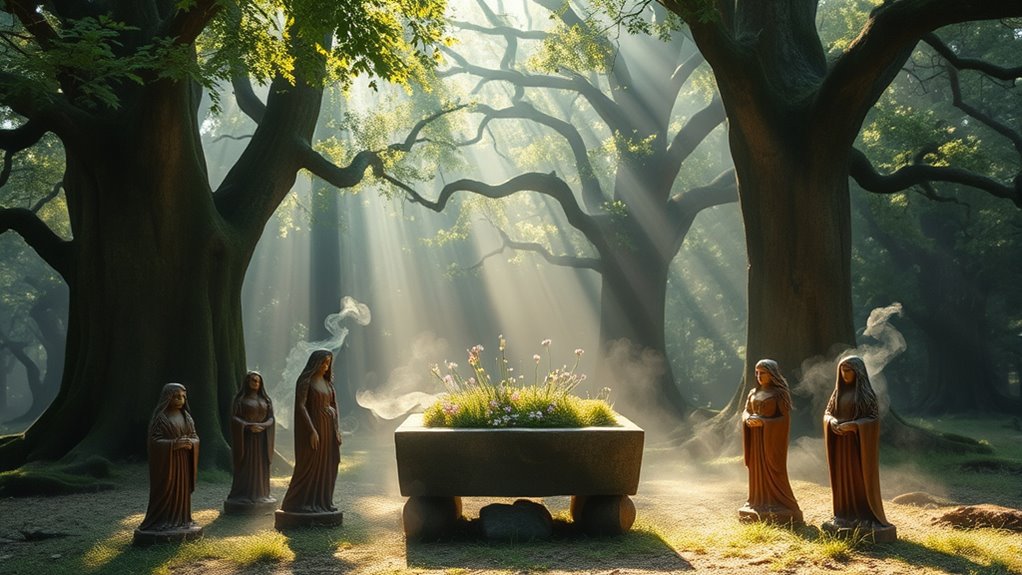
When you explore the rich tapestry of Celtic mythology, you’ll discover a fascinating array of goddesses, each embodying unique attributes and powers. These goddesses aren’t just figures of lore; they represent deep-rooted Celtic mythological symbolism that resonates even today. Among them, goddesses like Brigid, the goddess of fire, poetry, and healing, hold a special place. You’ll find that her name is often invoked in rituals aimed at invoking inspiration and protection, showcasing how these ancient goddess rituals still influence modern spirituality.
Another prominent figure is the Morrigan, often associated with war and fate. When you probe into her stories, you’ll notice she embodies the duality of life and death, a reminder that endings are often new beginnings. The symbolism surrounding her can reflect personal transformation and the power of choice, making her a compelling figure for those seeking strength in challenging times. You might feel inspired to incorporate her essence into your own rituals, drawing upon her fierce energy as you navigate your life’s battles.
Then there’s Danu, the mother goddess, who represents the earth and fertility. When you connect with her, you’re tapping into the nurturing aspects of nature, grounding yourself in the cycles of life. Many ancient goddess rituals celebrated the earth’s bounty, and you may find joy in honoring her through seasonal celebrations or by cultivating your garden. Letting Danu’s influence flow through you can deepen your appreciation for nature’s gifts and cycles.
You might also encounter Aine, the goddess of love and fertility, whose story often intertwines with themes of passion and empowerment. Her representation of the sun and the moon signifies balance, urging you to embrace both your light and shadow. By acknowledging Aine’s duality, you can foster a more complete understanding of your own desires and emotions.
As you explore these goddesses, remember that they aren’t merely ancient figures; they’re archetypes that reflect aspects of your own life. Integrating Celtic mythological symbolism into your daily existence can enhance your spiritual journey. Consistent practice of rituals and meditation can further deepen your connection to these powerful deities. Whether through meditation, rituals, or simply reflecting on their stories, these goddesses invite you to connect with the deeper layers of your being. So, let their wisdom guide you, reminding you of the powerful legacy of the Celtic goddesses and the ancient rituals that continue to inspire many today.
Frequently Asked Questions
How Do I Pronounce Celtic Goddess Names Correctly?
To pronounce Celtic goddess names correctly, start with pronunciation tips like emphasizing the first syllable. For example, “Brigid” sounds like “Bree-gid.” Watch out for common mispronunciations, like saying “Celtic” with a hard ‘k’ instead of ‘s.’ Don’t stress over every detail; fluent speakers often adapt the sounds. Listening to native pronunciations can help you get it right, so practice often and confidently share your newfound knowledge of these beautiful names!
Are There Any Modern Interpretations of These Goddess Names?
Yes, there are plenty of modern interpretations of Celtic goddess names! You’ll find that many people embrace modern goddess symbolism, viewing these deities through contemporary lenses. Cultural reinterpretations of Celtic deities often highlight their relevance today, emphasizing empowerment, nature, and femininity. By exploring these reinterpretations, you can discover new meanings that resonate with current values, making ancient names feel alive and significant in today’s world.
Can I Use Celtic Goddess Names for My Pets?
Absolutely, you can use Celtic goddess names for your pets! These names can provide great pet name inspiration, reflecting your pet’s personality or traits. Plus, using a goddess name can create a unique spiritual connection, enhancing your bond. Consider incorporating these names into your daily practices, like calling your pet or during playtime, to deepen that connection. You’ll find that it adds a special touch to your relationship with your furry friend.
What Are Some Popular Books About Celtic Goddesses?
If you’re looking for popular books about Celtic goddesses, you might enjoy “The Mabinogion” for its rich tales of ancient mythology. “Celtic Myth and Legend” by Charles Squire offers deep insights into goddess symbolism and their roles in Celtic culture. You could also check out “The Goddesses of Ireland” by Patricia Monaghan, which dives into the lives and stories of these powerful figures. These books will surely deepen your understanding and appreciation of Celtic mythology!
How Can I Connect Spiritually With These Goddesses?
To connect spiritually with these goddesses, start with spiritual meditation techniques that ground you while also elevating your consciousness. As you sit in quiet reflection, contrast the chaos of daily life with the tranquility of your inner self. Incorporate daily goddess invocation rituals; light a candle, offer a prayer, or create an altar. By bridging the gap between your world and theirs, you’ll cultivate a meaningful relationship that nourishes your spirit.
Conclusion
In your quest for understanding Celtic goddess names and their meanings, you might find it amusing that these powerful figures often embody the very traits society overlooks today—strength, wisdom, and connection to nature. While you scroll through modern trends, remember that the ancient Celts celebrated femininity in all its forms, weaving stories that resonate even now. So, as you embrace the latest fads, don’t forget the timeless essence of these goddesses, whispering their wisdom through the ages.