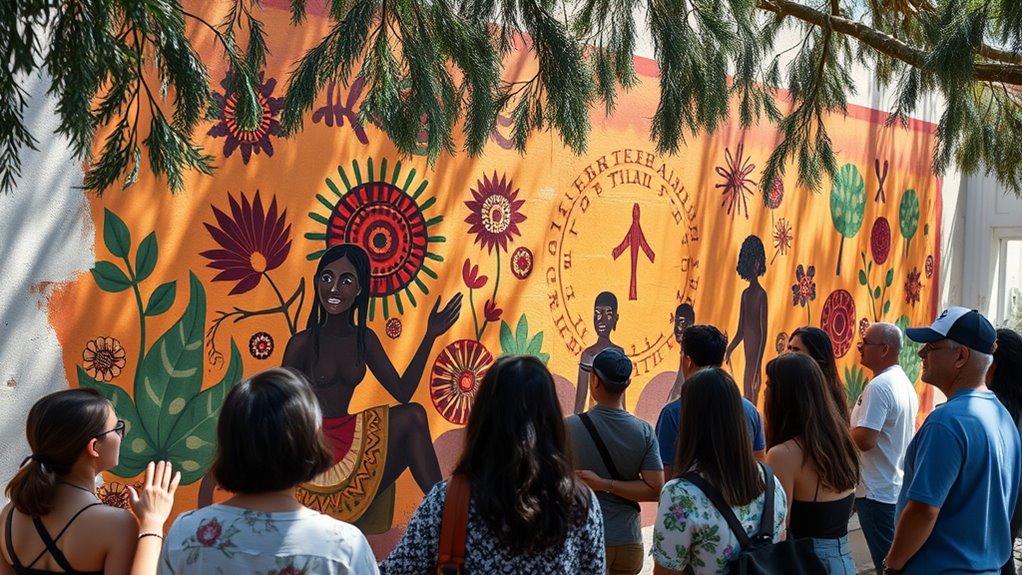

In Indigenous Australia, names carry deep meanings and reflect connections to land, ancestors, and spirituality. Each name tells a story and embodies a person’s identity and role within the community. These names often reference natural features and highlight unique relationships with the environment. By understanding these naming customs, you appreciate the cultural significance behind them and the importance of preserving Indigenous languages. Discovering more about these names can reveal even richer insights into Australia’s cultural heritage.

Prime made for students and young adults
- Fast, free delivery for dorm and study essentials
- Prime Video and Amazon Music included
- Member-only deals
Key Takeaways
- Indigenous Australian names are deeply connected to land, ancestors, and cultural identity, serving as vital links to heritage and community.
- Naming customs vary among Indigenous groups, with names often derived from local languages that reflect natural features and community narratives.
- Understanding names in Indigenous cultures highlights the importance of language preservation, which sustains oral traditions and cultural wisdom across generations.
- Names carry layered meanings and require respect; they embody stories of connections to land, community, and spirituality within Indigenous identities.
- Learning about Indigenous naming practices enriches appreciation for Australia’s cultural heritage and fosters respect for Indigenous cultures and their narratives.

When you explore the rich tapestry of Indigenous Australian cultures, you’ll discover that names hold deep significance, often reflecting connections to the land, ancestors, and spirituality. Each name tells a story, serving as a bridge between generations and a way to honor the heritage that shapes identity. Understanding these naming customs can help you appreciate the profound connections Indigenous Australians maintain with their environment and history.
Indigenous naming customs vary across different groups, but they often emphasize a relationship with the land and family lineage. Many names are derived from the local language, which illustrates the deep ties between a community and its geography. For instance, a name might reference a specific natural feature, such as a river or mountain, embodying the spirit of that place. This connection not only fosters a sense of belonging but also reinforces the importance of the land in cultural narratives. As you immerse yourself more deeply into these customs, you’ll see how names can encapsulate the essence of a person’s identity and their role within the community.
Indigenous names reflect deep connections to land and lineage, embodying the spirit of place and community identity.
In recent years, there’s been a growing focus on aboriginal language preservation, as many Indigenous languages are at risk of disappearing. As you learn about names, you’ll notice how crucial it is to maintain these languages for cultural continuity. Revitalizing Indigenous languages is not just about words; it’s about sustaining the stories, traditions, and identities that come with them. The act of naming in these languages is often tied to oral traditions, where stories of ancestors and creation are shared, ensuring that the wisdom of the past informs the present and future.
By engaging with Indigenous naming customs, you’re participating in a broader movement towards acknowledging and respecting these cultures. It’s essential to approach these practices with sensitivity and understanding, recognizing that names are not merely labels but are imbued with layers of meaning. When you hear an Indigenous name, think about the history and stories it carries. Additionally, color accuracy in visual representations of Indigenous art can enhance the appreciation of cultural narratives and identities.
In your journey through the rich landscape of Indigenous Australian cultures, you’ll discover that the power of names extends beyond mere identification. They serve as reminders of the deep connections between people, land, and spirit, inviting you to reflect on your own understanding of identity and belonging. Embrace this knowledge, and let it enrich your appreciation of Australia’s diverse cultural heritage.
Indigenous Australian language learning books
As an affiliate, we earn on qualifying purchases.
As an affiliate, we earn on qualifying purchases.
Frequently Asked Questions
What Are the Cultural Significances of Indigenous Australian Names?
Indigenous Australian names carry deep cultural significance, often connecting you to Dreamtime stories that shape your understanding of the land and spirituality. These names reflect clan identity, linking you to your ancestors and community. When you use these names, you honor traditions and maintain a sense of belonging. They serve as reminders of your heritage and the stories that have been passed down through generations, enriching your sense of self and connection to the world.
How Are Indigenous Australian Names Traditionally Given?
Indigenous Australian names are traditionally given through ceremonies that honor family and community. During these traditional ceremonies, names reflect kinship systems, connecting individuals to their ancestry and culture. You’ll find that names often signify relationships, roles, or significant events, weaving personal identity into the broader fabric of their community. By participating in these rituals, you help preserve the cultural heritage and strengthen the bonds that tie individuals to their lineage and land.
Can Non-Indigenous People Use These Names?
Yes, non-Indigenous people can use Indigenous Australian names, but it’s vital to approach this with cultural sensitivity. You should make certain that you’re using the names in a respectful way, recognizing their significance and origins. It’s a good idea to learn about the culture behind the names and seek permission where necessary. By doing so, you honor the heritage and promote understanding, rather than appropriating or misusing something that holds deep meaning.
Are There Common Themes in Indigenous Australian Naming Practices?
Yes, there are common themes in Indigenous Australian naming practices. You’ll notice that naming ceremonies often celebrate connection to the land, family, and culture. The name meanings frequently reflect personal traits, ancestral stories, or natural elements. As you explore these traditions, you’ll see how names carry deep significance, linking individuals to their heritage, their community, and their environment. Embracing these elements enriches your understanding of Indigenous identity and values.
How Do Names Reflect Indigenous Australian Stories and Languages?
Names in Indigenous Australian cultures reflect deep cultural storytelling and language preservation. When you hear a name, it often reveals connections to ancestors, land, and significant events. Each name carries meaning, encapsulating stories passed down through generations. By using these names, you help keep the language alive, fostering a sense of identity and continuity. In this way, names aren’t just labels—they’re living narratives that connect the past to the present.
Australian Aboriginal cultural jewelry
As an affiliate, we earn on qualifying purchases.
As an affiliate, we earn on qualifying purchases.
Conclusion
In the tapestry of Indigenous Australia, each name is a thread woven with stories, culture, and connection. Just as a river flows, carrying whispers of the past, these names guide you through the landscapes of heritage. Embrace them, for they’re not just labels; they’re bridges to understanding and respect. Just like the stars that light up the night sky, let these names illuminate your journey, reminding you of the rich narratives that shape our world.
aboriginal art and storytelling kits
As an affiliate, we earn on qualifying purchases.
As an affiliate, we earn on qualifying purchases.
Indigenous Australian name meaning charts
As an affiliate, we earn on qualifying purchases.
As an affiliate, we earn on qualifying purchases.
Halloween Picks
halloween
As an affiliate, we earn on qualifying purchases.