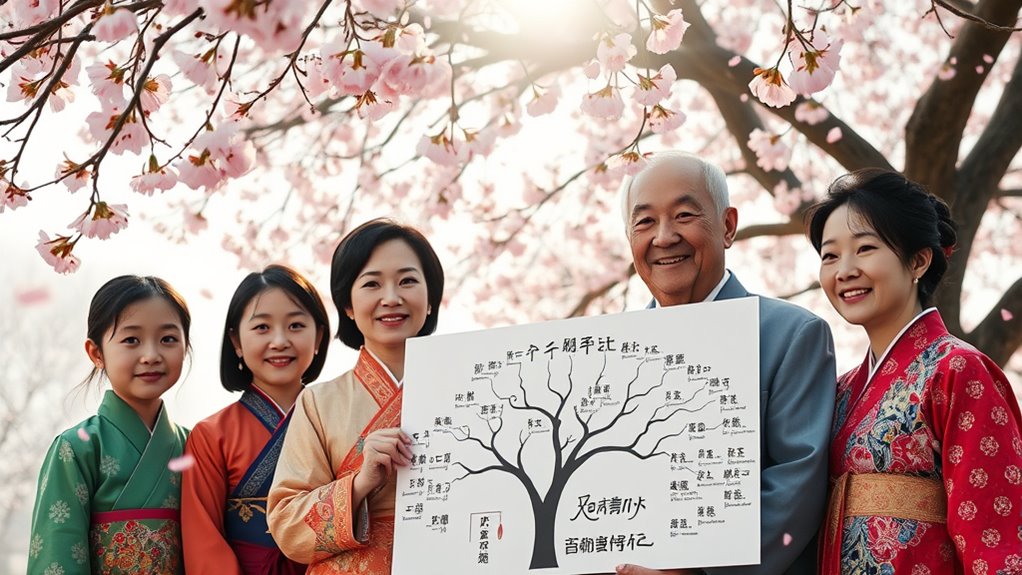

Korean names have a unique structure, with the family name appearing first, followed by the given name. This order highlights the importance of lineage in Korean culture. There are around 250 common surnames, each carrying rich historical significance. Given names typically have two syllables, often chosen to reflect positive traits or family hopes, sometimes shared among siblings to signify generational ties. If you’re curious about the deeper meanings behind these names, there’s much more to explore.
Key Takeaways
- Korean names consist of a family name followed by a given name, emphasizing family ties over individual identity.
- Family names often originate from ancient clans, with about 250 common surnames such as Kim, Lee, and Park.
- Given names typically have two syllables, with each syllable conveying meaningful significance reflective of family hopes or traits.
- Sharing a syllable among siblings indicates generational ties, aligning with Confucian values of ancestor respect and lineage.
- Modern naming trends may include unique or Westernized names, but the traditional structure of family name first remains prevalent.
Have you ever wondered why Korean names are structured the way they are? If you’re curious, you’re not alone. Understanding naming conventions in Korean culture can be a fascinating journey through history and tradition. Unlike many Western names, which often consist of a first name followed by a surname, Korean names typically follow the reverse order: a family name comes first, followed by a given name. This structure reflects deep-rooted values in Korean society, emphasizing family ties over individual identity.
The evolution of Korean family names is vital to grasping these naming conventions. Most Korean surnames derive from ancient clans, with only about 250 family names in common use today. The most popular ones, like Kim, Lee, and Park, have rich histories that trace back thousands of years. Understanding this lineage can add a layer of depth to your appreciation of Korean culture. When you hear a name, you’re not just hearing a label; you’re connecting to a lineage and its stories.
In terms of given names, they usually consist of two syllables, and each syllable often carries a specific meaning. Parents choose these syllables carefully, often reflecting their hopes for their child’s future or aligning with positive characteristics. You might notice that some names are also shared generationally, which means that siblings may share one syllable in their names. This practice ties into the Confucian value of respecting ancestors and family heritage, further emphasizing the importance of family in Korean culture. Additionally, understanding the role of color accuracy in visual representations can enhance your appreciation of cultural symbols found in traditional Korean art and names.
As the naming conventions in Korean culture have evolved, they’ve also adapted to modern influences. While traditional names remain popular, many parents today are choosing unique or even Westernized names for their children. However, even in these cases, the structure remains primarily intact: the family name still precedes the given name, honoring the family’s heritage and lineage.
Exploring Korean names opens a window into understanding the society’s values and history. It’s not just about the names themselves; it’s about the stories they tell, the families they connect, and the traditions they uphold. So, the next time you encounter a Korean name, remember the rich cultural tapestry it represents. You’re not just hearing a name; you’re engaging with a legacy that spans generations.
Frequently Asked Questions
What Are the Most Common Korean Surnames?
The most common Korean surnames are Kim, Lee, and Park. Their popularity stems from historical significance and large family lineages. You’ll find that Kim, originating from the Gyeongju region, is the most prevalent. Lee, with roots linked to the royal lineage, ranks second. Park also has ancient ties and remains widely used. Understanding these Korean surname origins gives you insight into cultural identity and heritage, reflecting the rich tapestry of Korean history.
How Do Koreans Choose Their Given Names?
Koreans choose their given names based on cultural influences and modern trends. You’ll notice many parents opt for names that reflect positive meanings, often drawn from nature or virtues. Additionally, contemporary trends lean towards unique, often Western-inspired names, which can blend traditional elements with modern flair. This mix allows for personal expression while honoring heritage, making the naming process both meaningful and reflective of current societal values.
Are There Any Specific Meanings Behind Korean Names?
Imagine a garden where each flower signifies a unique story; that’s how Korean names work. There’s a rich cultural significance behind their meanings. Each name often symbolizes virtues, nature, or aspirations for the individual. Parents carefully choose names to reflect hopes for their child’s future, embedding deep symbolism in traditional Korean names. So, when you hear a name, remember it’s not just a label; it’s a tapestry woven with dreams and identity.
Can Foreigners Have Korean Names?
Yes, foreigners can have Korean names! As modern naming practices evolve, many foreigners adopt Korean names to embrace the culture and connect with locals. These names often hold cultural significance, reflecting values and family heritage. You might choose a name based on its meaning or phonetic similarity to your original name. This practice not only enhances your experience in Korea but also shows respect for the rich traditions surrounding Korean names.
How Do Korean Naming Conventions Differ by Region?
Korean naming conventions can differ markedly by region. You’ll notice regional name variations that reflect local culture and traditions. For instance, certain names may be more popular in the Gyeongsang province due to dialect influences on naming. In Jeolla, you might find unique characters or sounds that resonate with local history. These variations add depth to the Korean identity, showcasing how language and culture intertwine in the art of naming.
Conclusion
In the enchanting world of Korean names, you’ve discovered a rich tapestry woven with history and familial bonds. Each name tells a story, whispering secrets of generations past while embracing the future. As you navigate this cultural landscape, remember that each name carries a legacy, a gentle reminder of love and connection. So, as you continue your journey, let the beauty of these names inspire you to cherish your own roots and the stories they hold.