
TL;DR
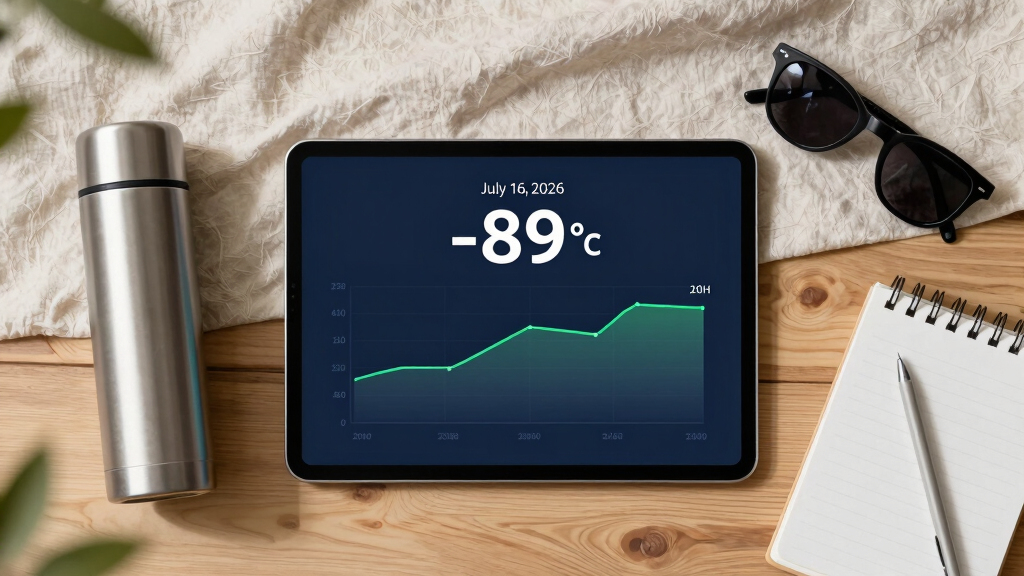
A market-based prediction indicates the high temperature in New York City on July 16, 2026, could be below 89°. However, long-term weather forecasts remain uncertain due to climate variability. This prediction is of interest to residents and climate analysts alike.
Current market activity indicates a significant number of bets favoring the high temperature in New York City on July 16, 2026, remaining below 89°F. Will The High Temp In NYC Be 81-82° On Jul 11, 2026? This prediction is notable given the region’s recent heat trends and the long-term climate outlook. While the market suggests a leaning toward cooler conditions, the forecast remains uncertain due to the inherent variability of climate modeling over such a long horizon. Will The High Temp In LA Be >85° On Jul 15, 2026?

Prime made for students and young adults
- Fast, free delivery for dorm and study essentials
- Prime Video and Amazon Music included
- Member-only deals
Kalshi, a trading platform for weather-based contracts, reports active trading on a prediction that the high temperature in NYC on July 16, 2026, will be less than 89°F. Specifically, 35 recent trades have been placed favoring this outcome, reflecting market confidence in a cooler-than-expected summer day.
Climate scientists emphasize that long-term weather predictions for specific days nearly five years in advance are inherently uncertain. Current climate models provide probabilistic estimates, and factors such as atmospheric patterns, ocean currents, and climate change effects complicate precise forecasts.
There is no official meteorological forecast for NYC on July 16, 2026, at this time, as standard weather prediction tools typically extend reliably only up to about two weeks in advance. Will The Temp In Chicago Be Above 76.99° On Jul 14, 2026 At 1Am EDT? The market-based prediction is based on probabilistic assessments and does not guarantee the actual weather conditions.
Implications of Long-Term Temperature Predictions
This prediction matters because it highlights the growing use of market-based instruments to gauge long-term climate expectations. It also underscores the challenges in accurately forecasting specific weather conditions several years ahead, which has implications for infrastructure planning, climate policy, and public preparedness.
For residents and businesses in NYC, understanding potential temperature scenarios helps in planning for future summers, especially as climate change influences the frequency and intensity of heatwaves. However, the inherent uncertainty means such forecasts should be interpreted cautiously.
Popular right now

Vitamix VX1 Professional-Grade Blender, 64 oz, Black

KitchenAid Artisan Mini Tilt-Head Stand Mixer, 3.5 Quart, Aqua Sky Blue

TCL F8D Series 50-Inch 4K QLED Smart Fire TV
As an affiliate, we earn on qualifying purchases.
Long-Term Climate Trends and Market Predictions for NYC
The prediction about July 16, 2026, is based on active trading on Kalshi’s weather market, where participants bet on future weather outcomes. The platform’s recent activity suggests a market consensus leaning toward cooler temperatures, possibly reflecting broader climate trends or short-term climate variability.
Historically, NYC summers have seen increasing temperatures and heatwaves, partly driven by climate change. While short-term forecasts are reliable only days in advance, long-term climate models project a general warming trend with more extreme heat events. These models inform market predictions but are not precise for specific days years ahead.
There is no official weather forecast or meteorological prediction for the date at this time, and climate models are probabilistic rather than deterministic, especially over such a long horizon.
“Long-term weather forecasts for specific days several years in advance are inherently uncertain. Market predictions offer a probabilistic view but should be interpreted with caution.”
— Dr. Lisa Chen, Climate Scientist at NYC Climate Center
Limitations of Long-Term Weather Forecasting
It is not yet clear how accurately long-term predictions like this will reflect actual weather conditions on July 16, 2026. Climate models are probabilistic and influenced by numerous variables, making precise day-specific forecasts over several years highly uncertain.
Additionally, market-based predictions depend on trader behavior and available data, which may not fully account for future climate variability or unforeseen factors.
Monitoring Climate Trends and Market Activity
Scientists will continue to refine climate models and improve long-term weather predictions. Market activity on platforms like Kalshi will likely fluctuate as the date approaches, providing additional insights into collective expectations.
Official weather forecasts for NYC on July 16, 2026, may become available as the date nears, but current predictions remain speculative. Researchers and policymakers will monitor climate data to assess the accuracy of long-term forecasts and adapt planning accordingly.
Key Questions
How reliable are long-term weather predictions for specific days?
Long-term predictions for specific days, especially several years in advance, are highly uncertain. Climate models provide probabilistic estimates rather than precise forecasts.
What does the market activity indicate about NYC’s summer weather in 2026?
The active trading on Kalshi suggests a market consensus leaning toward temperatures below 89°F on July 16, 2026, but this is not a guarantee of actual weather conditions.
Why is there uncertainty about the weather on July 16, 2026?
Weather over such a long horizon is influenced by numerous variables, including atmospheric patterns and climate change, making precise predictions difficult.
Will official forecasts be available closer to the date?
Yes, standard meteorological forecasts typically become reliable up to two weeks in advance, and official predictions for July 16, 2026, will likely be issued as the date approaches.
How should residents interpret these long-term predictions?
They should be viewed as probabilistic insights rather than certainties and used alongside official forecasts and climate data for planning purposes.
Source: kalshi