
TL;DR

Prime made for students and young adults
- Fast, free delivery for dorm and study essentials
- Prime Video and Amazon Music included
- Member-only deals
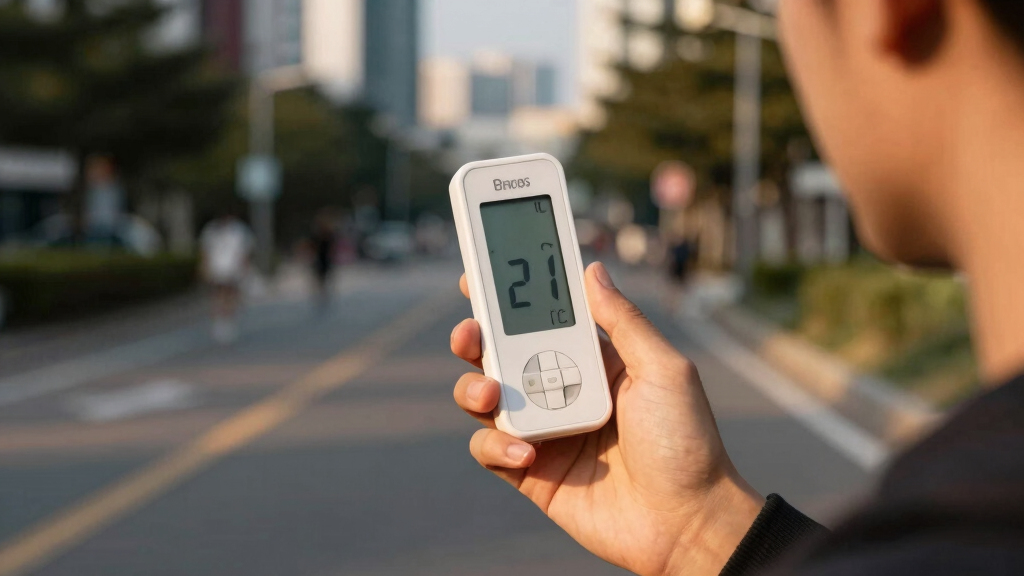
A new betting market suggests Seoul’s lowest temperature on July 9 could be 21°C, but meteorological forecasts indicate this is highly unlikely. The event has sparked debate about temperature extremes.
There is currently no confirmed evidence that Seoul will experience a lowest temperature of 21°C on July 9. The speculation stems from a newly listed betting market, which suggests this temperature might occur, but meteorological forecasts do not support this possibility. This discrepancy has drawn attention from both weather experts and the public.
The betting platform Polymarket recently listed a market where participants can wager on whether Seoul’s lowest temperature on July 9 will reach 21°C. As of now, no official weather forecast predicts such a low temperature for that day. Seoul’s typical July lows usually range around 23°C to 25°C, according to the Korea Meteorological Administration.
Weather experts emphasize that a 21°C low would be unusually cool for Seoul in mid-summer. Dr. Lee Min-jun, a meteorologist at Seoul National University, stated, “Based on current atmospheric conditions and historical data, a 21°C low in Seoul on July 9 is highly unlikely.” The forecast models currently predict lows between 24°C and 26°C, aligning with recent weather patterns.
The emergence of the betting market has prompted discussions about the accuracy of crowd-sourced predictions versus scientific forecasts. While markets like Polymarket can reflect public sentiment or speculation, they are not reliable indicators of actual weather conditions.
Implications of Market-Driven Weather Predictions
This development highlights how betting markets and public speculation can influence perceptions of weather forecasts, even when scientific data suggests otherwise. For residents and travelers in Seoul, understanding the actual weather remains crucial for planning activities and safety. The discrepancy underscores the importance of consulting official meteorological sources rather than market-based predictions.
Popular right now

De'Longhi 15-Bar Pump Espresso Machine with Milk Frother & Temperature Control

Dyson V8 Cyclone Cordless Vacuum

Shark PowerPro Reveal Plus Cordless Vacuum Cleaner, Charcoal, IZ376H
As an affiliate, we earn on qualifying purchases.
Seoul’s Typical July Temperatures and Forecasting Methods
Seoul experiences hot summers, with average lows around 23-25°C in July. The Korea Meteorological Administration provides daily forecasts based on atmospheric data and climate models. Historically, lows below 21°C in mid-summer are rare, occurring only during unusual cold spells or specific weather patterns. The current forecast indicates stable high-pressure systems that typically keep nighttime lows above 22°C.
The recent listing of a betting market predicting a 21°C low has sparked curiosity and skepticism, as such predictions are not grounded in scientific modeling. Experts note that weather markets can be influenced by speculation, not actual meteorological data.
“”Forecasts predict lows between 24°C and 26°C for Seoul on July 9, consistent with recent weather patterns.””
— Korea Meteorological Administration
Unconfirmed Nature of Market Predictions
It remains unclear how much influence the betting market’s prediction will have on public perception or whether it will impact actual weather forecasting. The prediction of a 21°C low is not supported by scientific models, but its presence raises questions about the accuracy and reliability of crowd-sourced predictions for weather events.
Monitoring Official Forecasts and Market Trends
Meteorologists will continue to monitor atmospheric conditions leading up to July 9. Official weather forecasts are expected to be updated regularly, providing more precise predictions. The betting market’s activity will also be observed as a gauge of public sentiment, but experts advise relying on scientific data for planning and safety.
Key Questions
Is it possible for Seoul to have a low of 21°C on July 9?
Based on current meteorological data and historical patterns, it is highly unlikely that Seoul will experience a low of 21°C on July 9.
What does the betting market prediction mean?
The prediction reflects public speculation and does not rely on scientific weather models. It should not be considered a reliable forecast.
Why are some people betting on such low temperatures?
People may bet on unlikely events for entertainment or speculative reasons, but these bets do not influence actual weather conditions.
When will we know the actual weather for July 9?
Official forecasts from the Korea Meteorological Administration will be updated regularly, providing the most accurate information closer to the date.
Could unusual weather patterns cause a lower temperature?
While unusual weather can occur, the current atmospheric conditions do not suggest a significant deviation below typical July lows for Seoul.
Source: polymarket