Japanese names often combine kanji characters that carry specific meanings and unique sounds, shaped by on’yomi and kun’yomi readings. Kana scripts like hiragana and katakana are used to clarify pronunciation and add stylistic flair, while romaji helps bridge to Western contexts. Recognizing how kanji influence name sound and meaning can be tricky, but understanding these elements improves your grasp of Japanese naming customs. If you’re curious, there’s plenty more to explore about how all these parts work together.
Key Takeaways
- Japanese names often combine kanji characters with specific readings, which can be on’yomi (Chinese) or kun’yomi (native Japanese).
- Kana (hiragana and katakana) are used to write names phonetically, clarifying pronunciation and alternative readings.
- Romaji transcribes Japanese names into Latin alphabet, aiding pronunciation for non-Japanese speakers.
- Kanji readings vary by context; understanding multiple readings helps interpret the name’s meaning and pronunciation.
- Recognizing the use of kana and romaji alongside kanji provides a comprehensive understanding of Japanese names.
The Structure of Japanese Names and Their Significance
Have you ever wondered what Japanese names reveal about a person’s identity? The structure of Japanese names follows specific patterns that reflect cultural and regional influences. Name formation patterns often include a family name, or surname, followed by a given name, with the order sometimes varying based on context. Regional naming conventions also play a role; certain characters and sounds are more common in specific areas, influenced by local dialects and traditions. For example, names from rural regions might emphasize nature-related kanji, while urban names may lean toward modern or unique characters. Understanding these patterns helps you see beyond the surface, revealing connections to history, geography, and local customs embedded in the names themselves. Additionally, the use of kanji characters in names can carry specific meanings that relate to personal traits or aspirations.
How Kanji Characters Shape Name Meanings and Readings
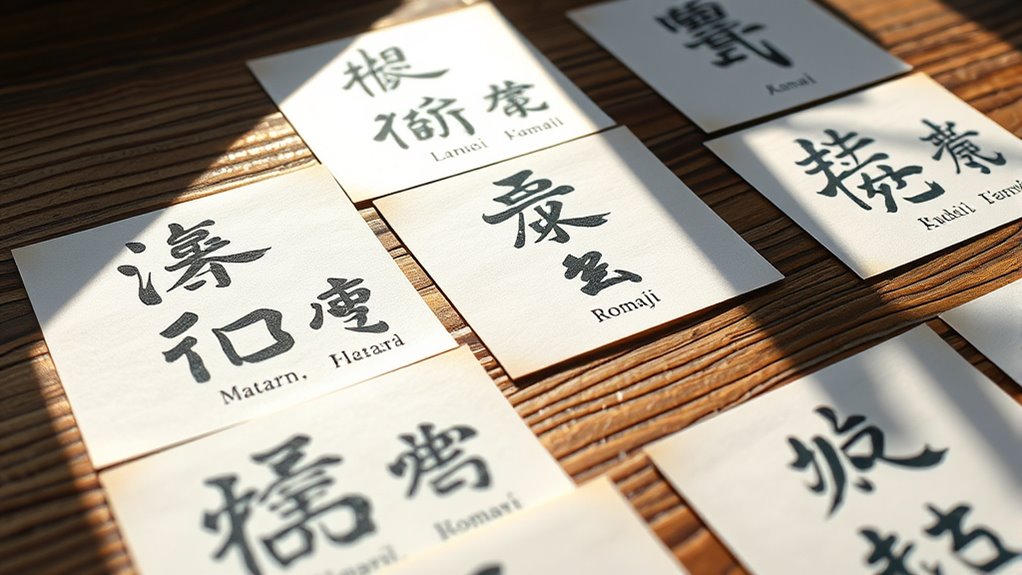
Kanji characters give Japanese names their unique meanings and nuances, allowing for a wide range of interpretations. You’ll notice that selecting specific kanji influences not just the meaning but also how a name is read. Multiple readings and pronunciations add another layer of complexity, shaping how names are understood and used. Understanding these essential oil benefits can help in creating personalized names that reflect individual qualities and aspirations.
Kanji Variations and Nuance
Did you know that the choice of kanji characters can dramatically change the meaning and pronunciation of a Japanese name? Even slight variations in kanji stroke order can influence how a character is read and understood. For example, some kanji have multiple readings depending on context, which adds nuance to a name’s meaning. Additionally, name length variations—using single or multiple characters—affect the overall impression. Longer names might convey elegance or tradition, while shorter ones often feel modern or straightforward. Variations in stroke order can also impact the aesthetic and balance of the kanji, subtly shaping how the name is perceived. Understanding these nuances helps you appreciate the complexity behind Japanese names and the cultural significance embedded in each character. Moreover, kanji stroke order plays a crucial role in the proper writing and aesthetic harmony of a name.
Meaning-Driven Character Selection
Ever wonder how the choice of kanji characters directly influences the meaning and pronunciation of a Japanese name? When you customize a name, you’re selecting kanji that embody specific qualities, values, or hopes. These characters reflect cultural influences and personal aspirations, making each name unique. By choosing different kanji, you shape not only the meaning but also the way the name sounds and feels. For example:
| Kanji | Meaning | Emotional Impact |
|---|---|---|
| 美 | Beauty | Grace and elegance |
| 健 | Health | Vitality and strength |
| 希 | Hope | Optimism and future |
This process allows you to craft a name that’s rich in significance, blending cultural tradition with individual identity. Additionally, understanding name readings and pronunciation is essential to fully appreciating how kanji influence a name’s overall impression.
Multiple Readings and Pronunciations
A single kanji character can have multiple readings, which means the same symbol might be pronounced differently depending on the context or the name it appears in. This kanji flexibility influences name pronunciation, making Japanese names uniquely customizable. When choosing a name, you might see a kanji read in various ways, reflecting different meanings or family traditions. For example:
- A kanji might be read as “Hiro” in one name and “Yoshi” in another.
- The same character can have on’yomi (Chinese-origin) and kun’yomi (native Japanese) readings.
- Name readings often blend multiple kanji, each with its own pronunciation.
- Parents select readings that align with desired meanings or sounds.
- The multifunctionality of kanji adds depth and personal significance to Japanese names.
- Understanding kanji readings is essential for accurately interpreting and appreciating the nuances of Japanese naming conventions.
The Role of Hiragana and Katakana in Naming Practices

Hiragana and Katakana play crucial roles in Japanese naming practices by providing flexible options for expressing a child’s name. Hiragana’s phonetic role allows parents to write a name’s pronunciation simply and clearly, especially for names with uncommon or unique readings. Katakana, on the other hand, also serves a phonetic purpose but is often used for foreign names or to give a modern, stylish flair. Visually, these scripts are distinct: hiragana features rounded, flowing characters, while katakana has sharp, angular strokes. This visual difference helps distinguish native Japanese names written in hiragana from foreign-influenced names in katakana. Both scripts enable parents to customize names, convey specific pronunciations, and add aesthetic appeal, making them essential in Japan’s naming practices. Additionally, these scripts can be combined with various crochet styles for locs to create personalized and meaningful representations of names.
Understanding On’yomi and Kun’yomi Readings in Names
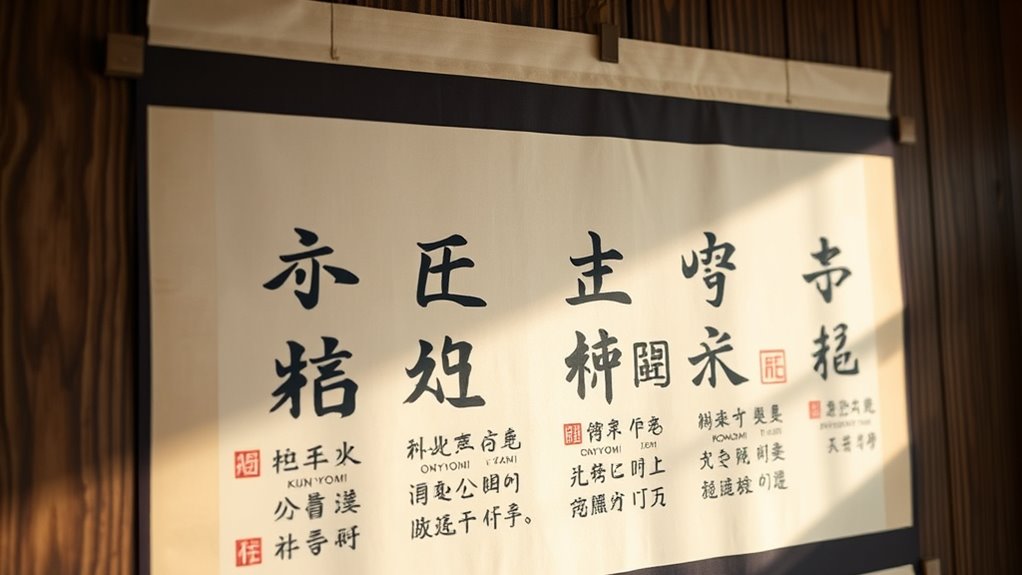
Understanding the difference between On’yomi and Kun’yomi readings helps you grasp how Japanese names are constructed and pronounced. You’ll notice some names use Chinese-derived On’yomi, while others rely on native Kun’yomi. Recognizing these distinctions reveals their cultural significance and how they influence naming choices. Additionally, organizing space efficiently in your environment can support a more mindful approach to decluttering and maintaining clarity.
Distinguishing Reading Types
Distinguishing between on’yomi and kun’yomi readings is essential when interpreting Japanese names, as each reading type follows different rules and origins. Recognizing these differences helps you navigate name pronunciation variations and kanji reading complexities more effectively. On’yomi readings are derived from Chinese pronunciation, often used in multi-kanji names, while kun’yomi are native Japanese readings, typically linked to individual kanji’s original meanings. To distinguish them, consider these cues:
- On’yomi are common in compound names
- Kun’yomi are often used in given names
- On’yomi tend to sound more formal or classical
- Kun’yomi are frequently more familiar and native
- Context and kanji combination guide the reading choice
- Understanding reading types can significantly improve your ability to interpret names accurately.
Mastering these distinctions clarifies how each reading influences name interpretation and pronunciation, making your understanding of Japanese names more accurate.
Usage in Names
Have you ever wondered why some Japanese names use on’yomi readings while others use kun’yomi? It often depends on historical naming trends and gender-specific preferences. Traditionally, on’yomi readings are common in formal, masculine, or older names, reflecting their Chinese origins. Conversely, kun’yomi readings tend to be softer and are often chosen for feminine names, especially in modern times. You’ll notice that many boys’ names feature on’yomi, giving a sense of strength or tradition, while girls’ names lean toward kun’yomi, emphasizing beauty or nature. These patterns help convey cultural values and gender distinctions. Additionally, name reading conventions influence how names are selected and understood within Japanese society. Understanding these naming conventions allows you to better interpret the meaning and origin behind a person’s name, revealing both personal identity and historical influences in Japanese naming practices.
Cultural Significance
In Japanese names, on’yomi and kun’yomi readings carry deep cultural significance that reflects historical values and social expectations. These readings influence how names are perceived, linking personal identity to cultural traditions. You may face name pronunciation challenges when encountering unfamiliar kanji combinations, as the readings aren’t always intuitive. Understanding these nuances helps respect cultural naming customs and avoids mispronunciations. Additionally, ethical hacking techniques share the importance of understanding complex systems and cultural contexts to effectively identify vulnerabilities. Naming conventions emphasize harmony and auspicious meanings. Variations in readings reveal social status or regional influences.
The Use of Romaji: Bridging Japanese Names to the World
Romaji, the Latin alphabet representation of Japanese words, plays a crucial role in connecting Japanese names to the rest of the world. It allows you to understand and pronounce names with greater ease, especially for those unfamiliar with Japanese scripts. By providing a clear romaji pronunciation, you can communicate more confidently and accurately across borders. Romaji helps facilitate international recognition, making Japanese names accessible in global contexts like travel, business, and social interactions. It acts as a bridge, simplifying the complex nuances of Japanese pronunciation for non-native speakers. This system guarantees that Japanese names are understood and remembered worldwide, fostering cultural exchange and appreciation. Overall, romaji serves as a practical tool for bridging Japanese names into the international community. Clear pronunciation is essential for accurate communication and respectful cultural exchange.
Common Challenges in Reading and Pronouncing Japanese Names
Why do Japanese names often pose challenges for non-native speakers? It’s mainly due to pronunciation difficulties and reading ambiguities caused by multiple kanji readings and complex characters. You might find it hard to determine the correct pronunciation or meaning without context. Common issues include:
Japanese names can be tricky due to multiple kanji readings and pronunciation ambiguities.
- Multiple kanji readings for a single name, leading to confusion
- Variations in pronunciation depending on the kanji used
- Ambiguities in reading kanji in unfamiliar contexts
- Differences between kana spelling and actual pronunciation
- Inconsistent romanization that complicates recognition
- Reading conventions also influence how names are interpreted and pronounced, adding another layer of complexity.
These challenges make it tough to read and pronounce names accurately. Without familiarity, you might mispronounce or misunderstand the name’s origin or meaning, which can lead to communication barriers. Overcoming these hurdles requires patience and exposure to the nuances of Japanese reading conventions.
Tips for Learning and Recognizing Japanese Name Components
To effectively learn and recognize Japanese name components, start by familiarizing yourself with common kanji used in personal names and their meanings. Understanding these kanji helps with name pronunciation and grasping cultural naming conventions. Recognizing patterns in kanji combinations makes it easier to identify family names versus given names. Practice reading names in different contexts, such as signs or official documents. Use the table below to learn some common kanji and their meanings:
| Kanji | Meaning |
|---|---|
| Takashi | Noble, high |
| Yuki | Happiness, snow |
| Sato | Village, hometown |
Focusing on kanji meanings and pronunciation patterns helps you better interpret names and appreciate their cultural significance. This approach builds confidence and improves your ability to recognize Japanese name components accurately. Additionally, familiarizing yourself with the common structures used in Japanese names can further enhance your understanding.
Frequently Asked Questions
How Do Japanese Names Change With Different Generations or Regions?
You’ll notice that Japanese names change with generations and regions through regional naming trends and generational name shifts. In different areas, certain kanji or sounds become popular, reflecting local culture. Over generations, parents often choose names that honor family traditions or modern influences, leading to shifts in style. These changes create unique patterns that reveal regional and historical influences, giving Japanese names their rich diversity over time.
Are There Specific Rules for Combining Kanji in Names?
You might think Japanese name formation rules are strict, but they actually allow for creativity within certain kanji combination principles. When combining kanji in names, you follow specific rules like choosing characters with positive meanings and compatible sounds. While there’s flexibility, you should guarantee the kanji’s readings and meanings blend harmoniously. This balance helps create meaningful, culturally appropriate names while respecting traditional kanji combination principles.
Can the Same Kanji Have Multiple Pronunciations in Names?
Yes, the same kanji can have multiple pronunciations in names. This means your chosen kanji might have different kanji pronunciation options, leading to various name variations. When selecting kanji for a name, you need to contemplate the possible readings, as they influence how the name sounds and its meaning. Be aware that some kanji are flexible in pronunciation, making it important to clarify the intended reading when creating or reading Japanese names.
How Do Parents Choose Kanji for Their Child’s Name?
You might think choosing kanji is purely about aesthetics, but it’s deeply rooted in cultural influences and family traditions. Parents select kanji for their child’s name by considering the meaning, sound, and how it reflects their hopes or values. They often consult ancestors or family elders, blending tradition with personal wishes. This thoughtful process guarantees the name carries significance, honoring heritage while shaping the child’s identity.
What Are the Cultural Sensitivities Around Naming Conventions?
You should be aware that cultural sensitivities around Japanese naming conventions emphasize respecting historical customs and gendered preferences. Names often reflect family history and societal values, so choosing kanji carefully is crucial. Avoid selecting characters that might carry negative connotations or contradict traditional gender roles. Understanding these sensitivities helps honor cultural traditions and ensures your child’s name is both meaningful and respectful within Japanese society.
Conclusion
Think of Japanese names like a puzzle with many pieces—each kanji, kana, or romaji adds a unique color and meaning. I once met someone named with a kanji that meant “hope,” and it reminded me how names carry stories and dreams. By understanding these elements, you discover a world of cultural richness and connection. Embrace the challenge, and you’ll find Japanese names become as familiar as a favorite melody.