

Name etymology reference books range from rigorous scholarly dictionaries to light, story-driven collections, and the right one depends on whether you are researching name origins seriously or browsing for entertainment. My top overall pick is A Dictionary of First Names, which pairs authoritative sourcing with broad coverage of given names across English-speaking cultures. For casual readers, The Origin of Names, Words and Everything in Between delivers etymology in an accessible, entertaining format, while The Oxford Dictionary of English Etymology is the strongest choice for academic word-and-name research. The main tradeoff in this category is depth versus readability: scholarly works are thorough but dense, while popular titles are fun but less citable. Read on for the full breakdown of all 11 books.

Prime made for students and young adults
- Fast, free delivery for dorm and study essentials
- Prime Video and Amazon Music included
- Member-only deals
Key Takeaways
- A Dictionary of First Names earned the top spot because it balances scholarly rigor with genuine everyday usability — most competing titles sacrifice one for the other.
- The Century Cyclopedia volumes dominate sheer coverage of place names, biography, and mythology, but their age and density make them reference-only purchases rather than reading material.
- The Origin of Names series is the clear beginner pick: it trades citation-grade accuracy for storytelling, which is exactly what casual readers want and serious researchers should avoid.
- The Oxford Dictionary of English Etymology and the Barnhart Concise Dictionary cover word origins rather than personal names, so buyers should confirm they actually want general etymology before purchasing.
- Multi-volume sets (the Century Cyclopedia Volumes 1–4) offer the best per-volume value but demand shelf space and patience — single-volume dictionaries win on convenience.
| A Dictionary of First Names |  | Best Overall for Name Etymology | Format: Print hardcover reference | Publisher: Oxford University Press | Content Focus: First-name origins, meanings, and histories | VIEW LATEST PRICE | See Our Full Breakdown |
| The Origin of Names, Words and Everything in Between: Name Meanings, Fun Facts, Word Origins, Etymology |  | Best for Casual Browsing | Format: Trade paperback | Content Focus: Name meanings, word origins, and trivia | Tone: Casual and entertaining | VIEW LATEST PRICE | See Our Full Breakdown |
| American Given Names: Their Origin and History in the Context of the English Language |  | Best for Historical Depth | Format: Print scholarly volume | Publisher: Oxford University Press | Content Focus: Origins and history of American given names | VIEW LATEST PRICE | See Our Full Breakdown |
| Century Cyclopedia of Names: A Pronouncing and Etymological Dictionary of Names in Geography, Biography, Mythology, History, Ethnology, Art, Archaeology, Fiction, etc. Vol. II |  | Best for Serious Researchers (Antiquarian Pick) | Format: Vintage print volume (Vol. II of a set) | Content Focus: Proper names across geography, biography, mythology, history, art, fiction, and more | Features: Pronunciation and etymology entries | VIEW LATEST PRICE | See Our Full Breakdown |
| Barnhart Concise Dictionary of Etymology: An Accessible Linguistics Reference Book on the Origins of 21,000 English Words |  | Best Bridge Pick: Words Behind the Names | Format: Print reference volume | Entry Count: Approximately 21,000 English words | Content Focus: Etymology of English vocabulary | VIEW LATEST PRICE | See Our Full Breakdown |
| The Century Dictionary and Cyclopedia of Names, Vol I |  | Best for Deep Archival Research | Coverage: Geography, biography, mythology, history, ethnology, art, archaeology, fiction | Entry Type: Proper names with pronunciation and etymology | Format: Print, single large volume | VIEW LATEST PRICE | See Our Full Breakdown |
| The Century Cyclopedia of Names, Volume 9 |  | Best for Completing a Century Collection | Coverage: Geography, biography, mythology, history, ethnology, art | Entry Type: Pronunciations and etymologies of names | Editor: Benjamin E. Smith | VIEW LATEST PRICE | See Our Full Breakdown |
| The Oxford Dictionary of English Etymology |  | Best Authoritative Word-Level Reference | Coverage: Origins and historical development of English words | Entry Type: Etymological dictionary entries | Publisher: Oxford University Press | VIEW LATEST PRICE | See Our Full Breakdown |
| The Origin of Names, Words and Everything in Between: Volume II |  | Best Casual Read for Word-Story Lovers | Coverage: Origins and histories of various names and words | Entry Type: Narrative etymology stories | Series Position: Volume II of The Origin of Names, Words and Everything in Between | VIEW LATEST PRICE | See Our Full Breakdown |
| The Name Encyclopedia: Origins, Meanings, and Stories of Names from Around the World |  | Best for Cross-Cultural Name Context | Coverage: Names from cultures worldwide | Entry Type: Origins, meanings, and cultural stories | Format: Print encyclopedia | VIEW LATEST PRICE | See Our Full Breakdown |
| The Century Cyclopedia of Names: A Pronouncing and Etymological Dictionary of Names in Geography, Biography, Mythology, History, Ethnology, Art, Archaeology, Fiction, Etc., Volumes 1-4 | 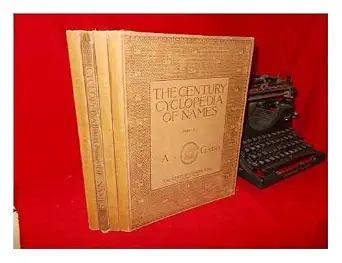 | Best Deep-Reference Set for Serious Researchers | Format: Multi-volume physical book set | Volumes Included: Volumes 1-4 (complete set) | Reference Type: Pronouncing and etymological dictionary | VIEW LATEST PRICE | See Our Full Breakdown |
| name etymology reference book | Format | Intended Audience |
|---|---|---|
| A Dictionary of First Names | Print hardcover reference | — |
| The Origin of Names | Trade paperback | — |
| American Given Names: Their Or | Print scholarly volume | — |
| Century Cyclopedia of Names: A | Vintage print volume (Vol. II of a set) | — |
| Barnhart Concise Dictionary of | Print reference volume | — |
| The Century Dictionary and Cyc | Print, single large volume | Researchers, students, enthusiasts |
| The Century Cyclopedia of Name | Researchers and series collectors | |
| The Oxford Dictionary of Engli | Print reference dictionary | Linguists, students, language enthusiasts |
| The Origin of Names | Language enthusiasts and casual readers | |
| The Name Encyclopedia: Origins | Print encyclopedia | Researchers, writers, name enthusiasts |
| The Century Cyclopedia of Name | Multi-volume physical book set | Researchers and reference libraries |
More Details on Our Top Picks
A Dictionary of First Names
For a roundup centered on name etymology, this is the reference I would put at the top of the list. It does the one job that matters most — tracing origins and meanings of first names — with the kind of scholarly discipline that casual titles like The Origin of Names, Words and Everything in Between only gesture at. Where that book entertains, this one settles questions: it is the volume a reader consults when accuracy counts, such as confirming a name’s linguistic root before printing it in family or professional work. Compared with American Given Names, its scope is broader, covering names beyond the English-language tradition. The tradeoff is texture — it prioritizes dense, reliable entries over storytelling and historical color, so readers who want narrative context may find it dry. Oxford’s editorial pedigree is the reason it earns the top spot despite that flatness.
Pros:- Comprehensive coverage of first-name origins and meanings
- Oxford reference authority suited to serious research
- Broader linguistic scope than English-only alternatives
- Reliable for confirming name roots rather than guessing
Cons:- Entries lack deeper historical and cultural narrative
- Dense reference format feels dry for leisure reading
Best for: Writers, genealogists, and parents who need accurate, look-up-style etymologies for first names across many linguistic traditions
Not ideal for: Casual readers who want entertaining name lore and anecdotes — this is a working reference, not a browser’s delight
- Format:Print hardcover reference
- Publisher:Oxford University Press
- Content Focus:First-name origins, meanings, and histories
- Scope:First names across multiple linguistic traditions
- Structure:Dictionary-style alphabetical entries
- Intended Use:Reference and name research
Our verdict“If you need one trustworthy book to look up what first names actually mean and where they come from, this is the one to buy first.”
The Origin of Names, Words and Everything in Between: Name Meanings, Fun Facts, Word Origins, Etymology
This is the lightest, most readable entry in the lineup, and that is precisely its value. Rather than competing with A Dictionary of First Names on rigor — a fight it would lose — it wins on approachability, packaging etymology as fun facts and trivia a reader can enjoy in short sittings. Compared with the Barnhart Concise Dictionary of Etymology, which demands dictionary-style consultation, this book invites browsing and works well as a gift or coffee-table conversation starter. The tradeoff is depth: anyone doing serious etymological verification will find the treatment shallow, and the breezy tone trades precision for charm. It also splits attention between names and general word origins, so dedicated name researchers get less name-specific material than the title suggests. Still, no other pick here makes etymology this painless for newcomers.
Pros:- Highly readable, entertainment-first presentation
- Covers both name meanings and general word origins
- Bite-sized format suits short reading sessions
- Strong gift potential for language enthusiasts
Cons:- Too shallow for serious linguistic research
- Name coverage diluted by general word-origin content
Best for: Curious general readers, trivia lovers, and gift-buyers who want entertaining bite-sized facts about names and words
Not ideal for: Researchers and writers who need verified etymologies — the depth is insufficient for citation-grade work
- Format:Trade paperback
- Content Focus:Name meanings, word origins, and trivia
- Tone:Casual and entertaining
- Scope:Names plus general English word etymology
- Structure:Bite-sized topical entries and facts
- Intended Use:Leisure reading and gifting
Our verdict“Buy this to enjoy etymology, not to study it — it’s the most fun entry here and the least rigorous.”
American Given Names: Their Origin and History in the Context of the English Language
Where other picks answer what a name means, this one answers how naming itself evolved — and that difference defines its role. American given names are treated historically, with attention to waves of immigration, fashion, and cultural influence that shaped what parents chose generation by generation. Compared with A Dictionary of First Names, which offers faster lookups with less context, this is the slower, richer read: better for understanding why names rose and fell than for quick definition checks. Its English-language framing is both strength and limit — it gives the analysis coherence but leaves out names from traditions outside that lineage, and modern naming trends receive little attention. For historians, linguists, and genealogists tracing American family naming patterns, however, that contextual depth is exactly what a dictionary cannot provide.
Pros:- Deep historical analysis of American naming trends
- Strong cultural and immigration context
- Academic rigor suited to scholarly work
- Explains naming evolution rather than just definitions
Cons:- Limited to English-language naming context
- Little coverage of contemporary naming practices
Best for: Genealogists, historians, and linguists studying how American naming practices developed over time
Not ideal for: Expectant parents wanting quick modern name suggestions with meanings — this is analytical history, not a baby-name guide
- Format:Print scholarly volume
- Publisher:Oxford University Press
- Content Focus:Origins and history of American given names
- Frame of Reference:English language context
- Structure:Analytical historical treatment with trends
- Audience:Linguists, historians, genealogists
Our verdict“This is the pick for readers who want the story behind American naming customs rather than a simple meaning lookup.”
Century Cyclopedia of Names: A Pronouncing and Etymological Dictionary of Names in Geography, Biography, Mythology, History, Ethnology, Art, Archaeology, Fiction, etc. Vol. II
This is the most specialized entry in the roundup, and it earns its place through sheer breadth: names from geography, biography, mythology, history, ethnology, art, archaeology, and fiction, all with pronunciation and etymology in one place. No modern pick here matches that cross-disciplinary sweep — American Given Names covers one tradition, and A Dictionary of First Names stops at personal names. As a vintage volume (Volume II of a larger set that also appears in this roundup as the four-volume compilation), it doubles as a collectible artifact of lexicography. The tradeoffs are real: entries can be dated, availability of a single volume is inconsistent, and there are no ratings or updates to lean on. For a researcher working with historical texts who needs to decode obscure proper nouns, though, that vintage coverage is a feature, not a bug.
Pros:- Extraordinary cross-disciplinary coverage of proper names
- Includes pronunciation guidance alongside etymology
- Valuable as an antiquarian collectible
- Useful for decoding historical and literary references
Cons:- Some entries are outdated by over a century
- Single-volume availability is inconsistent; no ratings or update path
Best for: Researchers, students, and antiquarian book collectors who need etymology and pronunciation for proper nouns across many disciplines
Not ideal for: General readers wanting current coverage — the vintage entries and single-volume availability make it impractical for everyday use
- Format:Vintage print volume (Vol. II of a set)
- Content Focus:Proper names across geography, biography, mythology, history, art, fiction, and more
- Features:Pronunciation and etymology entries
- Era:Historical/antiquarian publication
- Structure:Dictionary-style entries, multi-disciplinary
- Intended Use:Scholarly reference and collecting
Our verdict“A niche, old-world reference best suited to researchers and collectors who need proper-name etymology no modern title covers as broadly.”
Barnhart Concise Dictionary of Etymology: An Accessible Linguistics Reference Book on the Origins of 21,000 English Words
This pick reframes the question: instead of listing names, it explains the English words that names come from, covering some 21,000 entries with real linguistic care. That makes it the bridge between casual browsing and heavy scholarship — more rigorous than The Origin of Names, Words and Everything in Between, yet far more accessible than dense alternatives like the Oxford Dictionary of English Etymology elsewhere in this roundup. For readers whose etymological curiosity extends past personal names into vocabulary at large, it offers the best value per page. The obvious tradeoff: this is word etymology, not a name dictionary, so anyone specifically researching given-name meanings will still need a dedicated title. It also functions purely as an etymological reference — no definitions or usage guidance — so it complements rather than replaces a general dictionary. As a companion volume, it’s hard to beat.
Pros:- 21,000 entries with genuine linguistic scholarship
- Accessible explanations suited to non-specialists
- Excellent value as a general etymology companion
- More approachable than heavyweight academic etymologies
Cons:- Focused on word origins, not personal-name definitions
- No general dictionary features such as definitions or usage
Best for: Language enthusiasts and students who want an approachable yet scholarly guide to English word origins that complements a name-focused reference
Not ideal for: Buyers whose only goal is looking up given-name meanings — this covers words broadly, not personal names specifically
- Format:Print reference volume
- Entry Count:Approximately 21,000 English words
- Content Focus:Etymology of English vocabulary
- Accessibility:Written for students and enthusiasts, not just specialists
- Structure:Dictionary-style alphabetical etymologies
- Intended Use:Linguistics reference and study
Our verdict“The best companion purchase here — pair it with a name dictionary to understand both the names and the words beneath them.”
The Century Dictionary and Cyclopedia of Names, Vol I
This volume stands out as a period artifact with genuine scholarly weight, covering pronunciation and etymology across geography, biography, mythology, history, ethnology, art, archaeology, and fiction. Compared with the Oxford Dictionary of English Etymology, which focuses on general English vocabulary, this book zeroes in on proper names specifically, making it the stronger choice when the question is “where does this place name or historical figure’s name come from?” The tradeoff is age: this is an early-20th-century reference, so it reflects the scholarship of its era rather than modern linguistic revisions. Like its sibling The Century Cyclopedia of Names, Volume 9, it demands shelf space and commitment.
Pros:- Covers names across geography, biography, mythology, history, ethnology, art, archaeology, and fiction in one place
- Includes both pronunciation guidance and etymology for each entry
- Serves as an authoritative period reference unavailable in modern books
- Useful for cross-disciplinary research without buying multiple modern titles
Cons:- Scholarship is dated and won’t reflect modern etymological revisions or post-publication names
- Large, heavy single volume that is impractical to carry or browse casually
Best for: Researchers, genealogists, and historians who want dense, period-accurate etymological detail on proper names across many disciplines
Not ideal for: Casual readers or parents choosing a baby name — it’s heavy, dense, and predates modern naming trends
- Coverage:Geography, biography, mythology, history, ethnology, art, archaeology, fiction
- Entry Type:Proper names with pronunciation and etymology
- Format:Print, single large volume
- Series Position:Volume I of the Century Dictionary and Cyclopedia of Names
- Intended Audience:Researchers, students, enthusiasts
- Portability:Low — large and heavy
Our verdict“This is the pick for serious researchers who want a sweeping, archival-grade reference on proper names rather than a modern, reader-friendly guide.”
The Century Cyclopedia of Names, Volume 9
Edited by Benjamin E. Smith, this volume offers the same pronouncing-and-etymological approach as The Century Dictionary and Cyclopedia of Names, Vol I, but its real role here is different: it’s the piece that completes an existing Century set rather than a starting point. If you already own other volumes in the series — including the Century Cyclopedia of Names, Vol. II — this fills a gap in your alphabetical or topical coverage. Bought alone, though, it makes less sense than the Oxford Dictionary of English Etymology, which delivers complete standalone coverage of word origins in one book. The tradeoff is inherent to the format: partial coverage at a lower entry cost.
Pros:- Same detailed pronunciation and etymology format as the rest of the Century series
- Covers names across geography, biography, mythology, history, ethnology, and art
- Edited by a reputable scholar, Benjamin E. Smith
- Affordable way to fill gaps in an existing collection
Cons:- Part of a multi-volume series, so complete coverage requires buying additional volumes
- Dated content that won’t include modern names or revised etymologies
Best for: Collectors and researchers who already own companion volumes and need to complete their Century Cyclopedia set
Not ideal for: First-time buyers wanting complete name coverage in a single purchase — one volume alone leaves gaps
- Coverage:Geography, biography, mythology, history, ethnology, art
- Entry Type:Pronunciations and etymologies of names
- Editor:Benjamin E. Smith
- Series Position:Volume 9 of the Century Cyclopedia of Names
- Format:Print
- Intended Audience:Researchers and series collectors
Our verdict“Buy this to finish a Century collection, not to start one — standalone buyers should look elsewhere first.”
The Oxford Dictionary of English Etymology
Where most books in this roundup chase proper names, this Oxford title takes the wider view: the origins of English words themselves. That shift matters for buyers. If your curiosity runs toward how everyday vocabulary evolved, this is a more rigorous tool than something like The Origin of Names, Words and Everything in Between: Volume II, which trades depth for entertainment value. The Oxford editorial pedigree means entries are grounded in documented linguistic history rather than anecdote. The tradeoff cuts both ways, though: for readers specifically hunting given-name meanings, A Dictionary of First Names will serve better, and the dense academic formatting makes this feel like a library reference rather than bedside reading.
Pros:- Detailed, historically grounded etymologies of English words
- Backed by Oxford’s editorial and academic authority
- Stronger scholarly depth than popular etymology titles in this roundup
- Useful long-term desk reference for language study and writing
Cons:- Focuses on general vocabulary, not personal or place names
- Dense academic presentation with little guidance for casual browsing
Best for: Linguists, students, and word-history enthusiasts who want scholarly rigor on English vocabulary origins
Not ideal for: Baby-name researchers — proper names and given names are not this book’s focus
- Coverage:Origins and historical development of English words
- Entry Type:Etymological dictionary entries
- Publisher:Oxford University Press
- Format:Print reference dictionary
- Intended Audience:Linguists, students, language enthusiasts
- Strength:Scholarly authority on English word history
Our verdict“The most authoritative pick here for word origins, but pass if your interest is specifically in personal names.”
The Origin of Names, Words and Everything in Between: Volume II
This is the beach-read entry of the lineup. Unlike the Oxford Dictionary of English Etymology, which is built for lookup work, this volume is designed to be read straight through, delivering name and word origins as short, entertaining stories. Compared with the first volume in the series, it continues the same accessible formula rather than repeating its material, which makes it a natural second purchase rather than a redundant one. The tradeoff is depth: entries favor charm over exhaustive documentation, so a researcher who needs citable etymologies will find the Century Cyclopedia volumes more dependable. What you get instead is momentum — the kind of book that gets passed around a dinner table.
Pros:- Engaging, story-driven treatment of name and word origins
- Accessible to readers with no linguistics background
- Continues fresh material from the first volume rather than duplicating it
- Easy to read cover to cover or dip into casually
Cons:- Light on scholarly documentation and depth
- Being a sequel, works best alongside the first volume
Best for: Casual readers, trivia lovers, and language hobbyists who want entertaining bite-sized origin stories
Not ideal for: Academic researchers or writers needing documented, citable etymologies
- Coverage:Origins and histories of various names and words
- Entry Type:Narrative etymology stories
- Series Position:Volume II of The Origin of Names, Words and Everything in Between
- Format:Print
- Intended Audience:Language enthusiasts and casual readers
- Reading Style:Browsed straight through or in short sittings
Our verdict“Pick this for fun, not for research — it’s the most entertaining entry here but the least rigorous.”
The Name Encyclopedia: Origins, Meanings, and Stories of Names from Around the World
This title earns its slot by doing what the Century volumes structurally cannot: presenting names from cultures around the world with their stories attached. Where The Century Dictionary and Cyclopedia of Names, Vol I is an artifact of Western scholarship, this encyclopedia frames each name within its cultural and historical context, which matters if you’re a writer building characters or a researcher tracing naming traditions across regions. Compared with The Origin of Names, Words and Everything in Between: Volume II, it trades playful tone for breadth and cultural framing. The catch is that breadth over depth means some entries are necessarily brief, and the lack of edition details or documented sourcing makes it weaker as an academic citation.
Pros:- Genuinely global coverage of names across many cultures
- Includes cultural stories and historical context, not just meanings
- Accessible format suitable for browsing and creative reference
- Broader cultural framing than period-specific cyclopedias in this roundup
Cons:- Breadth comes at the cost of depth on individual names
- Limited documentation and edition information make citations difficult
Best for: Writers, researchers, and name enthusiasts who want global cultural context behind names rather than just definitions
Not ideal for: Scholars who need documented sources and rigorous etymological citations
- Coverage:Names from cultures worldwide
- Entry Type:Origins, meanings, and cultural stories
- Format:Print encyclopedia
- Intended Audience:Researchers, writers, name enthusiasts
- Strength:Cross-cultural context and narrative framing
- Documentation:Limited sourcing and edition details
Our verdict“The best pick here for understanding names in their cultural context, though not the one for rigorous sourcing.”
The Century Cyclopedia of Names: A Pronouncing and Etymological Dictionary of Names in Geography, Biography, Mythology, History, Ethnology, Art, Archaeology, Fiction, Etc., Volumes 1-4
This four-volume set stands out for its sheer breadth across disciplines — geography, biography, mythology, history, ethnology, art, archaeology, and even fiction — making it the closest thing on this list to a university-library grade name reference. Compared with A Dictionary of First Names, which concentrates on given names for parents and genealogists, this set treats personal names as just one strand in a much wider web of proper nouns. Where The Name Encyclopedia offers approachable stories for casual browsing, this is dense, scholarly lookup material. The tradeoff is real: it is a legacy reference, so anyone hunting modern name trends or recently coined names will come up empty. Buyers should also note the practical friction of tracking a complete four-volume set in good condition, plus the absence of pricing and ratings data to guide a purchase decision.
Pros:- Extensive coverage spanning geography, biography, mythology, history, ethnology, art, archaeology, and fiction
- Pairs etymology with pronunciation guidance, which many etymology-only books omit
- Complete four-volume set functions as a self-contained reference library
- Valuable for historical and literary research that single-topic name books cannot support
Cons:- No price information or customer ratings available, making it hard to evaluate value before committing
- Being a legacy publication, it lacks modern names and contemporary naming trends
- A four-volume physical set demands significant shelf space and careful condition-checking when buying used
Best for: Researchers, librarians, and etymology hobbyists who want exhaustive, multi-disciplinary coverage of historical proper names in one reference set
Not ideal for: Expectant parents or casual readers wanting modern baby-name meanings — it predates contemporary naming trends and is far denser than needed
- Format:Multi-volume physical book set
- Volumes Included:Volumes 1-4 (complete set)
- Reference Type:Pronouncing and etymological dictionary
- Subjects Covered:Geography, biography, mythology, history, ethnology, art, archaeology, fiction
- Intended Audience:Researchers and reference libraries
- Price Data:Not listed
- Customer Ratings:Not available
Our verdict“This set makes the most sense for serious researchers who need deep, cross-disciplinary name etymology and already know that vintage, print-based scholarship serves them better than a modern single-volume guide.”

How We Picked
I evaluated each book against four criteria: scholarly authority (who wrote it, how it was sourced, and whether its etymologies can be cited confidently), scope of coverage (how many names or words it treats, and across which cultures and categories), usability (organization, cross-referencing, physical format, and how pleasant the book is to actually consult), and value for money (price relative to depth and whether a newer or smaller alternative covers the same ground). Books that blur the line between reference and entertainment were judged on how honestly they position themselves, since a fun browse book marketed as a reference is a common disappointment in this category.
The ranking reflects a simple logic: books that reliably answer the question “where does this name come from” with traceable evidence rank above books that tell a good story without sources. General word-etymology dictionaries were included because many buyers search for name etymology and actually want word origins, but they rank lower when their coverage of personal names is thin. Older multi-volume works score high on depth and low on practicality, so their placement depends on how much the reader values exhaustive coverage over convenience.
| name etymology reference book | Intended Audience |
|---|---|
| A Dictionary of First Names | — |
| The Origin of Names | — |
| American Given Names: Their Or | — |
| Century Cyclopedia of Names: A | — |
| Barnhart Concise Dictionary of | — |
| The Century Dictionary and Cyc | Researchers, students, enthusiasts |
| The Century Cyclopedia of Name | Researchers and series collectors |
| The Oxford Dictionary of Engli | Linguists, students, language enthusiasts |
| The Origin of Names | Language enthusiasts and casual readers |
| The Name Encyclopedia: Origins | Researchers, writers, name enthusiasts |
| The Century Cyclopedia of Name | Researchers and reference libraries |
Factors to Consider When Choosing Name Etymology Reference Books
Choosing a name etymology reference book is easier once you know what kind of question you are trying to answer. These are the factors that separated the worthwhile purchases from the disappointing ones in this comparison.Personal Names Versus Word Origins
The single most common buying mistake in this category is confusing the two. Several of the strongest etymology dictionaries on the market — the Oxford and Barnhart volumes among them — trace the origins of English words, not given names or surnames. If you are naming a baby, researching family history, or writing fiction, a words-only dictionary will not help you. Conversely, if you are curious about language history broadly, a first-names dictionary will feel narrow. Before buying, check the subtitle carefully: books with “English Etymology” in the title almost always mean vocabulary, while “First Names” or “Given Names” means personal names. A few titles, like the Origin of Names series, straddle both, but at a shallower depth than either specialist type.
Scholarly Depth Versus Readability
There is a real tradeoff between books you can cite and books you can enjoy. Academic dictionaries trace each name through linguistic evidence — root languages, earliest recorded uses, spelling variants — which makes them trustworthy but slow to read. Popular collections offer anecdotes and “fun facts” that make great conversation but often oversimplify or repeat folk etymologies that scholars have debunked. Neither approach is wrong; the mistake is buying the wrong one for your purpose. If you need to verify an etymology, pay for the scholarly version. If you want entertainment, the popular version is a better spend, and its lower price usually reflects the difference honestly.
Age of the Scholarship
Etymology is a living field, and older reference works can carry superseded theories or reflect the scholarly biases of their era. The Century Cyclopedia volumes, for example, are historical artifacts as much as references — magnificent in coverage, but their linguistic conclusions predate a century of research. Modern names pose a bigger problem: recently popular names, modern coinages, and names from immigrant communities simply do not exist in century-old dictionaries. Newer works like A Dictionary of First Names incorporate updated research and contemporary naming trends. As a rule, treat pre-1950 volumes as supplementary sources and rely on a modern dictionary as your primary reference.
Single Volume Versus Multi-Volume Sets
Multi-volume cyclopedias offer unmatched breadth — geography, biography, mythology, and fiction in one set — but they demand shelf space, a bigger budget, and the patience to search across volumes. Single-volume dictionaries win on convenience and are usually all a casual researcher needs. The practical middle ground many buyers miss: if you only need one category (say, biographical names), a single-volume specialist dictionary beats owning four volumes of which you use one. Check the physical dimensions and page counts before ordering, because “dictionary” can mean anything from a paperback to a ten-pound hardcover. Also verify which volumes a listing actually includes, since partial sets are common in the resale market for older cyclopedias.
Coverage Scope and Cultural Breadth
Name dictionaries vary enormously in whose names they include. Some focus narrowly on English-language naming traditions; others, like the Name Encyclopedia, reach across world cultures. If you are researching names from a specific tradition — Irish, Arabic, East Asian, African — check that the book actually covers it in depth rather than listing a token handful of entries. American Given Names, for instance, situates names within the history of the English language, which is excellent for Anglo-American research but thin elsewhere. A book that claims global coverage in its marketing may still devote 80 percent of its pages to European names. Skim the index or a preview before committing.
Frequently Asked Questions
Can one book cover both personal names and general word etymology?
Not at the depth most buyers expect. Books like the Origin of Names series attempt both, and they work well as entertaining introductions to language history, but each entry is necessarily brief. If you need to verify a word origin or trace a name’s documented history, a specialist reference does the job far better. My suggestion is to treat hybrid books as a starting point: if a particular name or word fascinates you, follow up in a dedicated dictionary such as the Oxford Dictionary of English Etymology for words or A Dictionary of First Names for given names. Serious researchers will want both specialist volumes on the shelf regardless.
Are the old Century Cyclopedia volumes still worth buying?
They are worth buying for the right reader, and that reader is fairly specific. If you research historical figures, classical mythology, or obsolete place names, their coverage is still extraordinary and often unavailable elsewhere in one place. If you want modern scholarship or recently popular names, they will frustrate you — a large share of their linguistic explanations reflects nineteenth-century theory. The complete four-volume set is the better purchase than scattered single volumes, because the indexing only makes sense as a set. Prices on used copies vary widely, so compare sellers before committing.
Which book is best for choosing a baby name with a genuine meaning?
A Dictionary of First Names is the strongest option because it distinguishes documented etymology from folk etymology, which many baby-name books do not. Its entries explain where each name is actually attested, what language it comes from, and how its popularity shifted over time. The Name Encyclopedia is a reasonable alternative if you want names from a broader range of cultures and don’t need the same level of scholarly precision. I would steer clear of entertainment-focused collections for this purpose, since their meaning claims are often repeated folklore. For a decision this personal, accuracy about a name’s origin matters.
Is the Barnhart Concise Dictionary or the Oxford Dictionary of English Etymology the better purchase?
They serve different readers. The Oxford volume is denser, more exhaustive, and the standard scholarly citation for English word origins — the better choice for academic work. Barnhart is more accessible, covers 21,000 entries in a friendlier format, and costs less, which suits writers and curious readers who consult etymology occasionally rather than constantly. Neither covers personal names in more than passing detail, so confirm you want word origins before buying either. If your budget allows only one and your use is casual, Barnhart delivers most of the practical value at a lower price.
How much should I expect to spend on a quality name etymology reference?
Single-volume modern dictionaries typically sit in a moderate price range and represent the best value for most buyers — one purchase covers years of reference use. Entertainment-focused paperbacks cost less but are usually finished after a read-through. At the top end, multi-volume sets and scholarly hardcovers can cost several times more, and that premium only pays off if you consult them regularly or need their exhaustive coverage. Used copies of older cyclopedias can be bargains, but check volume completeness and condition carefully. My general advice is to spend more on the book you will cite and less on the book you will browse.
Conclusion
The right pick depends entirely on what brought you to this category. For best overall, A Dictionary of First Names combines authoritative scholarship with everyday usability, making it the safest single purchase. For best value, the Barnhart Concise Dictionary of Etymology delivers serious reference quality at a friendlier price than its Oxford rival. For best premium, the Oxford Dictionary of English Etymology is the citable gold standard for word origins, while the Century Cyclopedia Volumes 1–4 set is the premium choice for exhaustive name and biography coverage. For beginners, The Origin of Names, Words and Everything in Between makes etymology genuinely fun and costs little. For specific needs: American Given Names for Anglo-American naming history, the Name Encyclopedia for global cultural breadth, and Volume II of the Origin of Names series for readers who finish the first book and want more. Whatever you choose, match the book to your purpose — that single decision separates a satisfying purchase from an expensive paperweight.
Fall Picks
fall essentials
As an affiliate, we earn on qualifying purchases.