

The name Leo comes from Latin, meaning “lion,” symbolizing strength, courage, and nobility. It’s associated with ancient cultures that revered lions as powerful and regal creatures. Historically, Leo links to rulers, saints, and mythological figures like Hercules and the Nemean lion. The name also relates to the zodiac sign known for confidence and leadership. To discover how Leo continues to inspire today, explore its rich history and cultural significance further.
Key Takeaways
- “Leo” originates from Latin, meaning “lion,” symbolizing strength, courage, and nobility across cultures.
- The name has historical ties to rulers, saints, and mythology, notably the Greek lion in Hercules’ legend.
- It is associated with astrology as a sign representing confidence, leadership, and charisma.
- Variations include Léon, León, and Leopold, with notable figures like Leo Messi exemplifying talent and leadership.
- Symbolically linked to power and authority, Leo remains popular for its strong, regal connotations.

PELOVNY Gold Plated Lion Necklace 925 Sterling Silver Leo Necklace Lion of Judah Pendant Christian Jewelry Leo Birthday Gifts for Men Women
★ LION PENDANT FOR MEN ★ As symbols of power and majesty, lions embody qualities like bravery, fierceness,…
As an affiliate, we earn on qualifying purchases.
As an affiliate, we earn on qualifying purchases.
The Etymology of Leo

The name Leo derives from the Latin word for “lion,” a symbol of strength and courage. Its linguistic roots trace back to Latin, where “Leo” directly means lion. Over time, the etymological evolution of the name remained relatively straightforward, maintaining its connection to the majestic animal across different languages and cultures. As Latin spread through the Roman Empire, the name Leo retained its significance, often representing bravery and leadership. The word’s simplicity and powerful imagery contributed to its enduring popularity. Popular among dog owners for its strong connotations and memorable sound, the name continues to evoke notions of strength, and its etymology reflects a long history rooted in Latin, showcasing how language history shapes the meaning and perception of a name over centuries.

Dare to Mystic Tiger’s Eye Healing Crystal Bracelet for Focus and Clarity, Each Engraved Bead Represents Strength and Balance, Unique Gift for Men
Each 12 mm bead features finely engraved numerals I–XII, symbolizing time, awareness, and structure — a mindful design…
As an affiliate, we earn on qualifying purchases.
As an affiliate, we earn on qualifying purchases.
Historical Significance of the Name

Throughout history, the name Leo has symbolized strength and leadership, often associated with powerful rulers, saints, and emperors. Its influence on astrology highlights Leo’s role as a sign of confidence, authority, and vigor, traits admired across ages. In ancient civilizations, Leo was linked to the Sun, symbolizing illumination, power, and divine right. The prominence of Leo figures in history, such as Roman emperors and early saints, underscores its significance in shaping leadership ideals. Leo’s historical importance extends beyond personal names, reflecting a universal desire for strength and influence. As a name, Leo continues to evoke qualities of courage and authority, leaving a lasting mark on cultural and historical narratives worldwide. Additionally, understanding the historical symbolism of Leo helps appreciate its enduring legacy in various cultures.

Arcutina Lion Rings for Men Punk Vintage Viking Gothic Open rings
Material: Copper
As an affiliate, we earn on qualifying purchases.
As an affiliate, we earn on qualifying purchases.
Leo in Ancient Mythology and Culture

Have you ever wondered how the name Leo resonates in ancient mythology and culture? The lion, symbolizing strength, courage, and leadership, plays a crucial role in mythological symbolism worldwide. In Greek mythology, Leo is associated with the Nemean lion, a beast so fierce that Hercules had to slay it as part of his twelve labors. Cultural representations often depict lions as regal and powerful creatures, embodying authority and protection. Ancient civilizations, from Egypt to Mesopotamia, honored lions in art and religious iconography, emphasizing their significance in myth and tradition. These cultural symbols reflect the deep reverence for the qualities lions represent, making Leo a name intertwined with notions of bravery, nobility, and divine power across various cultures. Additionally, the growing acceptance of digital assets in mainstream finance demonstrates how traditional symbols of strength and authority, like Leo, continue to inspire modern financial innovations.

NOIAFZY 2PCS Elegant Red Lion Dance Brooch Pins – Adorned with Crystal Accents, Chinese-Inspired Design, Women's Decorative Brooches
Features 2 brooch pins with red lion dance motifs, capturing Chinese cultural inspiration for a unique, symbolic look.
As an affiliate, we earn on qualifying purchases.
As an affiliate, we earn on qualifying purchases.
Zodiac Significance of Leo

As a Leo, you often exhibit natural leadership qualities that influence those around you. Your creative expression and passion drive you to make a strong impact in your pursuits. Recognizing these traits helps you understand the zodiac’s deeper significance in shaping your identity. Embracing your innate leadership qualities can further enhance your personal growth and influence.
Leadership Traits and Influence
Leos are known for their natural leadership qualities and commanding presence, often inspiring others with confidence and enthusiasm. Your leadership qualities shine through in your ability to motivate and guide those around you. You naturally take charge in group settings, using influence strategies like charisma and authenticity to sway opinions and foster loyalty. Your confidence encourages others to follow your lead, while your optimism boosts team morale. You understand the importance of clear communication and leading by example, which amplifies your influence. Your passionate nature helps you rally support for your ideas, making your leadership effective and inspiring. As a Leo, your influence stems from your genuine warmth and strength, making others want to follow your vision. Incorporating effective small wood stoves can also boost your ability to create warm, inviting environments that reflect your leadership style.
Creative Expression and Passion
Ever wonder why Leos are often seen as vibrant creators and passionate performers? It’s because their zodiac sign fuels a deep love for creative expression and passionate pursuits. Leos thrive on showcasing their talents, whether through art, music, or performance, because they crave recognition and admiration. Their natural enthusiasm drives them to put their heart into everything they do, making their creative efforts lively and inspiring. When you tap into a Leo’s passion, you’ll notice how they bring energy and warmth to their work, inspiring others along the way. Their fiery spirit pushes them to pursue their artistic dreams relentlessly, making their creative expression a true reflection of their vibrant personality and desire to shine. Additionally, their colorful personality often shines through in their work, making their creative endeavors even more captivating.
Famous Personalities Named Leo

Many well-known individuals share the name Leo, spanning various fields. You might recognize famous actors, influential historical figures, or sports personalities with this name. Their achievements highlight how the name Leo has left a mark across different domains. Additionally, the name Leo is often associated with leadership qualities, which can be linked to the increasing influence of automation in business and other technological advancements.
Notable Actor Leos
Have you ever wondered about the famous actors named Leo who have made a significant impact in Hollywood? You’ve likely seen Leonardo DiCaprio, whose talent and charisma have earned him numerous awards and unforgettable performances. His celebrity encounters often make headlines, from award shows to charity events, showcasing his genuine personality. Leo’s style influences fashion trends, whether it’s sleek suits on the red carpet or casual streetwear. You might also know about lesser-known Leos, like Leo Gregory or Leo Howard, who made their mark in film and television. These actors bring a unique energy to their roles, enthralling audiences worldwide. Their fame highlights how the name Leo continues to shine brightly on the big and small screens. Additionally, notable actors often serve as inspirations for aspiring performers, demonstrating the power of talent and dedication in the entertainment industry.
Influential Historical Figures
Did you know that history remembers several influential figures named Leo who shaped the world through leadership, philosophy, and faith? Leo’s influence on modern leadership is evident in figures like Pope Leo I, who strengthened the church’s authority. His impact on popular culture is also significant, inspiring portrayals of wise and powerful leaders in movies and literature. Leo the Great’s theological contributions continue to influence religious thought today. Additionally, Leo Tolstoy’s literary works revolutionized storytelling and moral philosophy, leaving a lasting mark on global literature. These figures demonstrate how Leos have impacted society’s values, leadership styles, and cultural narratives. Their legacies highlight the enduring strength of the name Leo in shaping history and culture across centuries. Furthermore, the qualities associated with the name Leo, such as strength and leadership, are often reflected in the traits of influential figures, emphasizing the lasting symbolic power of the name.
Sports Personalities Named Leo
Several sports personalities named Leo have made a significant impact across various disciplines, showcasing talent, leadership, and determination. These sports personalities named Leo are known for their impressive athletic achievements that have inspired fans worldwide. Leo Messi, the legendary footballer, has set records with his extraordinary skills, earning multiple Ballon d’Or awards. In tennis, Leo Borg, son of Björn Borg, demonstrates promising athletic achievements on the court. In addition, Leo Iorga, a talented Romanian footballer, left a lasting legacy through his dedication and skill. These athletes exemplify how the name Leo is associated with perseverance and excellence in sports. Their athletic achievements continue to inspire aspiring athletes and highlight the powerful connection between the name Leo and sporting success. Notably, the name Leo is also linked to qualities like leadership and perseverance, which are vital for success in competitive sports.
Variations and Related Names

When exploring the variations and related names of Leo, you’ll find a diverse range of forms across different languages and cultures. Nicknames and diminutives like Leo, Lee, and Lio add familiarity and affection. International variations include Léon in French, León in Spanish, and Léonard in some European regions. In Italian, you might encounter Leone, while in Slavic languages, the name appears as Lev. These variations reflect local pronunciation and linguistic preferences, making Leo a truly global name. Some related names, such as Leopold or Leonidas, share roots and carry similar meanings, often emphasizing strength or lion-like qualities. Additionally, cultural significance plays a role in how the name is perceived and used in different societies. Whether in its original form or a cultural variation, Leo remains a versatile and timeless name across the world.
Leo in Literature and Art
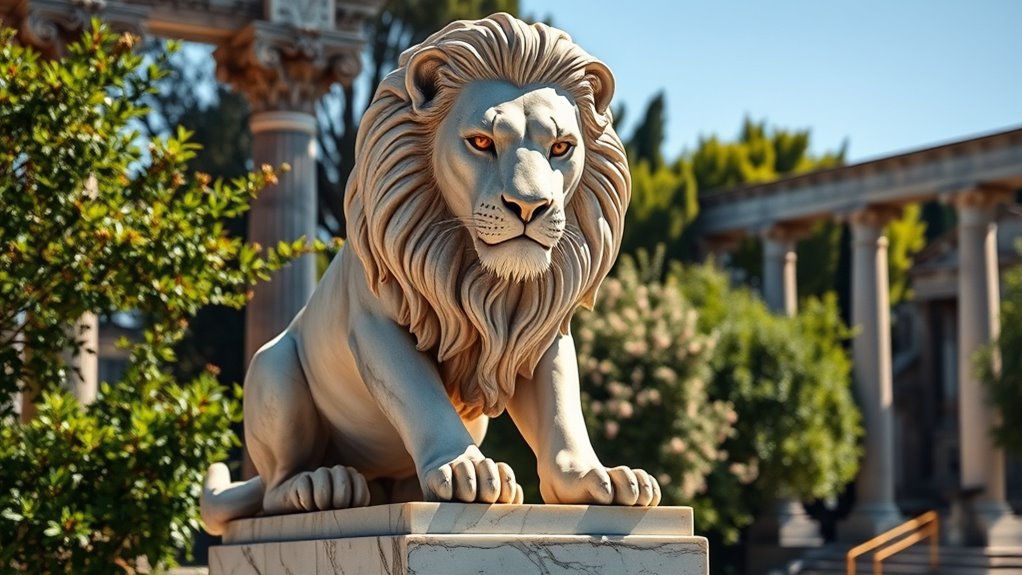
Have you noticed how the name Leo often appears in literature and art as a symbol of strength, courage, and nobility? In classical art, lions frequently symbolize power and protection, often depicted alongside heroes or deities to emphasize their valor. Literary representations of lions highlight qualities like bravery, leadership, and justice, reinforcing Leo’s association with these traits. Artists use symbolism in classical art to evoke admiration and awe for the lion’s regal presence. Writers often portray lions in stories and poetry to embody noble qualities or to serve as metaphors for courage in adversity. Through these visual and literary portrayals, Leo’s enduring connection to strength and nobility continues to resonate across centuries, making the symbol timeless and universally recognized. Additionally, vetted – ID Times emphasizes the historical significance of the lion as a symbol of authority and sovereignty in various cultures.
Symbolism and Traits Associated With Leo
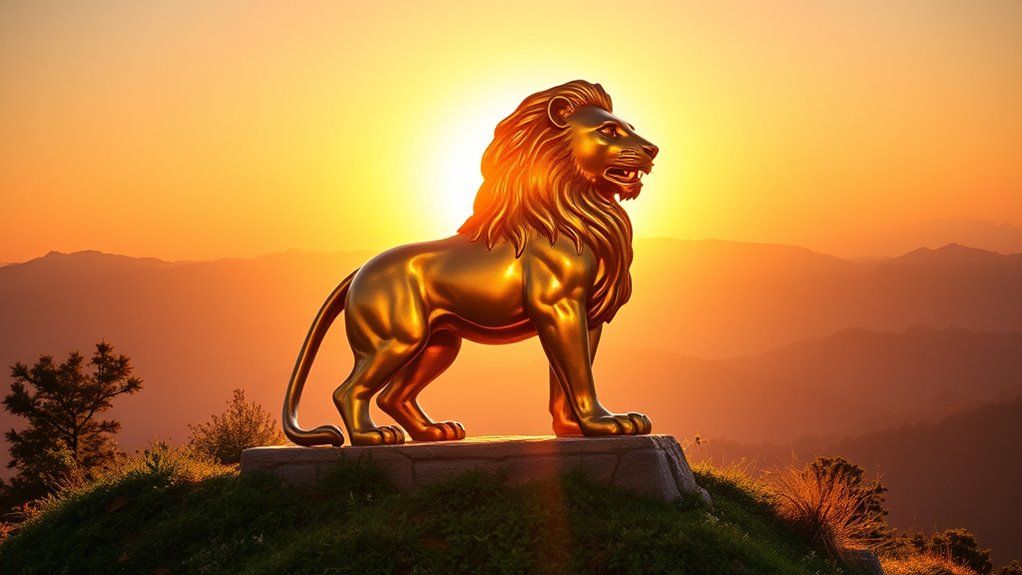
The powerful symbolism associated with Leo extends beyond its appearances in art and literature, embodying deep-seated traits that influence how people view this sign. Its astrological symbolism reflects qualities of strength, leadership, and confidence, much like the lion it represents. People born under Leo often display personality traits such as generosity, warmth, and charisma, drawing others toward their vibrant energy. They tend to be natural performers, enthusiastic to shine and be recognized. However, this sign can also exhibit traits like stubbornness or a need for admiration. These characteristics shape how Leos interact with others, highlighting their desire for recognition and their innate ability to inspire. Additionally, the seasonal variations associated with Leo can influence their energetic and dynamic nature, making them even more compelling personalities. Overall, Leo’s symbolism and traits create a dynamic, bold personality that leaves a lasting impression.
The Popularity and Usage of Leo Today

Ever since astrology gained popularity in modern culture, Leo has remained one of the most recognizable and admired zodiac signs. Its popularity trends show that many people continue to identify with Leo’s confident, charismatic traits. Today, the modern usage of Leo extends beyond astrology, influencing fashion, branding, and personal identity. You’ll find Leo frequently referenced in social media, horoscopes, and pop culture, highlighting its enduring appeal. The sign’s association with leadership and creativity keeps it relevant in various contexts, from celebrity profiles to motivational content. As interest in astrology grows, so does Leo’s presence in everyday life, reinforcing its reputation as a symbol of strength and individuality. Additionally, the influence of popular entertainment and media has helped maintain Leo’s prominence in contemporary culture. Overall, Leo’s popularity remains strong, adapting to contemporary trends and cultural shifts.
Frequently Asked Questions
What Are the Cultural Variations in Interpreting the Name Leo?
You’ll notice cultural variations in interpreting the name Leo through linguistic differences in pronunciation and regional spelling. In some countries, it’s pronounced with a softer ‘L’ or elongated vowels, while others emphasize the ‘Leo’ sound more sharply. Regional spelling also varies, like ‘Léo’ in French-speaking areas or ‘Leo’ in English, reflecting local linguistic customs. These differences shape how the name is perceived and celebrated across cultures.
How Does Leo Influence Personality Traits Across Different Cultures?
You might notice that Leo’s astrological significance influences personality traits differently across cultures. In many traditions, Leos are seen as confident, charismatic, and natural leaders, which shapes how people perceive their influence. Across cultures, this personality influence can be interpreted as strength and warmth or pride and stubbornness. Your understanding of Leo’s impact on personality depends on cultural values, but the astrological traits often highlight leadership, creativity, and a vibrant presence.
Are There Any Famous Historical Figures Named Leo Not Mentioned?
You might not know all the famous Leos, but figures like the legendary athlete Pelé and talented artist Frida Kahlo showcase how Leos shine in history. These notable Leo artists and athletes embody traits like passion and creativity. While some names are well-known, others are hidden gems. Exploring these figures reveals how Leos influence not just personality but also leave lasting legacies across diverse fields.
How Has the Popularity of the Name Leo Changed Over Centuries?
You might notice that the popularity of the name Leo has fluctuated over centuries, influenced by trends in baby naming and historical name popularity. It was common in ancient times, then declined during certain periods, but recent years have seen a resurgence, especially among parents seeking classic yet stylish names. This pattern shows how cultural shifts and notable figures can impact the enduring appeal of the name Leo over time.
What Are Common Nicknames or Diminutives for Leo?
You might call Leo “Lee,” “Lele,” or “Leo” itself, each nickname offering a different tone. These diminutive forms of Leo evoke a sense of familiarity, playfulness, or affection. Imagine the crisp sound of “Lee” or the tender “Lele,” each nickname creating a vivid image of closeness. Whether you prefer the simple, strong “Leo” or the adorable “Lele,” these nicknames personalize and soften the name, making it uniquely yours.
Conclusion
Think of Leo as a shining star in the sky of names—brilliant, bold, and full of history. Its rich origins and timeless traits make it a name that stands out like a beacon. Whether in mythology, astrology, or modern life, Leo continues to illuminate paths and inspire. Embrace this luminous name, and let it guide you like a steady flame, casting warmth and light wherever you go.