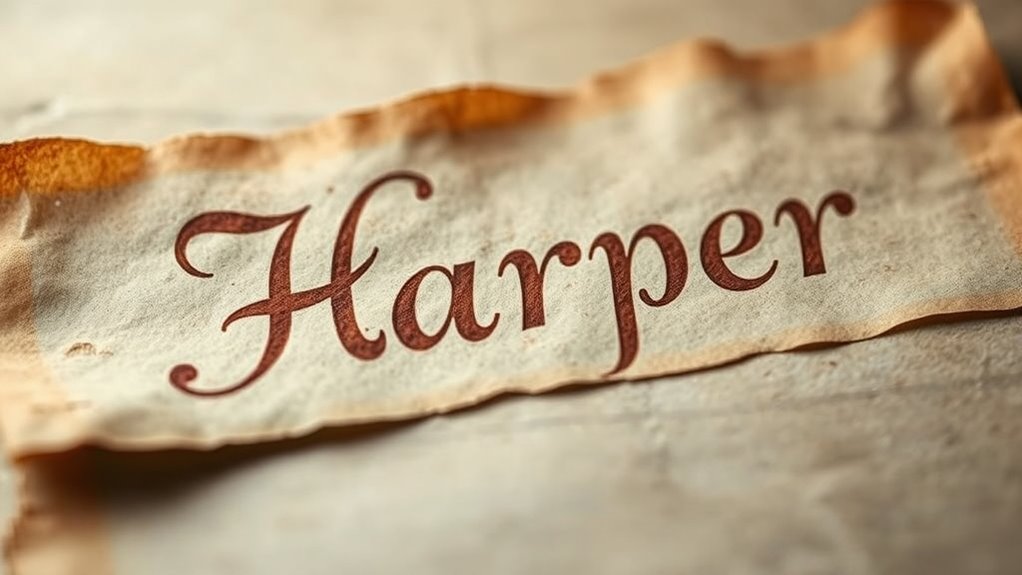

Harper is a name with deep roots in Old English, meaning “harp player,” and originally described medieval musicians or storytellers who used music to pass down tradition. Over time, it became a surname and now also works as a popular given name, especially for girls. The name symbolizes creativity, storytelling, and cultural heritage, often associated with artistic expression. To discover more about Harper’s fascinating history and modern significance, keep exploring its cultural connections and evolving trends.
Key Takeaways
- The name Harper originates from Old English, meaning “harp player,” and was historically an occupational surname for medieval musicians.
- It is linked to ancient Celtic storytellers and musicians who preserved culture through song and oral tradition.
- Harper symbolizes creativity, storytelling, and cultural heritage, often depicted as artistic and wise in literature.
- The name has gained modern popularity globally, especially for girls, influenced by trends favoring unisex and vintage names.
- Variations include nicknames like “Harp” and similar names such as Harrison and Harley, reflecting its versatile and contemporary appeal.
The Etymology of Harper
The name Harper originates from the Old English word “herepere,” which means “harp player” or “one who plays the harp.” It was initially used as an occupational surname for musicians or harpists in medieval England. Over time, linguistic influences shaped its pronunciation and spelling, blending regional dialects and phonetic development. As language evolved, the original sounds shifted, making it easier to pronounce and more widespread. These phonetic changes helped the name evolve from a descriptor of a profession to a popular given name and surname. The phonetic development reflects broader linguistic influences, such as Norman French and Latin, which contributed to the modern form “Harper.” Understanding these influences helps you see how language shapes names and cultural identity over centuries.
Historical Roots and Origins
Have you ever wondered how the name Harper connects to medieval society? Its roots trace back to ancient Celtic tribes, where the term likely referred to someone who played a role in storytelling or music. During the Middle Ages, harpers and minstrels became essential figures, entertaining nobles and preserving history through song. These musicians were crucial in conveying cultural stories and traditions, and their influence helped shape the name Harper as a symbol of musical skill and storytelling. The role of the harper was highly respected, linking the name to a rich heritage of oral history and artistic expression. This historical connection to Celtic tribes and medieval performers highlights Harper’s long-standing association with music, storytelling, and cultural preservation. Additionally, these unique roles helped establish a lasting legacy of artistic contribution that continues to influence the name today.
Harper as a Surname: Its Evolution
As the influence of medieval musicians like harpers and minstrels grew, the name Harper began to appear more frequently as a surname. This shift reflects its evolution from a descriptive occupation to a hereditary family name. By exploring Harper surname genealogy, you’ll see how it spread across regions, often linked to families involved in music or storytelling. Notable family histories reveal that some Harpers gained prominence through their artistic contributions or land holdings, helping the name persist through generations. Over time, the surname became common in English-speaking countries, maintaining its occupational roots while also serving as a marker of lineage. Additionally, understanding air quality and its importance can shed light on how occupational names like Harper might indirectly relate to environmental factors. Understanding this evolution offers insight into how occupational names like Harper transformed into enduring family identifiers.
Cultural Significance and Associations
Harper carries rich cultural associations that extend beyond its occupational origins, symbolizing artistry, storytelling, and creativity across various societies. The name often evokes connections to folk traditions and the preservation of musical heritage, highlighting its role in cultural expression. As a symbol of storytelling, harpers have historically contributed to passing down myths, histories, and songs. This association emphasizes the importance of music and oral traditions within communities. You’ll find the name linked to a deep appreciation for artistic expression and cultural identity. Additionally, the role of harpers in biodiversity preservation underscores their significance in maintaining cultural and ecological balance through traditional practices.
Harper in Literature and Media

In literature and media, the name Harper often symbolizes creativity, storytelling, and artistic expression, echoing its cultural roots. You’ll notice this symbolism in media, where harpers are portrayed as storytellers, musicians, or wise guides, emphasizing their role as conveyors of tradition and emotion. The portrayal of harpers in literature often highlights their connection to the arts, portraying them as characters who inspire or challenge societal norms through their craft. This symbolism underscores themes of cultural preservation and personal expression. In various works, harpers serve as metaphors for voice and memory, reminding audiences of the power of storytelling. Overall, the depiction of harpers enriches narratives by emphasizing the importance of art, history, and cultural continuity. Additionally, the association with cultural preservation reinforces the enduring legacy of storytelling across generations.
Modern Trends and Popularity
You might notice that Harper has become a popular choice for new parents in recent years, often ranking high on naming charts. Its appeal spans multiple countries, reflecting a growing international trend. This surge in popularity shows how modern trends influence traditional names in diverse cultures.
Recent Naming Trends
Have recent naming trends reflected a desire for uniqueness and individuality? Absolutely. You’ll notice a rise in gender neutral naming shifts, emphasizing flexibility and modern values. Celebrities influence these choices, often inspiring parents to pick names that break traditional molds. For example:
- Increasing popularity of unisex names like Harper and Riley
- Celebrity baby name trends shaping mainstream preferences
- Unique spellings to stand out further
- Reclaiming vintage or less common names for modern use
- The influence of brand reputation and product authenticity on cultural trends in naming choices
These trends show a move toward personal expression, making names more about identity than convention. You’re more likely to see parents choosing names that reflect their values or individual style, rather than sticking to traditional gender assignments or popular standards. It’s all about creating a distinctive identity from the start.
Popularity Across Countries
Curious about how Harper’s popularity varies around the world? You’ll find that regional popularity differs markedly, with the name ranking highly in countries like the United States, Canada, and Australia. In the US, Harper consistently ranks among the top girl’s names, reflecting a modern trend toward unisex and stylish names. Globally, Harper’s name rankings have risen steadily, driven by celebrity influence and evolving naming preferences. In the UK and other parts of Europe, the name’s popularity is growing, but it’s less dominant compared to North America. This variation highlights how cultural factors and regional naming trends influence Harper’s appeal. Additionally, name popularity metrics help illustrate these trends and show how different regions adopt new naming styles. Overall, Harper’s rising global name rankings showcase its widespread acceptance, making it a modern, trendy choice across many countries.
Variations and Similar Names
Are there variations or similar names to Harper that you might encounter? Absolutely. You may come across nicknames for Harper like “Harps” or “Harpy,” which add a playful touch. Similar sounding names include Harrison, Harley, Hopper, and Haper—each offering a unique twist while maintaining phonetic ties. These variations can appeal to different styles or cultural preferences. If you’re exploring options, consider how these names sound and feel, especially if you want something close to Harper but with a slight difference. Whether you’re searching for nicknames for Harper or similar sounding names, these options expand your choices while keeping the phonetic ties of the original name. It’s all about finding a variation that resonates with you or your family.
The Future of the Name Harper
As trends in baby naming continue to evolve, Harper is poised to maintain its popularity due to its modern yet timeless appeal. Future naming trends suggest that unisex names like Harper will stay in vogue, blending tradition with contemporary style. You might see more parents choosing Harper for its flexibility and sleek sound. Potential nickname developments could include “Harp” or “Harpy,” adding a playful or affectionate touch. As the name becomes more common, unique variations or spellings may emerge, but Harper’s core charm will likely keep it relevant. Its balance of sophistication and simplicity makes it adaptable for all ages. Additionally, the rising popularity of unisex names is reflected in name trends, indicating that Harper’s future in naming looks bright, promising continued appeal across different generations.
Frequently Asked Questions
Are There Any Famous Historical Figures Named Harper?
Yes, there are famous historical figures named Harper. You might think of Harper Lee, the renowned author of “To Kill a Mockingbird,” who made a lasting impact on American literature. Among famous musicians, you’ll find Harper Simon, a talented singer-songwriter and son of Paul Simon. These individuals showcase how the name Harper has been borne by influential people across different fields, leaving a notable mark in history and culture.
How Has the Name Harper Influenced Modern Naming Trends?
You’ll notice that Harper’s popularity has soared due to cultural shifts influencing baby names, especially with gender-neutral naming trends gaining momentum. Many parents choose Harper because it’s versatile, modern, and unisex, reflecting society’s move toward inclusivity. This trend encourages more gender-neutral options, making Harper a favorite for both boys and girls. Its rising influence shows how contemporary influences shape naming choices, blending tradition with fresh, progressive ideas.
What Are the Most Common Nicknames for Harper?
You’ll find that common nicknames for Harper include Harp, Harry, and even H. Variations of Harper often involve shortening or playful twists, like Harpie or Hapi. These nicknames give you options to personalize the name and make it more casual or affectionate. Whether you prefer a simple variation like Harp or something more unique, these nicknames help create a closer, more personal connection to the name Harper.
Is Harper More Popular as a Girl’s or Boy’s Name?
Ever wonder if Harper is more popular for girls or boys? Today, Harper leans toward being a girl’s name, especially in gender-neutral naming trends. However, cultural variations influence its popularity worldwide. In some areas, it’s used equally for boys and girls, reflecting modern shifts toward unisex names. You might find it equally charming for either gender, but overall, it’s more commonly chosen for girls now.
Are There Any Notable Fictional Characters Named Harper?
You’ll find several notable fictional characters named Harper in popular culture. For example, Harper Connelly from Charlaine Harris’s novels is a psychic with unique traits, while Harper Avery from the TV series “Grey’s Anatomy” is a key figure in medical innovation. These characters often embody traits like resilience and intelligence, making the name Harper resonate with strong, memorable personalities in stories and media.
Conclusion
As you explore the rich tapestry of the name Harper, you uncover a melody that weaves through history, culture, and imagination. Like a timeless river flowing with stories and significance, Harper continues to evolve, embracing new forms while carrying its ancient roots. Its enduring charm invites you to see beyond the surface, revealing a name that’s both a whisper of the past and a song of the future—an everlasting echo in the symphony of identity.