Czech names often have rich meanings rooted in history, religion, and nature, with popular favorites like Jan and Marie reflecting cultural values. Many nicknames, such as Jenda or Míša, express closeness and affection, adding personal warmth. Traditional names are influenced by saints and historical figures, while modern trends lean toward unique international names. Exploring these names reveals fascinating stories behind their origins and the affection they carry—if you want to discover more, there’s plenty to uncover.
Key Takeaways
- Czech names often originate from saints, historical figures, or nature, reflecting cultural and religious traditions.
- Many Czech names have meaningful nicknames that express affection and personal bonds, often derived from the original names.
- Traditional Czech names like Jan and Marie are deeply rooted in history, religion, and storytelling, symbolizing virtues and cultural identity.
- Modern naming trends include unique, international, or revived traditional names influenced by media and globalization.
- Understanding Czech names involves exploring their origins, cultural significance, and common affectionate nicknames.
Common Czech Names and Their Origins

Have you ever wondered where Czech names come from? Czech names often have deep roots in history and culture. In literature, names like Jan and Marie are timeless, reflecting the country’s rich storytelling tradition. They also appear frequently in classic Czech works, shaping cultural identity. Interestingly, Czech names in astrology are believed to carry specific traits, influencing personality and destiny. Names like Petr or Eva are associated with certain characteristics based on astrological signs, giving them added significance beyond their linguistic origins. Many Czech names derive from saints, historical figures, or nature, but their presence in literature and astrology highlights their broader cultural importance. Additionally, understanding the origins of Czech names can provide insight into their significance and the values of Czech society.
Cultural Significance Behind Popular Names
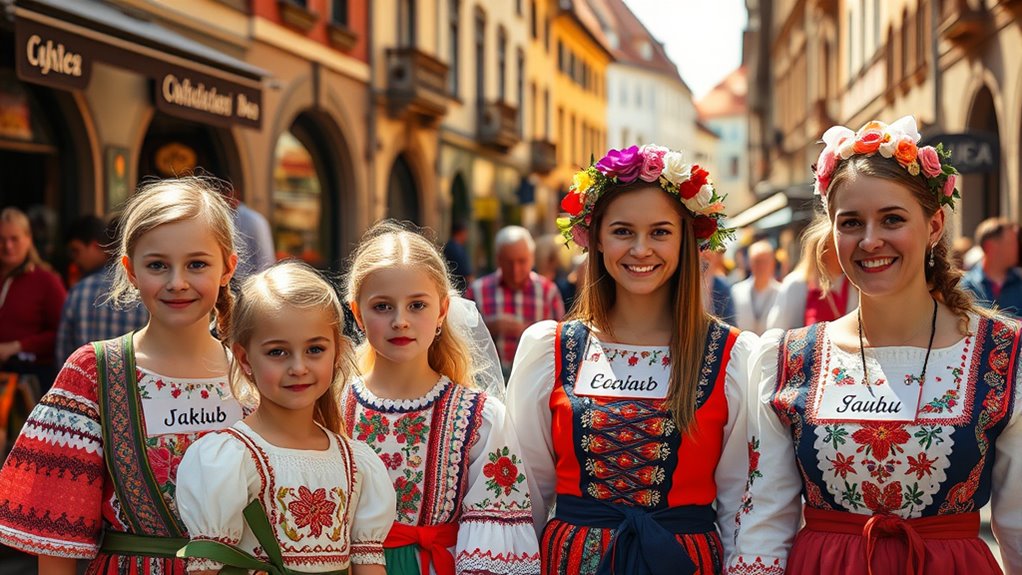
Many popular Czech names carry deep cultural significance that goes beyond their linguistic roots. You’ll notice that name pronunciation traditions emphasize clarity and respect for historical forms, preserving the name’s original sound. Gender-specific naming conventions are also important, as each name aligns with traditional roles and societal expectations. For example, male names often reflect strength or historical figures, while female names highlight beauty or virtue. These naming patterns reinforce Czech cultural identity and connect individuals to their heritage. Naming ceremonies, often involving family elders, uphold these traditions, ensuring that names are not just identifiers but symbols of cultural continuity. Additionally, understanding the Etsy Shops strategies can offer insights into how cultural practices are preserved and promoted through modern platforms, connecting tradition with contemporary commerce. By understanding these practices, you gain insight into how Czech society maintains its rich cultural fabric through names.
Unique Nicknames and Their Affectionate Meanings

In Czech culture, unique nicknames often carry deep affectionate meanings that strengthen personal connections. You’ll notice that nicknames serve as expressions of affection, showing closeness and warmth. These nicknames are often playful, tender, or humorous, highlighting your special bond. Regional variations in nicknames add a rich layer of diversity; for example, a name might have different affectionate forms depending on the Czech region. Some nicknames are derived from the person’s given name, while others reflect unique traits or shared experiences. This regional and personal variation makes Czech nicknames both meaningful and intimate. Whether you’re called “Jenda” instead of “Jiří” or “Míša” for “Michaela,” these affectionate forms deepen your sense of belonging and love within Czech culture. Additionally, understanding the linguistic variations of nicknames can provide insights into the cultural nuances and social dynamics of Czech communities.
Historical Figures and Their Influence on Naming Trends
| Name Origin | Influence on Czech Culture |
|---|---|
| Saints | Names like Jan (John), Anna, and Petr (Peter) are common due to religious traditions. |
| National Heroes | Names such as Tomáš (Thomas) honor prominent leaders. |
| Religious Leaders | Influence of figures like Saint Wenceslas shapes naming choices. |
| Water-related themes | The significance of water and aquatic symbolism can also influence naming trends, reflecting cultural values and beliefs. |
Modern Trends in Czech Naming Practices

Have you noticed how Czech parents today increasingly choose unique and modern names for their children? This shift reflects broader modern trends in Czech naming practices. In rural areas, czech naming customs often still favor traditional names, but even here, globalization influences choices. You’ll see more parents selecting international or trendy names, blending old and new.
- Increasing popularity of global names like Emma or Liam.
- Revival of traditional Czech names with modern twists.
- Influence of media and celebrity culture shaping preferences.
- Younger parents favoring unique, non-traditional options over classic ones.
Frequently Asked Questions
How Do Czech Names Vary Across Different Regions?
You’ll notice that Czech names vary across regions due to regional naming traditions and dialectal variations. In some areas, you might find unique nicknames or forms influenced by local dialects, making names sound different from the standard Czech versions. These regional differences reflect local culture and history, giving each area a distinct naming flavor. So, exploring Czech names reveals a fascinating mix shaped by regional customs and dialectal nuances.
Are There Specific Names Associated With Czech Folklore?
You’ll find that some Czech names are closely tied to Czech folklore characters and traditional fairy tales. Names like Rübezahl and Vodník evoke Czech legends, while others like Jeník and Mařenka come from classic tales. These names often carry cultural significance, reflecting stories passed down through generations. When choosing a Czech name, consider its connection to folklore—it adds depth and a sense of tradition to your character or child’s identity.
What Are the Gender-Neutral Czech Names?
Think of gender-neutral Czech names as a bridge connecting tradition and modern trends. Names like Alex, Kryštof, and Patrik are popular unisex Czech names that suit any gender. These names reflect the growing gender-neutral naming trends, allowing you to choose a name that’s flexible and inclusive. Embrace these versatile options, and you’ll find a perfect fit that celebrates individuality while honoring Czech naming customs.
How Do Czech Naming Laws Influence Name Choices?
Czech naming laws and cultural traditions heavily influence your name choices, requiring names to align with Czech language rules and gender distinctions. Religious beliefs also play a role, guiding you toward names that reflect Christian or other faith-based traditions. These laws and traditions guarantee names are culturally appropriate and respectful of religious practices, shaping your options and encouraging you to choose meaningful, culturally rooted names that adhere to official regulations.
Are There Popular Czech Names for Newborns Each Year?
Yes, each year, trendy baby names Czech Republic see fluctuations, but some popular Czech boy and girl names remain consistently loved. You’ll notice names like Jakub and Jakub for boys, and Anna or Tereza for girls, often topping lists. These names reflect cultural traditions and modern trends, making them popular choices. When choosing, you might consider how these names fit your style and the meaning behind them, ensuring a meaningful start for your newborn.
Conclusion
Exploring Czech names is like opening a cherished family album—each name tells a story and carries deep meaning. From ancient origins to modern trends, they connect you to history and culture. Embrace the nicknames and their warmth, just as a familiar song stays close to your heart. Names are more than words; they’re bridges to identity and tradition, like a guiding star shining brightly through generations.