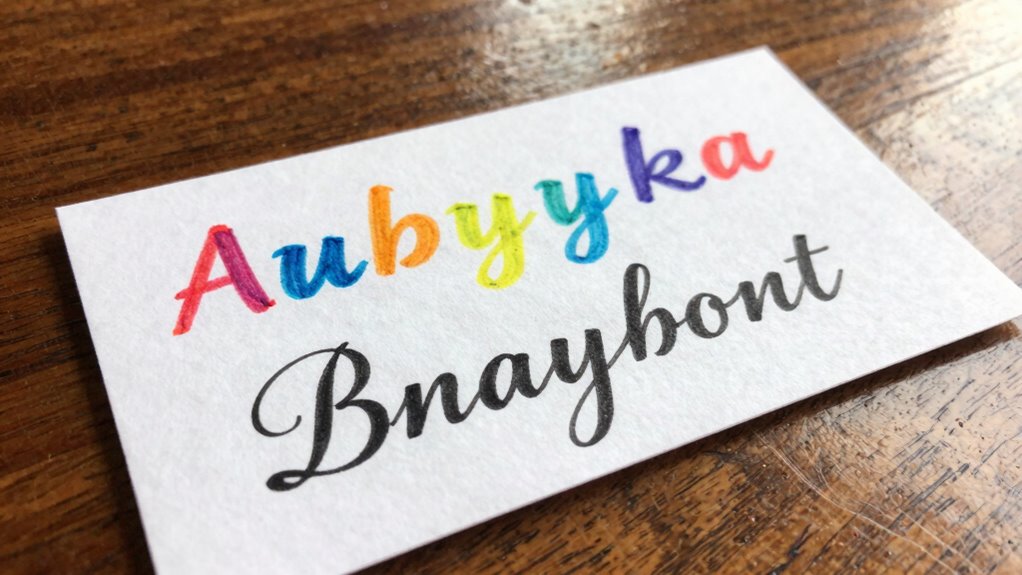

Phonetic spelling focuses on how a name sounds, making pronunciation clearer and reducing miscommunication, especially in multicultural settings. Traditional spelling follows established rules that often reflect a name’s cultural or historical roots, maintaining its original identity. While phonetic forms improve pronunciation, traditional spellings preserve cultural significance. Understanding both helps you appreciate naming diversity and respect different cultural expressions. Keep exploring to discover how these differences shape identity and communication across cultures.

Prime made for students and young adults
- Fast, free delivery for dorm and study essentials
- Prime Video and Amazon Music included
- Member-only deals
Key Takeaways
- Phonetic spelling shows how a name sounds, aiding correct pronunciation, while traditional spelling follows established linguistic conventions.
- Traditional spelling preserves cultural, historical, and linguistic origins of a name.
- Phonetic spelling simplifies pronunciation but may distort original cultural context.
- Traditional spelling often includes accents and unique letter combinations reflecting cultural identity.
- Recognizing both helps foster cultural understanding and accurate communication.

Understanding the difference between phonetic spelling and traditional spelling in names is important, especially when it comes to pronunciation and identity. Phonetic spelling focuses on how a name sounds, aiming to capture pronunciation accurately, while traditional spelling sticks to established conventions that often reflect historical or cultural origins. When you encounter a name with a phonetic spelling, you’re likely to find that it provides clearer guidance on pronunciation, which can be especially helpful in avoiding mispronunciations. This can be crucial in professional or personal settings where respectful communication matters. On the other hand, traditional spellings often preserve cultural variations and historical roots, even if they make pronunciation less straightforward. Recognizing this difference helps you appreciate how names evolve and why certain spellings exist, even if they seem inconsistent or difficult to pronounce at first glance.
Pronunciation clarity is a key benefit of phonetic spelling. When a name is spelled phonetically, you get a more immediate sense of how to say it correctly, reducing confusion for you and others. This is particularly useful in multicultural environments where names may have unfamiliar sounds or syllabic emphasis. Phonetic spellings serve as a guide, preventing you from awkward mispronunciations that might cause embarrassment or discomfort. However, it’s also important to understand that phonetic spellings can sometimes oversimplify or distort the original cultural context of a name. Traditional spellings, while potentially less intuitive for pronunciation, often retain cultural variations that are meaningful to those with a personal or cultural connection to the name. These variations can include unique letter combinations, accents, or diacritical marks that reflect linguistic heritage, making the name more than just a label—it’s a cultural marker. Additionally, cultural significance plays a vital role in why many names are preserved in their traditional spelling, emphasizing their importance beyond mere pronunciation. Recognizing the linguistic heritage embedded in names can deepen your understanding and respect for different cultures and traditions. Moreover, understanding the evolution of names over time can help you see how language and cultural identities influence spelling choices. Being aware of these distinctions can also foster greater cultural sensitivity and appreciation for diverse naming practices. As language continues to evolve, appreciating both phonetic and traditional spellings can help you better understand the diversity of naming conventions around the world.
As an affiliate, we earn on qualifying purchases.
Frequently Asked Questions
How Do Pronunciation Differences Affect Spelling Choices in Names?
Pronunciation differences influence your spelling choices because you want to guarantee clarity and avoid confusion. If a name’s pronunciation varies, you might opt for phonetic spelling to improve pronunciation clarity. However, to maintain spelling consistency, especially with traditional names, you may stick to common spellings. Balancing these factors helps others pronounce the name correctly while preserving its recognizable form. Your goal is to make the name easy to read and say.
Can Phonetic Spelling Change Over Time for the Same Name?
Yes, phonetic spelling can change over time for the same name. As pronunciation shifts or regional accents evolve, people might adapt the spelling to match current pronunciation, impacting name recognition and spelling consistency. These changes can make the name easier to recognize and pronounce, but they might also create confusion or inconsistency in official documents. Staying aware of these shifts helps maintain clarity and helps others correctly identify your name.
Are There Legal Implications for Spelling Variations in Official Documents?
Think of legal documentation like a map guiding your journey; any spelling variation can lead to confusion. Changing your name’s spelling on official documents, like during registration, may have legal implications, such as affecting your identity verification or legal rights. To avoid issues, make sure your name’s spelling is consistent across all legal records, as discrepancies can complicate matters like passport issuance or court proceedings.
How Do Cultural Differences Influence Phonetic Spelling of Names?
Cultural differences markedly influence phonetic spelling of names through cultural name adaptations and linguistic influence variations. You might see names spelled differently to match local pronunciation or writing customs, reflecting cultural identity and linguistic nuances. These adaptations help preserve pronunciation and cultural significance, though they can lead to inconsistent spellings across regions. Recognizing these influences ensures respectful representation of names in multicultural contexts, promoting understanding and inclusivity.
What Tools Are Available to Convert Traditional Spellings to Phonetic?
You can use online tools like phonetic transcription generators or specialized software to convert traditional spellings into phonetic forms. These tools help guarantee spelling consistency by providing standardized phonetic representations, making pronunciation clearer. Websites like Forvo or pronunciation dictionaries can also guide you. Just input the name, and the tool will give you a phonetic transcription, helping you understand or teach correct pronunciation more effectively.
As an affiliate, we earn on qualifying purchases.
Conclusion
Now that you know the difference between phonetic spelling and traditional spelling, you can confidently choose the correct form for names. Remember, phonetic spelling simplifies sounds, while traditional spelling sticks to standard rules. So, whether you’re spelling a name for a special occasion or just sharing a story, prioritize precision and practice. Perfectly pronouncing and presenting names promotes respect and understanding—making your communication clear, considerate, and compelling.
As an affiliate, we earn on qualifying purchases.
As an affiliate, we earn on qualifying purchases.
Halloween Picks
halloween
As an affiliate, we earn on qualifying purchases.