When parents shop for educational science kits, the real decision is rarely between two specific boxes — it’s between two models: a monthly science kit subscription (Mel Science, Kiwico’s Tinker Crate and Kiwi Crate lines, Mark Rober’s CrunchLabs) or a single standalone kit bought off a shelf (National Geographic’s STEM series, Thames & Kosmos kits, Snap Circuits, generic volcano and crystal-growing sets). Both promise hands-on learning. They differ in how they deliver it, what they cost over time, and — most importantly — whether they actually hold a child’s attention past the first afternoon.

Prime made for students and young adults
- Fast, free delivery for dorm and study essentials
- Prime Video and Amazon Music included
- Member-only deals

Doctor Jupiter Ultimate Science Experiments Kit for Kids Ages 8+
- ✔ Recommended age: 8+ years
- ✔ Number of experiments: 50+
- ✔ Instruction manual: Illustrated, step-by-step

Kuovei Science Kit for Kids with 80 Experiments
- ✔ Brand: Kuovei
- ✔ Number of experiments: 80
- ✔ Recommended age: Over 6 years (manufacturer range: 36 months–12 years)
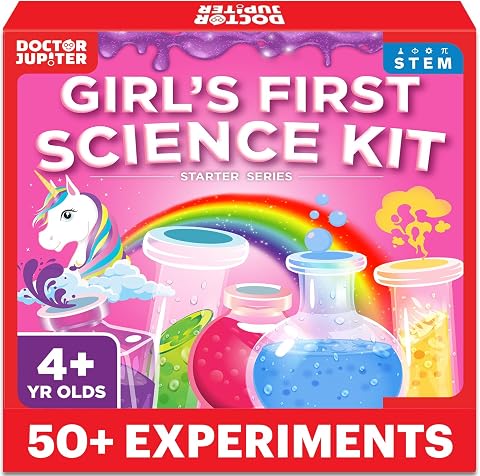
Doctor Jupiter First Science Experiments Kit for Kids Ages 4+
- ✔ Brand: Doctor Jupiter
- ✔ Age range: 4–12 years (best fit 4–7)
- ✔ Number of experiments: 50+
The core tension is this: subscriptions are engineered for repeat engagement. A new project arrives every month, builds on habits, and keeps a curious kid supplied with fresh material. But that comes with recurring costs that quietly add up to $150–$300+ per year, shipping schedules you don’t control, and the risk that your child loses interest while you’re still paying. One-off kits cost $15–$40, live in your closet until you need them, and make excellent gifts — but a single kit is usually consumed in one or two sittings, and the learning evaporates unless you follow up.
If your child is genuinely science-obsessed and you want sustained enrichment, a subscription usually wins. If you’re testing the waters, buying a birthday present, or want a rainy-weekend activity, a well-chosen one-off kit is the smarter spend. This guide breaks down where each model wins, where each falls short, and how to decide based on your child rather than the marketing.
At a Glance
| Criteria | Science kit subscriptions (e.g., Mel Science, Kiwico, CrunchLabs) | One-off boxed science kits (e.g., National Geographic STEM, Thames & Kosmos) | Winner |
|---|---|---|---|
| Cost over one year | $180–$350/year; recurring billing | $15–$40 total, one payment | B |
| Replay value and longevity | High — new project every month keeps momentum | Low to moderate — often finished in one sitting | A |
| Learning depth | Stronger — sequential projects, app/experiment extensions, real scientific tools in some kits | Variable — quality kits teach one concept well; cheap kits are more toy than science | A |
| Adult supervision required | Moderate — most projects need an adult for 15–45 minutes | Varies widely, from independent play to fully supervised | B |
| Age fit and range | Narrow per box but tiers from toddler to teen across subscription lines | Fixed age range printed on the box; easy to match precisely | B |
| Convenience and control | Low control — cancellation friction, shipping delays, no picking topics | Full control — you pick the exact topic and timing | B |
| Gift-ability | Good as a multi-month gift, awkward as a single occasion gift | Excellent — tangible, unwrappable, instantly usable | B |
| Mess and safety | Varies by kit; chemistry subscriptions involve real chemicals and goggles | Usually mild; mostly baking-soda-and-vinegar-level chemistry | B |
Doctor Jupiter Ultimate Science Experiments Kit for Kids Ages 8+
The Doctor Jupiter Ultimate Science Kit takes our top spot because it solves the problem most science kits have: they entertain without actually teaching. With over 50 experiments — from color-changing volcanoes to rainbow crystals — this kit pairs every activity with an explanation of the science behind it, which is what elevates it above pure spectacle. The illustrated, step-by-step manual means an eight-year-old with solid reading skills can drive many experiments themselves, with a parent stepping in for setup or messier reactions.Compared with the Kuovei kit, the Doctor Jupiter Ultimate offers fewer experiments (50+ versus 80), but we consider this a reasonable trade: the instructions and scientific explanations are more thorough, and the ASTM F963-17 safety certification provides reassurance the Kuovei listing does not explicitly match. It also sits at a higher age floor than the Kuovei, which cuts both ways — the content is more genuinely challenging for older kids, but younger siblings will need to wait. The realistic drawback is the same one that affects nearly every chemistry-style kit: some experiments will require adult help, so this is not a fully independent-quiet-time activity. Still, for a child aged eight or above who is ready for real scientific reasoning rather than just fizzing volcanoes, this pick makes the most sense for the money.
Pros:
- Over 50 experiments with genuine variety, from volcanoes to crystal-growing
- Explains the science behind each activity, not just the steps
- Illustrated, step-by-step instructions kids can partly follow themselves
- Meets ASTM F963-17 safety standards
Cons:
- Some experiments require adult help with setup or reactions
- Fewer total experiments than the Kuovei kit
- Age 8+ floor excludes younger siblings
Best for: Kids aged 8 and up who are ready for experiments with real scientific explanations behind them
Not ideal for: Children under 8, or families looking for a completely parent-free activity
Bottom line: The strongest all-around choice because it teaches why experiments work, not just how to do them.
“The strongest all-around choice because it teaches why experiments work, not just how to do them.”
Kuovei Science Kit for Kids with 80 Experiments
If experiment count is your priority, the Kuovei Science Kit is the clear volume leader of this lineup with 80 experiments packed into a single set. The included guidance cards walk children through activities like a rainbow fountain and an erupting volcano while explaining the underlying scientific principles, so the educational element has not been sacrificed entirely to quantity. The box also comes impressively equipped: goggles, gloves, test tubes, petri dishes, measuring cups, droppers, and a range of chemical materials and pigments give it the feel of a proper starter laboratory.Where this option diverges from the Doctor Jupiter Ultimate is in age range and oversight. The manufacturer lists an official range of 36 months to 12 years with a recommended start of around 6, making it more accessible to younger children than our top pick — but that lower floor comes with a real responsibility: several experiments use chemical materials that require careful handling, so parents of younger kids should expect to be hands-on throughout. We would also flag transparency as a minor weakness: the component list ends with the phrase "and other items," which means you cannot verify the exact contents before purchase. Compared with the Doctor Jupiter First Science Kit, the Kuovei is more chemistry-oriented and less sensory-play-based, so it suits kids who want "real science" rather than squishy, craft-adjacent experiments. This model is better suited to budget-conscious families with school-age children who want maximum activities per dollar.
Pros:
- 80 experiments — the most of any kit in this comparison
- Guidance cards explain both steps and scientific principles
- Well-equipped with lab gear like goggles, gloves, test tubes, and measuring cups
- Broad manufacturer age range that spans early elementary through age 12
Cons:
- Some experiments involve chemical materials requiring careful adult handling
- Component list is vague — "and other items" leaves exact contents unclear
- Instruction depth is thinner than the Doctor Jupiter kits
Best for: Families of kids roughly 6–12 who want the largest number of experiments and a genuine lab-style experience
Not ideal for: Preschoolers, or households unwilling to closely supervise chemical-based activities
Bottom line: The volume and value pick for school-age kids, provided a parent is willing to supervise the chemistry.
“The volume and value pick for school-age kids, provided a parent is willing to supervise the chemistry.”
Doctor Jupiter First Science Experiments Kit for Kids Ages 4+
The Doctor Jupiter First Science Kit occupies a niche the other two picks simply cannot: it is built from the ground up for children as young as four. Rather than simplifying an older kids’ chemistry set, it reimagines science for preschoolers through tactile, sensory-rich activities — squishies, oobleck, mini volcanoes, perfumes, and even face masks. This matters because four-year-olds learn science through touching, mixing, and mess-making, not through test tubes and titration. The 50+ experiments still come with illustrated step-by-step instructions, and the kit explicitly targets critical thinking and problem-solving skills, so the educational intent is real rather than decorative.Compared with its sibling, the Doctor Jupiter Ultimate Kit for ages 8+, this set trades chemical complexity for safe, food-adjacent ingredients — the included materials are things like food essences, food colors, and molds rather than reactive chemicals. That makes it the safest of the three for younger siblings, reinforced by the same ASTM F963-17 certification. The honest tradeoff is that an eight- or nine-year-old will likely find these activities too simple; this is a starter kit, not a long-term companion. And like every pick in this roundup, adult assistance is required for some experiments — arguably more so here, given the age group. For families whose scientists are still in preschool or early elementary, this pick makes the most sense as a first STEM kit that builds genuine curiosity before graduating to chemistry-style sets.
Pros:
- Genuinely designed for ages 4+, not a watered-down older kids’ kit
- Sensory activities like oobleck, squishies, and perfume-making suit preschool learning styles
- Screen-free, hands-on STEM with illustrated parent-friendly instructions
- ASTM F963-17 certified with food-adjacent, low-risk materials
Cons:
- Too simple for children 8 and up
- Adult assistance required for most experiments given the age group
- Sensory focus means less formal scientific depth than the Ultimate kit
Best for: Ages 4–7, especially preschoolers and early elementary kids new to hands-on science
Not ideal for: Kids 8 and up who will find the activities too simple, or parents expecting zero involvement
Bottom line: The best first science kit for preschoolers — safe, sensory, and genuinely educational rather than just messy fun.
“The best first science kit for preschoolers — safe, sensory, and genuinely educational rather than just messy fun.”
As an Amazon Associate we earn from qualifying purchases.
Key Differences
The biggest difference is temporal, not educational. A one-off kit is an event: your child opens it, does the activity — builds the volcano, grows the crystals, snaps the circuits — and in most cases the educational payload is delivered within hours. A subscription is a habit: the monthly arrival creates anticipation, the projects are paced to be done one at a time, and several subscriptions (Mel Science especially) deliberately sequence concepts so later experiments build on earlier ones. In practice, this means subscriptions generate far more total learning hours per dollar of effort on your part, while one-off kits generate more learning hours per dollar spent — at least until your child loses interest in the single topic.
The second major difference is financial exposure. A $25 National Geographic kit is a low-stakes experiment: if your kid hates it, you’re out a dinner’s worth of money. A subscription is a bet on your child’s sustained interest, and interest is exactly what parents tend to overestimate. Plenty of families pay for six months and use three boxes. The honest counterpoint: when a subscription clicks, it’s transformative — kids who devour each delivery get far more out of it than any single box could provide, and per-project cost ($20–$30 per box at annual pricing) is actually comparable to buying a decent one-off kit retail.
Finally, there’s a quality asymmetry worth knowing. Subscription companies compete on retention, so their kits are refined relentlessly: instructions are genuinely kid-readable, materials are pre-sorted, and failure rates are low. The one-off market is a mixed bag — Thames & Kosmos, Snap Circuits, and National Geographic are consistently solid, but the shelf is full of cheap kits with vague instructions and underwhelming results. If you go the one-off route, brand choice matters more than it does with subscriptions.
Detailed Comparison
Cost over one year (One-off boxed science kits (e.g., National Geographic STEM, Thames & Kosmos) wins — major)
This is where one-off kits win decisively, and it isn’t close on the surface. A quality standalone kit runs $15–$40, one time. Subscriptions run roughly $20–$35 per box depending on plan length, translating to $180–$350 over a year. However, the per-project math is more nuanced: a $250 annual subscription delivering 12 well-engineered projects costs about $21 each, which is competitive with buying 12 separate good kits at $25 apiece. The real risk isn’t the price — it’s paying for boxes your child never opens. Unused subscription months are pure waste; an unused one-off kit is a $25 mistake. If your budget is tight or your child’s interest is unproven, start with one-off kits. If interest is established, subscriptions deliver fair per-project value.
Replay value and longevity (Science kit subscriptions (e.g., Mel Science, Kiwico, CrunchLabs) wins — major)
Subscriptions win this criterion by design. The monthly arrival restarts enthusiasm on a schedule, and the best programs include extension activities — Mel Science pairs physical kits with a VR/app component, CrunchLabs adds build videos that many kids rewatch. One-off kits vary sharply here: Snap Circuits and good building kits survive months of reconfiguration, but consumable kits (crystal growing, volcano, slime) are single-use by nature. A realistic expectation: a typical one-off kit delivers two to five engaged hours total; a year of subscription boxes delivers thirty to sixty. If your goal is sustained screen-free engagement, the subscription model is structurally better — no standalone purchase can replicate the freshness of a new box every month.
Learning depth (Science kit subscriptions (e.g., Mel Science, Kiwico, CrunchLabs) wins — moderate)
Both models can teach real science, but subscriptions have an edge because of sequencing and support. Mel Science’s chemistry line uses actual reagents and mirrors school curricula; Kiwico includes its Zine (a mini-magazine) explaining the why behind each build; CrunchLabs teaches engineering thinking progressively. One-off kits are single-concept by nature — a crystal kit teaches saturation and crystallography reasonably well, then stops. The gap is moderate rather than major, because excellent one-offs (Thames & Kosmos chemistry sets, Snap Circuits with its project manuals) teach their concept more thoroughly than a single subscription box teaches its monthly topic. The subscription advantage is cumulative depth across the year, not per-box superiority.
Adult supervision required (One-off boxed science kits (e.g., National Geographic STEM, Thames & Kosmos) wins — moderate)
One-off kits generally win on independence, mostly because their activities are milder. Snap Circuits, building kits, and most slime/crystal kits can be done solo by an eight-year-old while you’re in the room. Subscription kits skew toward projects that genuinely need an adult: chemistry subscriptions require supervision and safety equipment by design, and many builds (especially ages 6–10 ranges) involve steps where adult help is expected for 15–45 minutes. If you’re buying to buy yourself quiet time, audit this carefully — a subscription box arriving monthly can quietly become a monthly obligation for you. Check the recommended supervision level before committing, not after the first box arrives.
Age fit and range (One-off boxed science kits (e.g., National Geographic STEM, Thames & Kosmos) wins — moderate)
One-off kits win on precision: the age range is printed on the box, reviews tell you whether a seven-year-old actually enjoys it, and you can match the topic to your child’s specific obsession (sharks, volcanoes, robots). Subscriptions cover broad age bands per line (e.g., 5–8, 8–12, 12+), and while they adjust difficulty within a band, a child at the young edge of a range may struggle and one at the older edge may find projects too easy. The practical consequence: subscriptions work best mid-band; one-offs let you buy exactly at your child’s level and interest. This is a moderate but real difference, especially for kids whose reading level or fine motor skills don’t match their age peers.
Convenience and control (One-off boxed science kits (e.g., National Geographic STEM, Thames & Kosmos) wins — moderate)
One-off kits win clearly. You choose the topic, the timing (birthday, holiday, rainy weekend), and the store. Subscriptions involve shipping schedules, occasional delays, billing cycles, and cancellation flows that some companies make harder than they should be. You also can’t cherry-pick topics — a physics-loving kid will periodically receive a biology or art-leaning box. That said, the subscription’s ‘weakness’ is also its mechanism: not choosing is what creates the surprise and the scheduled anticipation. Parents who value control should buy one-offs; parents happy to outsource enrichment curation get real value from the subscription doing that work.
Gift-ability (One-off boxed science kits (e.g., National Geographic STEM, Thames & Kosmos) wins — moderate)
One-off kits are among the best STEM gifts available: tangible, wrapped, immediately playable, no ongoing commitment dumped on the parents. A subscription is a generous gift on paper — months of deliveries — but it often requires the recipient’s parent to manage an account, and gifting auto-renewals can become an awkward surprise bill. Many subscription companies now offer prepaid gift plans that fix this, which is the right way to gift one. Still, for birthdays and holidays, the boxed kit remains the safer, more satisfying gift. This is a minor-to-moderate difference depending on the occasion.
Mess and safety (One-off boxed science kits (e.g., National Geographic STEM, Thames & Kosmos) wins — minor)
Standard one-off kits are overwhelmingly low-stakes: vinegar, baking soda, borax-free slime, snapped plastic components. Subscriptions split into two categories — engineering/build boxes (Kiwico, CrunchLabs) are similarly clean, while chemistry subscriptions (Mel Science) involve real chemicals, goggles included, and a genuine need for adult presence and a protected surface. Neither is dangerous when used as intended, and the chemistry subscriptions’ rigor is arguably a feature for older kids. But if your household can’t tolerate mess or unsupervised projects are non-negotiable, that narrows your subscription options to the build-focused lines. Minor for most families, decisive for some.
Science kit subscriptions (e.g., Mel Science, Kiwico, CrunchLabs): Pros and Cons
Pros:
- Sustained monthly engagement — the single biggest driver of whether kids keep learning
- Sequenced curriculum-style learning that builds over months
- High, consistent quality; instructions are refined for kid independence
- Extension content (apps, videos, magazines) extends each box beyond the physical build
- Prepaid gift plans and annual pricing bring per-box cost to roughly $20–$30
Cons:
- $180–$350/year commitment; recurring billing requires active management
- Risk of paying for boxes your child never opens once novelty fades
- No topic choice — your kid receives whatever the month’s theme is
- Chemistry lines require real adult supervision and tolerance for mess
- Shipping delays and cancellation friction vary by company
One-off boxed science kits (e.g., National Geographic STEM, Thames & Kosmos): Pros and Cons
Pros:
- One-time $15–$40 spend with zero ongoing commitment
- Perfect topic and age matching — buy exactly what your child loves
- Excellent, low-risk gifts for birthdays and holidays
- Most activities are low-mess and playable with minimal supervision
- Some (Snap Circuits, building kits) have genuine long-term replay value
Cons:
- Most kits are consumed in one or two sittings; total engagement is often 2–5 hours
- Quality varies wildly by brand; cheap kits often disappoint
- Single-concept learning with no progression unless you curate a sequence yourself
- Instructions in budget kits are frequently vague, pushing work onto the parent
Who Should Choose What
Choose Science kit subscriptions (e.g., Mel Science, Kiwico, CrunchLabs) if:
- Your child has already shown sustained interest in science — they ask questions, watch science videos, or devoured previous kits
- You want structured, year-round enrichment and will commit to doing boxes with your child monthly
- Your child is 10+ and can safely and independently handle real chemistry or engineering builds
- You’ve already tried 2–3 one-off kits and they were finished in an afternoon, leaving your kid wanting more
Choose One-off boxed science kits (e.g., National Geographic STEM, Thames & Kosmos) if:
- You’re testing whether your child is interested in science at all — start with one or two, not a subscription
- You need a birthday or holiday gift under $40
- You want a specific activity for a specific moment (school project, rainy weekend, travel)
- Your budget can’t absorb recurring charges, or you want to avoid managing another subscription
Skip both if: Your child has no interest in hands-on building or experiments at all — no kit format fixes absent interest, and a museum membership, nature outings, or science media may engage them better for less money.
Value for Money
On pure dollars-per-engaged-hour, the answer depends entirely on follow-through. A $25 one-off kit that gets 4 hours of use costs about $6 per hour. A $250 subscription that gets fully used across 12 boxes might deliver 40+ hours — roughly $6 per hour as well — plus deeper learning and zero shopping effort. But a subscription that’s half-abandoned costs $12+ per hour and leaves you with clutter. So the subscription is not the ‘expensive’ option and the one-off kit is not the ‘cheap’ one; the subscription is the higher-variance option.
The value-maximizing path for most families is sequenced: buy two or three well-reviewed one-off kits first (Snap Circuits plus one Thames & Kosmos or National Geographic kit matched to your child’s interests, roughly $50–$60 total). If your child finishes them hungry for more within a couple of weeks, that’s strong evidence a subscription will be used — subscribe on an annual plan for the best per-box rate, and set a calendar reminder to evaluate after three boxes. If your child drifts away after the first sitting, you’ve learned that for $60 instead of $300. Paying subscription prices is worth it only when you have evidence your child will actually consume the product; interest, not price, is the variable that determines value.
Final Verdict
For most families starting out, one-off kits are the right first purchase: they’re low-cost, low-risk, precisely matched to your child’s age and interests, and they double as gifts. Buy from reliable brands — Snap Circuits, Thames & Kosmos, National Geographic — and treat them as a test of your child’s appetite for hands-on science.
Choose a subscription when — and only when — your child has demonstrated sustained interest, meaning they’ve finished previous kits and asked for more. At that point the subscription model is structurally superior: it sustains momentum no single box can, teaches in sequence, and delivers fair per-project value. Kiwico suits younger builders and broad STEM curiosity; CrunchLabs suits engineering-minded kids roughly 9–14; Mel Science suits serious chemistry interest with committed adult involvement.
The deciding factor is your child’s demonstrated interest, not their stated interest. Test with one-offs, commit to a subscription only on evidence, and you’ll avoid the single most common mistake here: paying a year of subscription fees for a kid who was satisfied after one volcano.
Frequently Asked Questions
What’s the best age to start with science kits?
Around 5–6 for simple builds and sensory kits (with an adult doing most of the work), independent kit use typically works from 8 and up. For subscriptions, kids between 8 and 12 get the most from the core build-focused lines; chemistry subscriptions are best at 10+ with supervision.
Can one-off kits really replace a subscription if I pick good ones?
Partially. A curated sequence of quality one-offs (Snap Circuits into a Thames & Kosmos physics kit, then a chemistry set) can match a subscription’s content. What it can’t easily replicate is the monthly arrival effect — the scheduled novelty that keeps kids coming back. If you’re disciplined about buying and rotating kits, one-offs are a legitimate substitute; most parents aren’t, which is exactly the problem subscriptions solve.
Are science kit subscriptions hard to cancel?
It varies by company, but most major services (Kiwico, Mel Science, CrunchLabs) allow cancellation through an account dashboard, and prepaid gift plans simply expire rather than renew. Read the renewal terms before signing up, avoid month-to-month plans if you’re unsure, and set a reminder to review after three boxes.
Do cheap supermarket science kits actually teach anything?
The best of them do — National Geographic’s kits are inexpensive and scientifically respectable. But below roughly the $15 mark, many kits are closer to toys: weak instructions, single dramatic effect, little explanation. As a rule, choose kits from established science brands and check that the packaging names the actual scientific concept, not just the spectacle.
Which is better as a gift for someone else’s child?
Almost always a one-off kit. It’s tangible, age-labeled, immediately usable, and places no account, billing, or supervision burden on the parents. If you want to gift a subscription, use a prepaid gift plan with a fixed number of boxes so it expires cleanly rather than auto-renewing on someone else’s card.
Halloween Picks
halloween
As an affiliate, we earn on qualifying purchases.